Dopamine Detox Is a Myth — Here's What Actually Rewires Your Brain
"Dopamine detox" is everywhere: spend a day avoiding screens, food, music, and fun to "reset your dopamine receptors." It sounds scientific. It mostly isn't. Let's separate the real neuroscience from the wellness myth — and get to what actually rewires your habits.
What dopamine really does
The biggest misconception: dopamine is the "pleasure chemical." It isn't. Dopamine is mainly about motivation and anticipation — the wanting, not the liking. It spikes before a reward, driving you to pursue it.
You also can't "drain" or "detox" it. Dopamine is a fundamental neurotransmitter your brain produces constantly — for movement, learning, focus, and mood. Sitting in a dark room doesn't flush it out, and you wouldn't want it to.
So why do people feel better after a "detox" day?
Because they accidentally did something real: they took a break from hyper-stimulating, variable-reward loops (social media, games, junk food). Those loops train your brain to expect constant, effortless hits, which makes ordinary activities feel boring by comparison.
A day away doesn't reset receptors — but it breaks the cue→routine pattern and lets your baseline sensitivity to normal rewards recover a little. The benefit is real; the explanation is wrong. And a single dramatic "detox day" rarely sticks, because the loops are right where you left them tomorrow.
What actually rewires your brain
Lasting change doesn't come from deprivation marathons. It comes from consistent, repeated swaps that gradually retune what your brain finds rewarding:
- Reduce variable-reward friction. The endless-scroll, slot-machine design of apps is what hooks you. Add friction (log out, grayscale, app limits) so the easy hit isn't so easy.
- Replace, don't just remove. A vacuum gets filled by the old habit. Swap the routine for one with a slower, healthier reward — exercise, a craft, real conversation. (See the science of habit replacement.)
- Repeat until the new reward registers. Healthier rewards are quieter at first. They get more satisfying as your baseline recovers — which takes weeks of reps, not one heroic day.
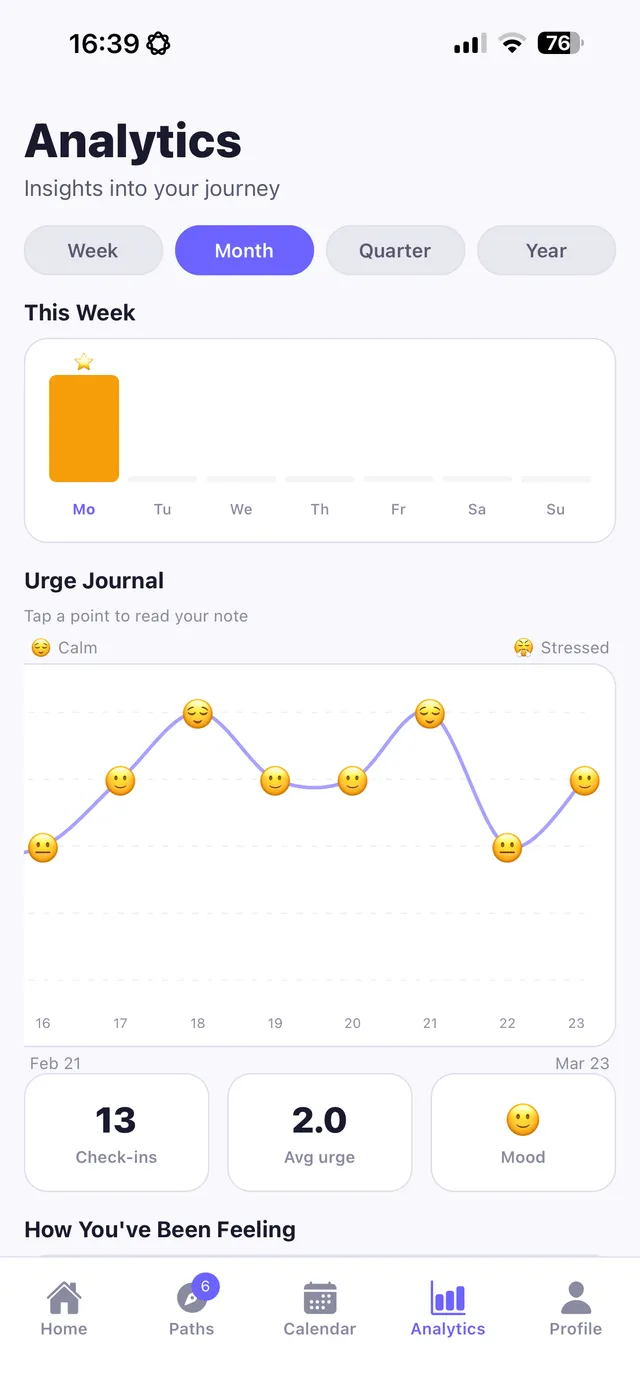
- Track the trend. You can't feel receptor-level change day to day, but you can see behavior change over weeks. Watching the data shift is what keeps you going.
Replacify helps you swap a bad habit for a better one — with structured paths, an SOS button for cravings, a focus timer, and streaks that keep you going.
The honest version
There's nothing magic to "reset." What works is unglamorous: dial down the hyper-stimulating loops, replace them with slower-reward routines, and repeat consistently until your brain recalibrates. A "dopamine detox" weekend can be a fine start — just don't mistake the day off for the actual work. The rewiring happens in the weeks after.
Replacify is built around that reality: structured replacement paths, friction-reducing tools, and analytics that show your real trend over time — so you can see the slow rewire actually happening instead of chasing a one-day reset.
Frequently asked questions
Does a dopamine detox actually work?
Not in the way it's marketed. You can't 'reset' or drain dopamine by avoiding stimulation for a day. People feel better because they briefly broke hyper-stimulating habit loops — but lasting change comes from consistent replacement, not a single detox day.
What does dopamine actually do?
Dopamine mainly drives motivation and anticipation — the 'wanting' before a reward — not pleasure itself. It's a constantly-produced neurotransmitter essential for movement, focus, learning and mood.
How do you really lower overstimulation?
Add friction to variable-reward loops (log out, app limits, grayscale), replace them with slower-reward routines, and repeat consistently for weeks so your baseline sensitivity to normal rewards recovers.
How long until my brain adjusts?
There's no exact reset point, but most people notice ordinary activities becoming more rewarding over a few weeks of consistent change — far longer than a single 'detox' day.
Replace the habit. Not yourself.
Replacify helps you swap a bad habit for a better one — with structured paths, an SOS button for cravings, a focus timer, and streaks that keep you going.