How Long Does It Take to Build a Habit? The 21-Day Myth vs. the 66-Day Truth

You've heard it a hundred times: "It takes 21 days to build a habit." It's on gym posters, in productivity books, in every hustle thread online. There's just one problem — it isn't true, and believing it is quietly setting you up to quit.
Where the 21-day myth came from
The number traces back to the 1960s and a plastic surgeon named Maxwell Maltz. He noticed that patients took about 21 days to stop feeling phantom sensations after an amputation, or to get used to a new face after surgery. He wrote this observation down in his book Psycho-Cybernetics.
Notice what he actually said: patients needed a minimum of about 21 days to adjust. Over the decades, "a minimum of about 21 days to adjust to a change" got flattened into "21 days to form any habit." A single anecdote about surgical recovery became a universal law it was never meant to be.
What the research actually says: ~66 days
In 2009, researchers at University College London led by Phillippa Lally ran the study everyone should quote instead. They tracked people forming a new daily habit — things like drinking water after breakfast or doing a short walk — and measured how long it took each behavior to become automatic (done without deliberation).
The results:
- Median time to automaticity: 66 days.
- Range: 18 to 254 days, depending on the person and the habit.
So the honest answer to "how long does it take to build a habit?" is: about two months for something simple, and much longer for something hard. Twenty-one days isn't the finish line. For most habits, it's barely a third of the way.
Why the range is so wide
That 18-to-254-day spread isn't random. Four things move the needle:
- Complexity. Drinking a glass of water after breakfast automates fast. "Go to the gym for an hour" is a chain of a dozen sub-decisions — it takes far longer.
- Consistency. Repetition in the same context is the engine of automaticity. Doing it daily beats doing it "when you remember."
- Cue strength. Habits that hang off a rock-solid existing trigger ("after I pour my morning coffee") form faster than ones floating with no anchor.
- Reward. A behavior your brain finds satisfying wires in quicker than one that feels like pure punishment.
The takeaway: you don't get to pick the exact day your habit "clicks." But you can stack the deck on all four factors.
Replacify helps you swap a bad habit for a better one — with structured paths, an SOS button for cravings, a focus timer, and streaks that keep you going.


The finding that changes everything: missing a day doesn't reset the clock
Here's the part almost nobody repeats. Lally's team found that missing a single day did not meaningfully hurt habit formation. Automaticity kept climbing. One skipped rep is a rounding error, not a reset.
This matters because the real reason people fail isn't the missed day — it's what they tell themselves after it. "I broke my streak, so it's ruined" becomes the excuse to quit entirely. The science says the opposite: consistency over time beats perfection, every time. (It's the same reason we built streaks that reward showing up, not flawlessness.)
How to actually get to automatic faster
You can't cheat biology, but you can remove the friction that stretches 66 days into 254:
- Replace, don't just remove. Willpower fades; a competing routine doesn't. The fastest path to a new habit is to give an existing cue a new response — the core idea behind breaking a bad habit by replacement.
- Anchor it to a trigger you already have. "After X, I do Y." A strong cue is the single biggest accelerant.
- Shrink the rep until it's stupidly easy. Two minutes, not two hours. You're building the automatic, not the intensity — you can scale up once it's wired in.
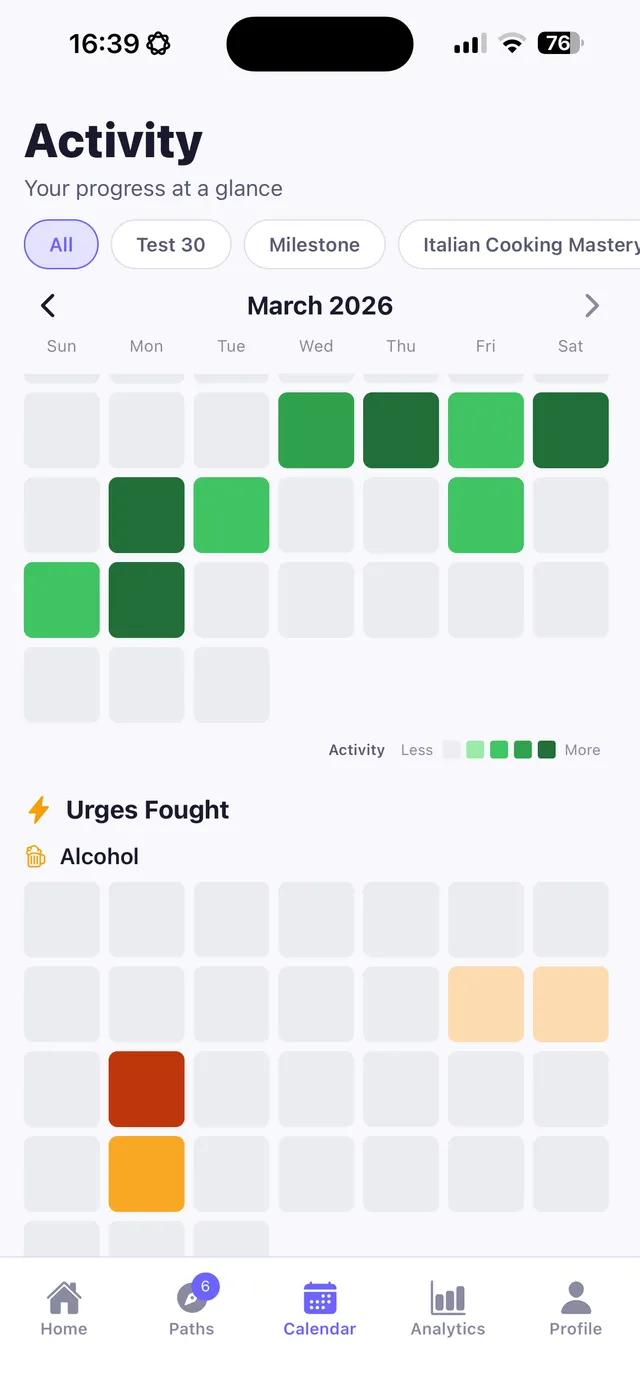
- Make showing up visible. Seeing a run of completed days is its own reward, and it keeps you honest on the low-motivation days.
- Have a plan for the urge to skip. The moment you want to bail is the moment that matters — here's a 5-minute plan for exactly that.
This is exactly the loop Replacify is built around: pick the habit, anchor it to a path, keep the reps small, and watch the streak grow — through the messy middle where 21-day thinking would have told you to quit.
The takeaway
Forget 21 days. A simple habit takes around 66 days to go automatic, and harder ones take longer — that's normal, not failure. Miss a day and keep going; it barely dents the process. Focus on consistent, low-friction reps anchored to a solid cue, and let the timeline be whatever it needs to be. The people who build lasting habits aren't faster than you. They just didn't quit on day 22.
Frequently asked questions
Is it true that it takes 21 days to form a habit?
No. The 21-day figure comes from a 1960s plastic surgeon's note that patients needed a minimum of about 21 days to adjust to a change — it was never a rule for habit formation. Research puts the real number much higher.
How long does it actually take to build a habit?
A landmark University College London study found a median of 66 days for a behavior to become automatic, with a range of 18 to 254 days depending on how complex the habit is and how consistently you do it.
Does missing one day ruin a habit?
No. The same research found that missing a single day did not meaningfully affect habit formation — automaticity kept building. Consistency over time matters far more than a perfect, unbroken streak.
How can I build a habit faster?
Replace an old routine rather than relying on willpower, anchor the new behavior to an existing cue ('after X, I do Y'), keep each rep tiny, make your progress visible, and have a plan for the moments you want to skip.
Replace the habit. Not yourself.
Replacify helps you swap a bad habit for a better one — with structured paths, an SOS button for cravings, a focus timer, and streaks that keep you going.