How to Build a Habit That Actually Lasts (Not Just for 21 Days)

"It takes 21 days to build a habit" is one of the most repeated pieces of self-help advice — and one of the least accurate. It's a genuinely useful number to know is wrong, because building a habit around a false timeline sets you up to feel like a failure right around the point real habits are actually just getting started.
The short answer
The 21-day figure is a myth traced back to a misreading of a mid-20th-century book on plastic surgery patients, not a real, universal rule for habit formation — it's not the number to plan around. How long a habit actually takes to feel automatic varies a lot by person and by how complex the habit is, often taking considerably longer than three weeks. A more useful framework for a habit that actually lasts: start tiny, stack it onto something existing, track it, plan for setbacks in advance, and tie it to your identity.
Where the 21-day myth actually comes from
The number traces back to a book from the 1960s by a plastic surgeon who observed that patients seemed to take roughly three weeks to adjust to changes in their appearance — a specific, informal observation about adapting to a physical change, not a controlled study of habit formation in general. Over decades of retelling, that offhand observation got flattened into "21 days to build a habit," repeated so often it became accepted as fact despite never having been a rigorous finding about habits at all.
The practical harm of the myth isn't just that it's inaccurate — it's that it gives people the wrong expectation. If you believe a habit should feel automatic by day 21 and it still feels effortful on day 25, it's easy to conclude the habit "isn't working" and quit right when more consistency would have paid off. Why most resolutions fail covers a version of this same trap.
What actually determines how long it takes
There's no single universal number, but a few factors reliably matter more than a fixed day count:
- Complexity of the habit. Drinking a glass of water after waking up is simpler to automate than a full workout routine with multiple steps.
- Consistency, not just elapsed time. A habit done six days a week for a month builds more automaticity than one done twice a week for two months, even though the second took longer in calendar time.
- The person. Individual differences in routine, environment and the habit's fit with existing behavior all affect how quickly something starts to feel automatic. How long it takes to build a habit goes deeper into this variability.
The honest, if less satisfying, answer is: it depends, often longer than three weeks, and the goal shouldn't be hitting a specific date — it should be building something that keeps holding after the date passes.
Replacify helps you swap a bad habit for a better one — with structured paths, an SOS button for cravings, a focus timer, and streaks that keep you going.


A framework for a habit that actually lasts
Start tiny
A version of the habit that's almost too easy to skip survives far more days than an ambitious version that only works when conditions are perfect. See small habits, big results for why size matters more than most people expect.
Stack it onto something existing
Attach the new habit to something you already do reliably — right after your morning coffee, right after you brush your teeth. Habit stacking borrows the automaticity of the existing behavior instead of asking the new one to build automaticity from nothing.
Track it
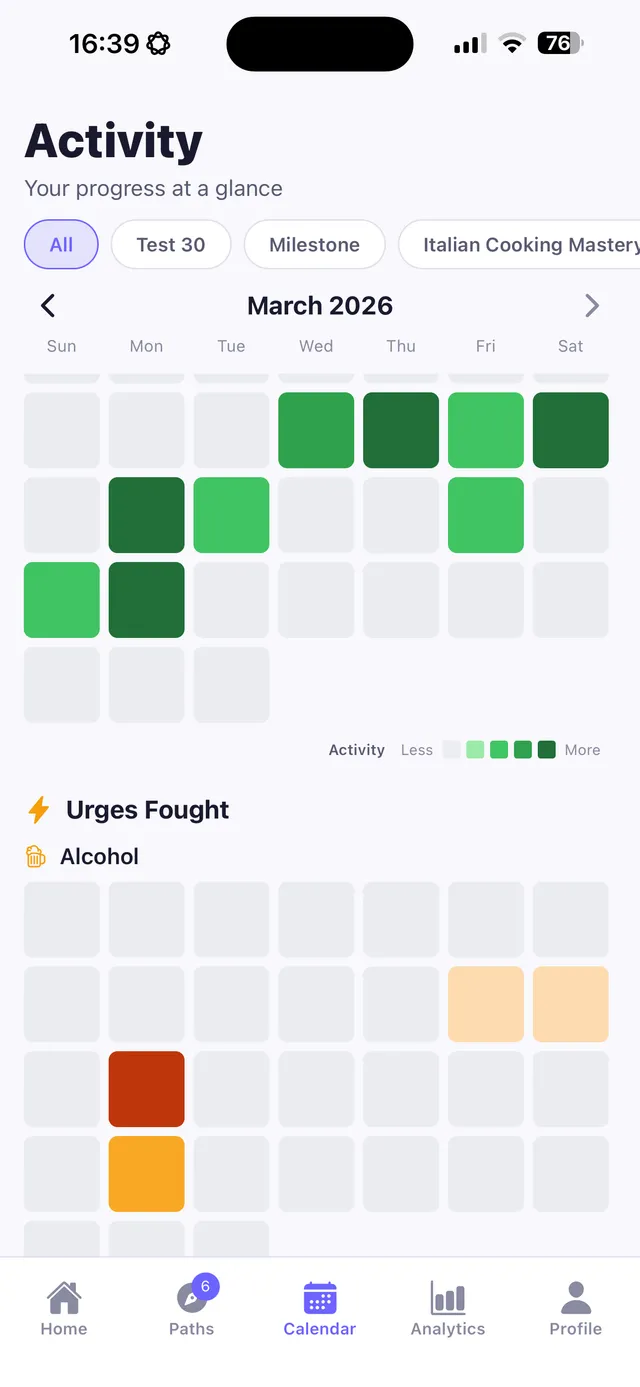
Visible progress reinforces itself. Seeing a streak grow gives you a reason to protect it on days motivation alone wouldn't be enough — how habit streaks work explains the mechanism in more depth.
Plan for setbacks in advance
Every durable habit survives at least one missed day. Deciding in advance what you'll do after a slip — not whether you'll quit, but specifically what happens the next day — is what separates a habit that recovers from one that collapses. See what to do after you break your streak and, for the reverse direction, what to do when a craving hits.
Tie it to identity
A habit that's just a task competes with your schedule every day. A habit that's part of who you believe you are competes with very little — identity-based habits tend to outlast goal-based ones because they don't need to be re-justified daily.
| Framework step | Why it matters more than the 21-day myth |
|---|---|
| Start tiny | Survives bad days a fixed 21-day plan doesn't account for |
| Stack it | Borrows existing automaticity instead of building from zero |
| Track it | Creates its own motivation, independent of a deadline |
| Plan for setbacks | Prevents one missed day from ending the whole attempt |
| Tie to identity | Removes the need to re-decide every day |
The bottom line
Forget the 21-day countdown — it was never a real rule to begin with, just an old observation about something else entirely that got repeated into folklore. How long a habit actually takes depends on the person and the habit's complexity, and it's usually longer than three weeks. What actually builds something that lasts is starting tiny, stacking it onto an existing routine, tracking it, planning for setbacks in advance, and tying it to identity rather than a deadline.
Replacify applies this whole framework directly: you choose a struggle and a specific, sized-right replacement path, your streak handles the tracking, the SOS button handles the inevitable hard moments, and the whole design is built around consistency over an arbitrary date — because that's what actually determines whether a habit lasts.
Frequently asked questions
Does it really take 21 days to build a habit?
No. The 21-day figure traces back to a mid-20th-century observation about plastic surgery patients adjusting to appearance changes, not a study of habit formation. It became a widely repeated myth despite never being a rigorous finding about habits.
How long does it actually take to build a habit?
It varies a lot depending on the person and the complexity of the habit, and it's often longer than three weeks. Consistency matters more than the raw number of days elapsed.
What actually makes a habit last long-term?
Starting with a version small enough to survive bad days, stacking it onto an existing routine, tracking your consistency, planning in advance for setbacks, and tying the habit to your identity rather than a fixed deadline.
Why is the 21-day myth actually harmful?
It sets a false expectation — if a habit still feels effortful past day 21, people often conclude it isn't working and quit right when more consistency would likely have paid off.
Replace the habit. Not yourself.
Replacify helps you swap a bad habit for a better one — with structured paths, an SOS button for cravings, a focus timer, and streaks that keep you going.