How to Stop Binge Eating: Understanding the Cycle and Steps Toward Recovery

If you've eaten far more than you meant to, felt out of control while doing it, and then felt guilty or ashamed afterwards, you're not alone — and you're not weak. Binge eating is common, and it's usually driven by patterns you can understand and change. This guide explains the cycle and practical steps toward stopping, but it starts with an important point: for many people, the most effective help is professional support.
The short answer
Binge eating often follows a cycle of restriction → hunger and cravings → a binge → guilt → more restriction. Stopping usually involves eating regular meals (not skipping or strictly dieting), identifying emotional and situational triggers, building alternative ways to cope, reducing shame, and getting professional help. Binge eating disorder is a recognised eating disorder, and treatments like cognitive behavioural therapy are effective.
What is binge eating?
A binge usually means eating an unusually large amount of food in a short period, with a sense of loss of control. Binge eating disorder (BED) is a diagnosable eating disorder in which binges happen regularly, cause significant distress, and aren't followed by regular compensatory behaviours like purging. It affects people of all body sizes.
If this sounds like you, please consider speaking to a doctor. You deserve support, not judgement.
The binge–restrict cycle
| Stage | What happens |
|---|---|
| Restriction | Strict dieting, skipping meals, "banned" foods |
| Build-up | Hunger, cravings and preoccupation with food grow |
| Trigger | Stress, tiredness, loneliness, being alone with food |
| Binge | Eating quickly, feeling out of control |
| Aftermath | Guilt, shame, physical discomfort |
| Back to restriction | "I'll be really good tomorrow" — and the cycle repeats |
The key insight: strict restriction often fuels bingeing. That's why "just eat less" advice can make things worse.
Steps that help
1. Eat regularly
Aim for three meals and planned snacks at fairly regular times. This is one of the most important parts of treatment approaches for binge eating, because it reduces the extreme hunger that makes binges more likely.
2. Drop the "banned foods" list
Labelling foods as forbidden tends to increase their pull. Many treatment approaches gradually reintroduce feared foods in a structured way — ideally with professional guidance.
3. Notice your triggers
Keep a simple record: time, place, what you were feeling, what happened before. Common triggers include stress, boredom, loneliness, tiredness, and long gaps without eating.
Replacify helps you swap a bad habit for a better one — with structured paths, an SOS button for cravings, a focus timer, and streaks that keep you going.


4. Build other ways to cope
If eating is your main way of handling difficult feelings, you'll need alternatives for those moments:
- Stress: a walk, slow breathing, a shower.
- Loneliness: calling or messaging someone.
- Boredom: an absorbing activity — a craft, music, a puzzle.
- Tiredness: rest, an earlier night.
Use the urge as a signal to pause: wait a few minutes, name the feeling, and try one alternative. Urges often ease with time. What to do when a craving hits.
5. Reduce shame
Shame after a binge often triggers the next restriction — and the next binge. Treat a binge as information about triggers, not proof of failure. Self-compassion is not letting yourself off the hook; it's what makes change possible.
6. Be careful with strict diets and tracking
Rigid calorie counting and extreme diets can intensify the cycle for some people. If you want to change your eating, a dietitian experienced in eating disorders can help you do it safely.
Why professional help matters
Cognitive behavioural therapy (CBT), including guided self-help versions, is a recommended treatment for binge eating disorder. Other therapies and, in some cases, medication may also be options. A doctor can help you find support.
- UK: Beat, the eating disorder charity, runs a helpline on 0808 801 0677 (England).
- US: the National Association of Anorexia Nervosa and Associated Disorders (ANAD) and other organisations offer free helplines and support groups.
If you're in crisis or thinking about harming yourself, contact emergency services or a crisis line immediately — in the US call or text 988; in the UK call Samaritans on 116 123.
The bottom line
Binge eating is usually a cycle fuelled by restriction, emotions and shame — not a lack of willpower. Regular meals, dropping food rules, noticing triggers, finding other ways to cope and self-compassion all help. For binge eating disorder, professional support, especially CBT, is effective and worth reaching out for.
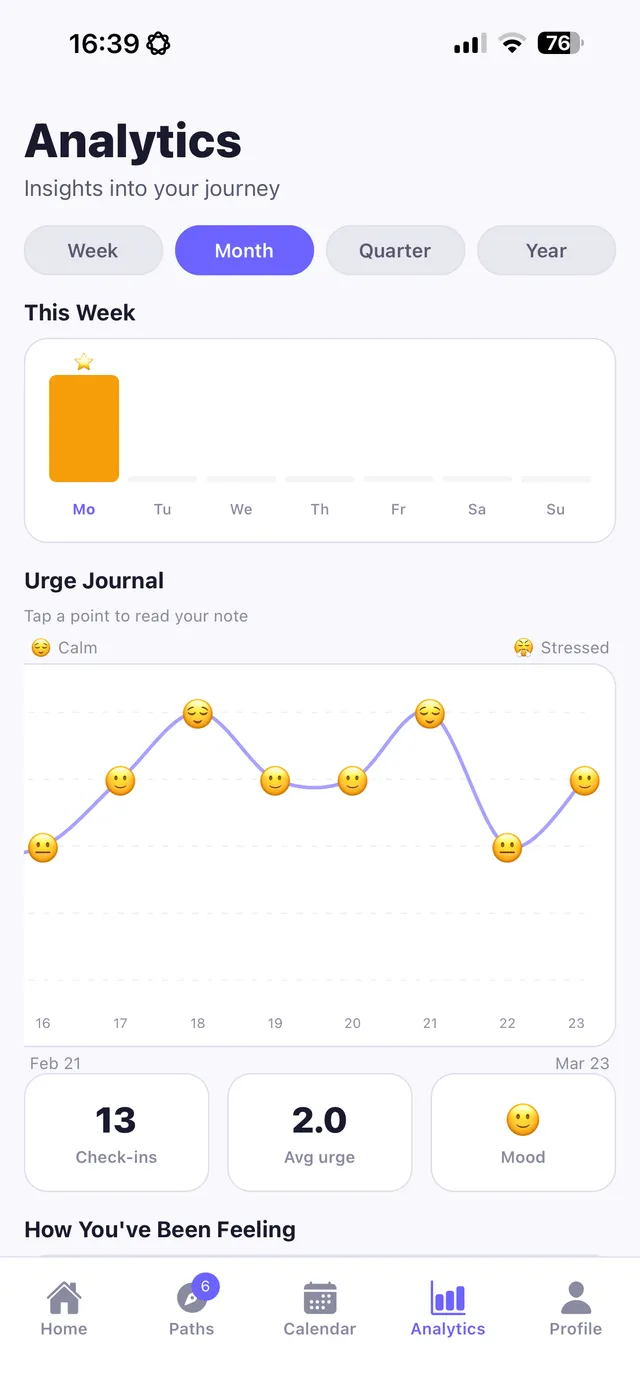
Replacify can be a supportive daily tool alongside professional care: it includes Junk Food / Binge Eating and Late-Night Snacking as struggles, lets you log check-ins with urge ratings to spot patterns, and offers a free SOS button with a guided activity when an urge hits.
Replacify is not a medical or eating disorder treatment service. If you think you may have an eating disorder, please speak to a doctor.
Frequently asked questions
How do I stop binge eating?
Eat regular meals, avoid strict restriction and banned-food lists, identify triggers, build other ways to cope with emotions, reduce shame, and seek professional support — especially if binges are regular.
What is binge eating disorder?
Binge eating disorder is a recognised eating disorder involving regular episodes of eating large amounts with a sense of loss of control, causing significant distress, without regular compensatory behaviours like purging.
Why does dieting lead to binge eating?
Strict restriction increases hunger, cravings and preoccupation with food, making binges more likely. The guilt afterwards often leads to more restriction, continuing the cycle.
Where can I get help for binge eating?
Start with your doctor. In the UK, Beat runs an eating disorder helpline; in the US, organisations such as ANAD offer free helplines and support groups.
Replace the habit. Not yourself.
Replacify helps you swap a bad habit for a better one — with structured paths, an SOS button for cravings, a focus timer, and streaks that keep you going.