How to Stop Online Shopping: 12 Ways to Break the Impulse-Buy Habit

A parcel arrives and you can't quite remember ordering it. Your "treat yourself" moments have become daily. Or you find yourself browsing shopping apps every time you're bored or stressed. Online shopping is designed to be effortless — saved cards, one-click checkout, "only 2 left!" — which makes it an easy habit to fall into. Here's how to stop online shopping, or at least take back control.
The short answer
To stop online shopping: track what and when you buy, add friction (delete shopping apps, remove saved cards, unsubscribe from marketing emails), use a waiting rule (48 hours or 30 days before buying non-essentials), identify your emotional triggers, replace the shopping "hit" with other activities, and set a clear budget. If spending feels out of control or is causing debt, get support.
Why online shopping becomes a habit
- Frictionless checkout. Saved payment details remove the pause where you might reconsider.
- Constant prompts. Emails, push notifications, targeted ads and "deals of the day".
- Scarcity and urgency. Countdowns and "low stock" warnings push fast decisions.
- The anticipation. For many people, browsing and waiting for a parcel is the enjoyable part.
- Emotional relief. Shopping can temporarily lift boredom, stress or low mood.
That's the habit loop at work: a cue (boredom, a sale email), a routine (browse and buy), and a reward (a lift in mood).
12 ways to stop online shopping
Track and understand
- Review the last three months of orders and bank statements. Total it up.
- Note your triggers for two weeks: time of day, mood, what you were doing.
Add friction
- Delete shopping apps from your phone.
- Remove saved cards from sites and your browser.
- Unsubscribe from marketing emails and turn off shopping notifications.
- Log out of your accounts.
Slow down decisions
- Use a waiting rule. Put items in a list and wait 48 hours — or 30 days for bigger purchases. Many urges pass.
- Ask three questions: Do I need it? Where will it go? What will I stop using?
Replacify helps you swap a bad habit for a better one — with structured paths, an SOS button for cravings, a focus timer, and streaks that keep you going.


Replace the "hit"
- Find another source of anticipation: planning a day out, a project, a trip, a hobby.
- Handle the underlying feeling: a walk for stress, a call for loneliness, an absorbing activity for boredom. 60 replacement ideas by need.
Set limits
- Set a monthly "fun money" budget and use a separate account or card for it.
- Try a no-buy challenge — 30 days of essentials only. 30-day challenge ideas.
Common triggers and replacements
| Trigger | Replacement |
|---|---|
| Bored in the evening | A hobby, a walk, a film chosen on purpose |
| Stressed after work | Exercise or a shower |
| Payday | Transfer savings first |
| Sale emails | Unsubscribe; waiting rule |
| Scrolling social media | Unfollow shopping accounts and influencers |
| Feeling low | Talk to someone; do something kind for yourself that isn't buying |
When shopping is a sign of something more
Compulsive buying — sometimes called shopping addiction — is recognised by many clinicians as a serious problem, even though it isn't a separate diagnosis in the main manuals. Consider getting support if:
- You feel unable to stop, despite wanting to.
- You're hiding purchases or lying about spending.
- You're getting into debt or can't pay bills.
- You feel a strong urge to shop when upset, followed by guilt.
A doctor or therapist can help, and free debt advice services can help you make a plan with creditors. Shopping to cope with low mood or anxiety is especially worth talking about.
The bottom line
Online shopping is built to remove friction, so put some back: delete apps, remove saved cards, unsubscribe, and wait before you buy. Understand your triggers, replace the "hit" with other rewards and set a clear budget. If spending feels out of control, you don't have to handle it alone.
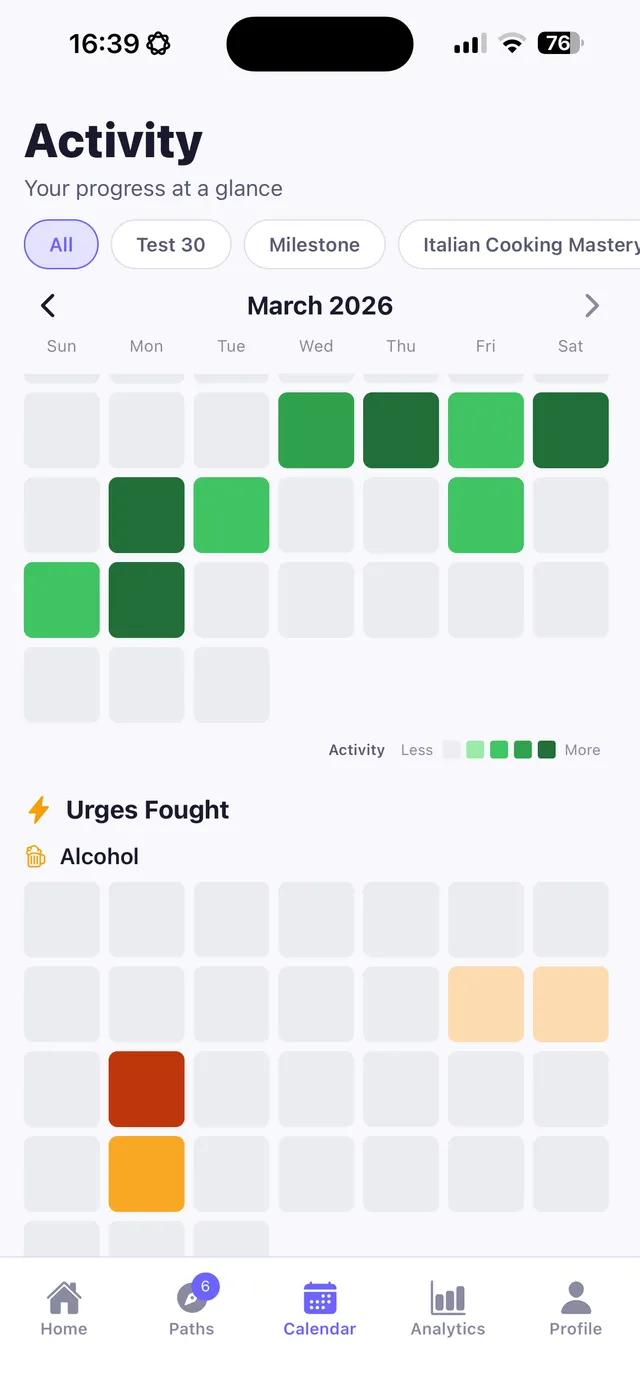
Replacify includes Online Shopping as one of its struggles. Tap SOS when the urge to browse hits for a guided activity and timer, track your no-spend days on the heatmap calendar, and invest the time in a replacement path — cooking, drawing, photography walks or learning a language — that gives you something to look forward to.
Frequently asked questions
How do I stop online shopping?
Track your spending, delete shopping apps, remove saved cards, unsubscribe from marketing emails, use a waiting rule before buying, and replace shopping with other activities that meet the same need.
Why am I addicted to online shopping?
Frictionless checkout, constant prompts and the anticipation of a parcel make shopping rewarding, and it can become a way to cope with boredom, stress or low mood.
What is the 30-day rule for shopping?
Wait 30 days before buying a non-essential item. If you still want it and can afford it, consider it then. Many impulse urges fade in that time.
When is shopping a problem?
If you can't stop despite wanting to, hide purchases, get into debt or shop to cope with difficult feelings, it's worth talking to a doctor, therapist or debt adviser.
Replace the habit. Not yourself.
Replacify helps you swap a bad habit for a better one — with structured paths, an SOS button for cravings, a focus timer, and streaks that keep you going.