The Habit Loop Explained: Cue, Routine, Reward (and How to Use It to Change Any Habit)

Why do you reach for your phone the moment you sit on the sofa? Why does finishing dinner make you want something sweet? Habits can feel mysterious, but most of them run on the same simple structure: the habit loop. Once you can see the loop, you can start changing it.
The short answer
The habit loop has three parts: a cue (the trigger), a routine (the behaviour) and a reward (the benefit your brain gets). Over time, the cue starts to trigger a craving for the reward, and the routine runs automatically. To change a habit, keep the cue and the reward, but swap the routine — and make the new routine easier to do than the old one.
Where the habit loop comes from
The cue–routine–reward loop was popularised by Charles Duhigg's 2012 book The Power of Habit, drawing on research into how habits form in the brain. James Clear's Atomic Habits later expanded it into four stages: cue, craving, response and reward. The core idea is the same: habits are shortcuts your brain builds so it doesn't have to think.
The three parts
| Part | What it is | Examples |
|---|---|---|
| Cue | The trigger that starts the habit | A time, place, emotion, person, or the action before |
| Routine | The behaviour itself | Scrolling, snacking, smoking, checking email |
| Reward | What your brain gets out of it | Relief, stimulation, pleasure, connection, distraction |
Cues
Most cues fall into five categories:
- Time: 3pm slump, before bed.
- Location: sofa, car, kitchen.
- Emotional state: stressed, bored, lonely, anxious.
- Other people: certain friends, colleagues.
- Preceding action: finishing a meal, opening a laptop, getting into bed.
Routines
The routine is the part you see — and the part people usually try to "just stop". That rarely works on its own, because the cue and reward are still there.
Rewards
The reward is what makes the loop stick. It's often not what you'd guess. The afternoon biscuit might really be about a break from your desk. The late-night scroll might be about having time that feels like your own.
Real-life habit loop examples
| Habit | Cue | Routine | Likely reward |
|---|---|---|---|
| Doomscrolling | Lying in bed | Open social media | Distraction, novelty |
| Afternoon sugar | 3pm energy dip | Vending machine snack | Energy, a break |
| Vaping | Stress at work | Step outside and vape | Relief, a pause |
| Checking phone | Notification sound | Pick up phone | Social connection, curiosity |
| Nail biting | Anxiety, boredom | Bite nails | Tension relief |
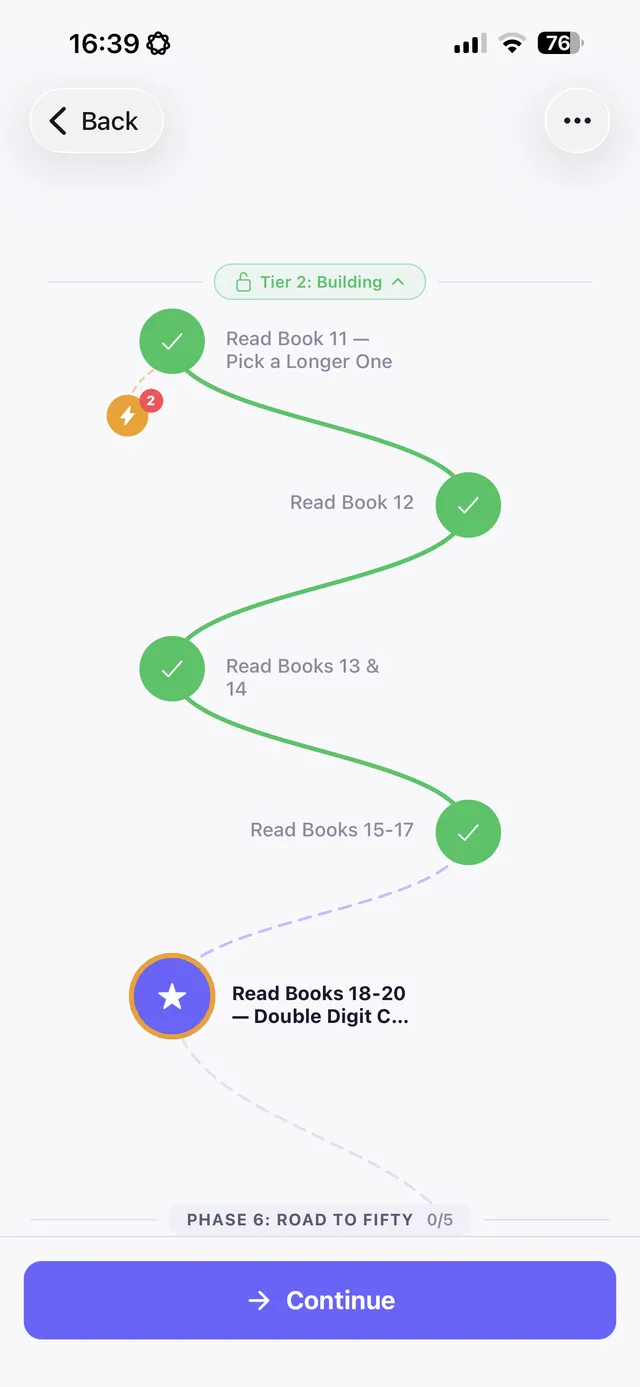
Replacify helps you swap a bad habit for a better one — with structured paths, an SOS button for cravings, a focus timer, and streaks that keep you going.


How to use the habit loop to break a bad habit
1. Identify the cue
For a few days, write down what happens right before the habit: time, place, emotion, people, previous action. Patterns appear quickly.
2. Experiment with the reward
Try different routines in the same moment and notice how you feel 15 minutes later. If a walk satisfies the 3pm urge as well as a biscuit, the reward was probably a break, not sugar.
3. Swap the routine
Keep the cue and reward, change the behaviour. Stress at work → instead of vaping, a two-minute walk and slow breathing. This is the heart of habit replacement — and there are 60 replacement ideas here.
4. Make the new routine easier
Put the replacement where the cue happens, and add friction to the old routine: apps off your home screen, snacks out of sight, cigarettes out of the house.
5. Repeat until it's automatic
New loops take time. How long does it take to build a habit? Longer than 21 days, for most people — but it does happen.
How to use the loop to build a good habit
Run it forwards:
- Choose an obvious cue — "after I pour my morning coffee".
- Make the routine tiny — one push-up, one page, one minute of meditation.
- Add a reward — ticking it off, a streak, something you enjoy.
Streaks can be a powerful reward in themselves. How habit streaks work.
The bottom line
Every habit runs on a loop: cue, routine, reward. You rarely beat a habit by fighting the routine alone. Identify the cue, figure out the real reward, and swap in a new routine that gives you the same benefit — then make it easy and repeat it.
Replacify is built on this loop. Pick your struggle, then enroll in a replacement path — structured phases and steps for activities like running, reading, meditation or cooking — so the old routine has a concrete alternative. When a cue hits hard, the free SOS button gives you a matched activity right away.
Frequently asked questions
What is the habit loop?
The habit loop is a model of how habits work: a cue triggers a routine, which delivers a reward. Repeated over time, the cue creates a craving and the routine becomes automatic.
Who created the habit loop?
It was popularised by Charles Duhigg in The Power of Habit (2012), based on research into habit formation. James Clear later described a four-step version in Atomic Habits.
How do I break a habit using the habit loop?
Identify the cue, figure out the real reward, then replace the routine with a different behaviour that delivers a similar reward, and make the new routine easier than the old one.
What are examples of habit cues?
Common cues are a time of day, a location, an emotional state, other people, or an action that comes just before the habit.
Replace the habit. Not yourself.
Replacify helps you swap a bad habit for a better one — with structured paths, an SOS button for cravings, a focus timer, and streaks that keep you going.