What Does Sober Curious Mean? A Guide to Drinking Less Without Labels

You don't think you have a drinking "problem", exactly. But you've started to notice the Sunday fog, the automatic Friday bottle, the nights you drank more than you meant to. Being sober curious is about exploring that — asking why and how much you drink — without having to call yourself sober or sign up for anything permanent.
The short answer
Sober curious means choosing to question your drinking and experiment with drinking less or not at all, by choice rather than necessity. It isn't the same as recovery from alcohol dependence. People try it through alcohol-free weeks, Sober October, drinking only on certain occasions, or switching to alcohol-free alternatives. The goal is intentional drinking, not a label.
Where the term came from
The phrase was popularised by writer Ruby Warrington in her 2018 book Sober Curious. It caught on alongside a wider shift: more alcohol-free beers, wines and spirits, bars with serious mocktail menus, and younger adults reporting that they drink less than previous generations.
Sober curious vs sober
| Sober curious | Sober / in recovery | |
|---|---|---|
| Starting point | Curiosity about drinking habits | Often after harm or dependence |
| Goal | Intentional, reduced or paused drinking | Complete abstinence |
| Labels | Optional | Often part of identity and support |
| Support | Self-directed, friends, apps | Often structured support, treatment, groups |
If you find you can't cut down despite trying, or drinking is causing harm, that's a sign to talk to a doctor — sober curiosity isn't a substitute for treatment when it's needed.
Why people get sober curious
- Better sleep. Alcohol fragments sleep, especially in the second half of the night.
- Mood and anxiety. Many people notice "hangxiety" disappears.
- Health. Health bodies increasingly stress that less alcohol is better for long-term health.
- Money and time. Fewer drinks, fewer lost mornings.
- Clarity. Seeing how much drinking was habit.
Replacify helps you swap a bad habit for a better one — with structured paths, an SOS button for cravings, a focus timer, and streaks that keep you going.


How to try being sober curious
1. Notice your patterns first
For two weeks, just observe. When do you drink? With whom? How much? How do you feel before and after? The patterns tell you where to start.
2. Pick an experiment
- A dry week or month — Sober October or Dry January are easy starting points.
- Alcohol-free weekdays.
- No drinking at home, only socially.
- A maximum per occasion, decided beforehand.
- Alternate each alcoholic drink with a non-alcoholic one.
3. Upgrade the alternatives
Make not-drinking feel like a choice, not a sacrifice: good alcohol-free beer, sparkling water with fresh citrus and herbs, kombucha, a nice glass. Many people find the ritual — the "end of the day" drink in hand — matters more than the alcohol.
4. Change the routine around drinking
If the drink comes at 6pm when you finish work, give 6pm a new ending: a walk, a workout, cooking something you enjoy. How to break a bad habit by replacing the routine.
5. Plan the social side
- Order first so you have something in your hand.
- Keep a simple line ready: "I'm not drinking tonight."
- Suggest plans that don't centre on drinking — breakfast, a walk, a climbing session, a film.
- Notice who pushes back. It often says more about them than you.
6. Reflect
After each experiment, ask: How did I sleep? How did I feel? What did I miss, and what didn't I miss? Use the answers to set your own rules.
Handling cravings and "just one"
Urges to drink usually come in waves tied to cues — a smell, a time of day, stress. They pass. Have a plan: what to do when a craving hits.
When to get support
If you find it hard to cut back despite wanting to, drink to cope with difficult feelings, or experience withdrawal symptoms like shaking or sweating when you don't drink, talk to a doctor. Don't stop suddenly if you drink heavily every day — withdrawal can be dangerous without medical support. In the UK, Drinkline (0300 123 1110); in the US, the SAMHSA National Helpline (1-800-662-4357).
The bottom line
Being sober curious means getting interested in your drinking rather than running on autopilot. Observe your patterns, run small experiments, upgrade your alternatives, change the routines around drinking and reflect on how you feel. You decide what your relationship with alcohol looks like.
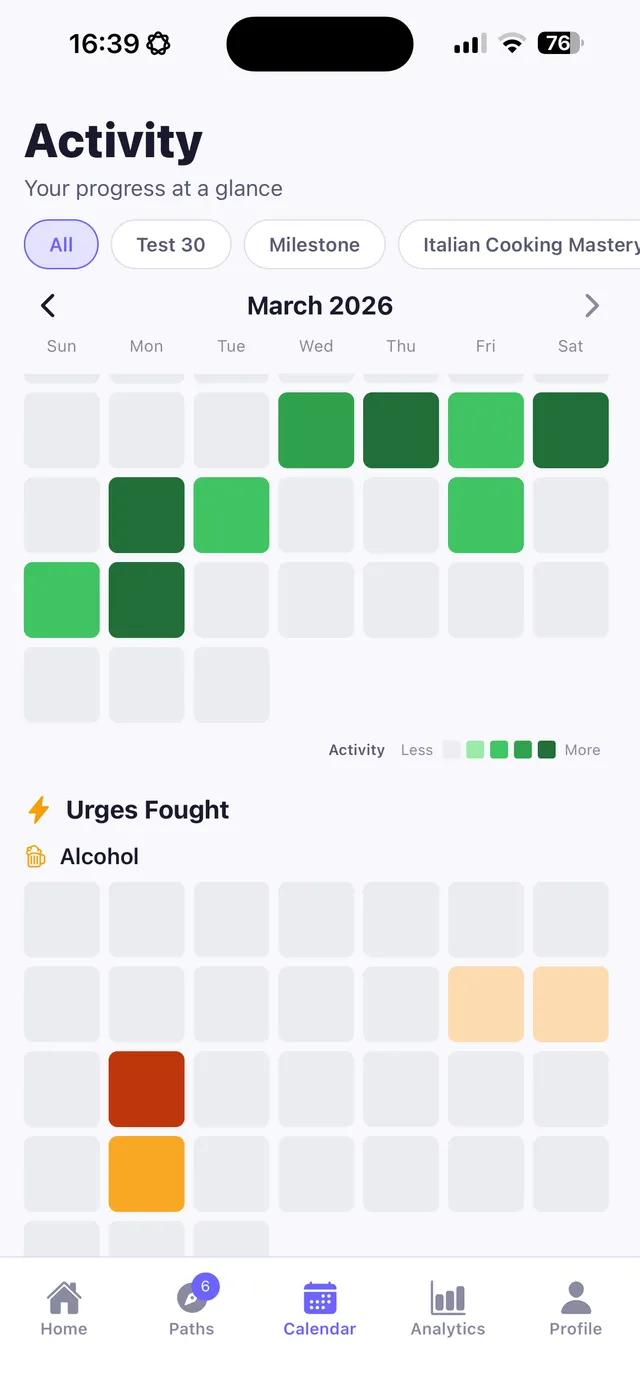
Replacify makes those experiments easier to stick with: choose Alcohol as your struggle, log daily check-ins and urge ratings, fill the old drinking time with a replacement path like cooking, running or meditation, and see your alcohol-free days build on the heatmap calendar.
Replacify is not a medical service. If you drink heavily or daily, talk to a doctor before stopping.
Frequently asked questions
What does sober curious mean?
Sober curious means choosing to question your relationship with alcohol and experiment with drinking less or not at all, without necessarily committing to lifelong sobriety.
Who started the sober curious movement?
The term was popularised by Ruby Warrington's 2018 book Sober Curious, alongside the growth of alcohol-free drinks and mindful drinking.
Is sober curious the same as being sober?
No. Sober curious is an exploratory, self-directed approach to drinking less. Sobriety usually means complete abstinence, often as part of recovery.
How do I start being sober curious?
Observe your drinking patterns, then try an experiment like a dry month, alcohol-free weekdays or no drinking at home, and reflect on how you feel.
Replace the habit. Not yourself.
Replacify helps you swap a bad habit for a better one — with structured paths, an SOS button for cravings, a focus timer, and streaks that keep you going.