Best Habit Tracker Apps in 2026: What Actually Matters

Search "best habit tracker apps" and you'll get a dozen ranked lists, most of them recycling the same ten names in a different order with review scores that don't quite add up. That's not very useful, because the honest answer is that the "best" app depends entirely on what you're trying to do. A student trying to read more and someone trying to stop doomscrolling at 1am need different tools, even though both are "building a habit."
The short answer
Habit tracker apps fall into a few broad categories — simple checklist/streak apps, gamified apps, journal-style apps, and replacement-focused apps like Replacify. Instead of chasing a ranked list, match the category to your actual goal, then check for the practical things that determine whether an app survives past week two: reminders that fit your schedule, forgiving streak recovery, sync across devices, and whether it does anything beyond logging a checkmark.
The four categories of habit tracker apps
Simple checklist/streak apps. These are minimal by design — a list of habits, a checkbox per day, and a streak counter. They're fast to open and easy to understand. The tradeoff is that they only record what happened; they don't help you figure out what to do when you're tempted to skip.
Gamified apps. These borrow mechanics from video games — experience points, avatars, levels, sometimes a whole RPG wrapper — to make tracking feel like progress in a game, not just a log. They can be genuinely motivating for people who respond well to that kind of feedback loop, and less appealing to people who find the game layer itself is one more thing to maintain. We go deeper on this tradeoff in why gamified habit apps work (and when they stop working).
Journal-style apps. These lean into reflection — a short daily entry alongside your tracking, sometimes prompts, sometimes mood logging. They suit people who want to understand why a habit is or isn't sticking, not just whether it happened. If you like this approach, journaling for beginners is a good primer even outside of any specific app.
Replacement-focused apps. This is a smaller, newer category, and it's the one Replacify belongs to. Instead of just tracking whether you did or didn't do something, these apps are built around the idea that breaking a habit means replacing it with something else — they give you a structured path for what to do instead, plus tools for the moment an urge actually hits.
The checklist that actually matters
Ignore star ratings for a second and check for these instead:
| What to check | Why it matters |
|---|---|
| Reminders you control | A reminder at the wrong time gets dismissed and ignored within days |
| Streak recovery / grace | One missed day shouldn't erase weeks of progress or motivation |
| Cross-device sync | If you switch phones or use a tablet too, your data needs to follow you |
| Tracks vs. helps you build | Does it just log the outcome, or does it help with the behavior itself? |
| Urge/craving support | For breaking a habit specifically, is there anything for the moment you're tempted? |
| Data you can actually see | Weekly or monthly views, not just a grid of dots you have to interpret yourself |
That third and fifth row are where most comparison lists go quiet, because most apps in the "simple tracker" category genuinely don't do much beyond recording data. That's fine if all you need is a log. It's a problem if you're trying to quit something and the hard part is the moment the craving hits, not the bookkeeping afterward.
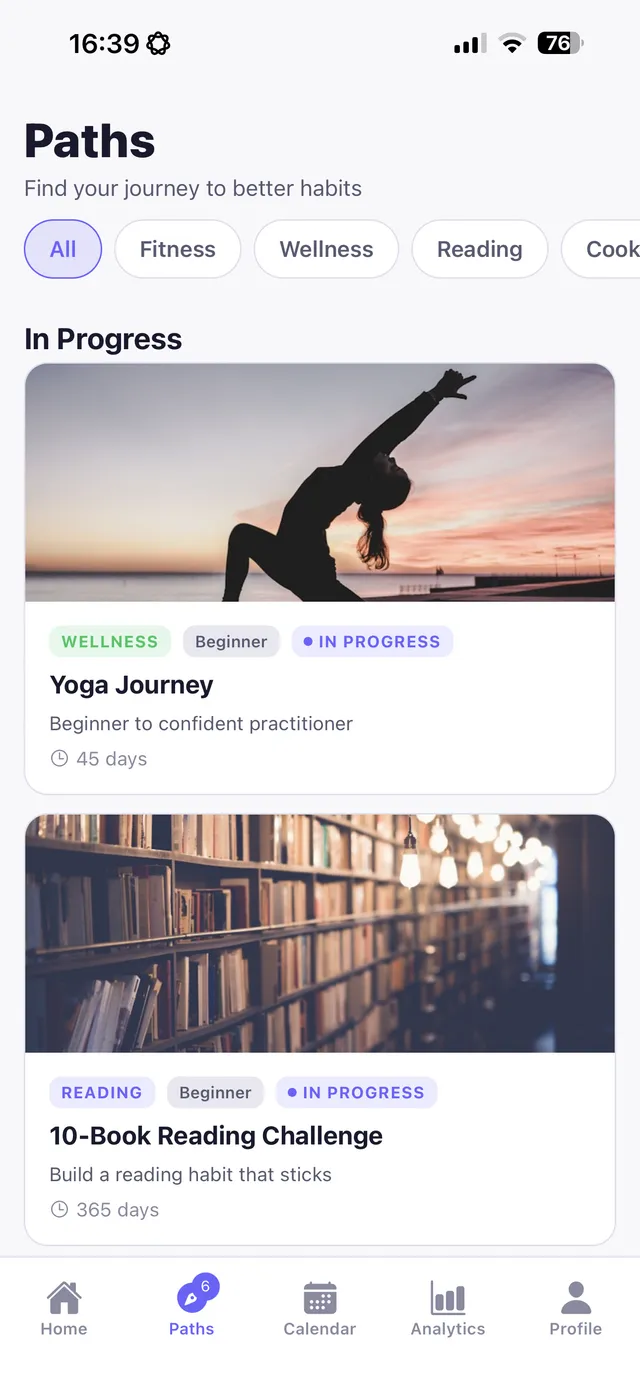
Replacify helps you swap a bad habit for a better one — with structured paths, an SOS button for cravings, a focus timer, and streaks that keep you going.


Tracking vs. building — the distinction that matters most
This is worth separating clearly, because it's the single biggest source of disappointment with habit apps. Tracking means recording what you did. Building means the app actively helps you do it — a plan for triggers, something to do instead of the old behavior, support in the moment of temptation. A streak counter can tell you that you vaped four days this week. It can't tell you what to do the fifth time you feel the urge at your desk. That's a different kind of tool, closer to what we describe in replacement behaviors that actually work than to a spreadsheet.
If your goal is to add a habit — meditate more, drink more water — a simple tracker is often genuinely enough, especially paired with habit stacking to anchor the new behavior to something you already do. If your goal is to stop doing something, tracking alone tends to underperform, because it has nothing to offer at the exact moment willpower runs out.
The bottom line
There's no single best habit tracker app for everyone in 2026 — there's the right category for your specific goal, checked against reminders, streak recovery, sync, and whether it actually helps with the behavior or just records it. If you're building a new routine, a simple tracker with good reminders can be enough. If you're trying to replace a habit that has real pull on you, look for something built for that specifically.
That's the gap Replacify is built to fill. You choose a struggle, pick a replacement path — running, reading, cooking, whatever fits — use the free SOS button the moment an urge hits, and track your streak as real progress, not just an empty grid of checkmarks.
Frequently asked questions
What's the best habit tracker app in 2026?
There isn't one universal best app — it depends on your goal. Simple checklist apps suit people adding easy habits, gamified apps suit people motivated by game mechanics, journal-style apps suit people who want reflection, and replacement-focused apps like Replacify suit people specifically trying to break a habit.
What should I look for in a habit tracker app?
Controllable reminders, forgiving streak recovery so one missed day doesn't wipe out your progress, cross-device sync, and — importantly — whether the app actually helps you build or break the behavior, not just record whether it happened.
Is a gamified habit app better than a simple checklist app?
Neither is universally better. Gamified apps can boost motivation through points and levels, but that extra layer is overhead some people don't want. A simple checklist is faster to use but offers less built-in encouragement.
Do habit tracker apps actually help you break bad habits?
Tracking alone mainly shows you what happened, which is useful but limited. Apps that go further — offering a replacement plan and support during urges, like Replacify's SOS tool — tend to help more with actually breaking a habit, not just recording attempts.
Replace the habit. Not yourself.
Replacify helps you swap a bad habit for a better one — with structured paths, an SOS button for cravings, a focus timer, and streaks that keep you going.