Habit Stacking: How to Build New Habits by Linking Them to Old Ones (With Examples)

Most new habits fail for a boring reason: you forget. You meant to meditate, stretch or read, but the moment never came. Habit stacking solves that by attaching the new habit to something you already do every single day, so the old habit becomes the reminder.
The short answer
Habit stacking uses the formula "After [current habit], I will [new habit]." The current habit acts as a reliable cue. Keep the new habit tiny at first (one minute, one page, one push-up), stack it right after a specific, consistent anchor, and build from there. It works for starting good habits and for replacing bad ones.
Where habit stacking comes from
The idea builds on research into implementation intentions — "if–then" plans that link a situation to a behaviour — and on behaviour scientist BJ Fogg's Tiny Habits method, which anchors tiny new behaviours to existing routines. James Clear popularised the name "habit stacking" in Atomic Habits.
Why it works
- Cues are everything. Habits are triggered by cues. An existing daily habit is one of the most reliable cues you have. How the habit loop works.
- No extra willpower to remember. The anchor does the reminding.
- Specific beats vague. "After I pour my coffee" is far more effective than "sometime in the morning".
The habit stacking formula
After [ANCHOR], I will [NEW HABIT].
Good anchors are:
- Things you do every day, without fail.
- Specific moments — not "morning", but "after I switch off the kettle".
- At a time and place where the new habit makes sense.
30 habit stacking examples
| Anchor | New habit |
|---|---|
| After I pour my morning coffee | I'll write my top priority for the day |
| After I brush my teeth in the morning | I'll do 10 squats |
| After I sit down at my desk | I'll close all tabs except the one I need |
| After I park the car | I'll take three slow breaths |
| After I finish lunch | I'll walk for 5 minutes |
| After I take off my shoes at home | I'll put my phone on the charger in the hall |
| After I start the dishwasher | I'll stretch for 2 minutes |
| After I get into bed | I'll read one page |
| After I brush my teeth at night | I'll write down one good thing from today |
| After I put the kettle on | I'll do one minute of breathing |
More ideas:
- After I open my laptop, I'll set a 25-minute focus timer.
- After I hang up a work call, I'll stand up and stretch.
- After I get home, I'll change into workout clothes.
- After dinner, I'll prep tomorrow's lunch.
- After I sit on the train, I'll open my book instead of my phone.
- After I shower, I'll drink a glass of water.
- After I make the bed, I'll open the curtains.
- After I feed the dog, I'll take it for a walk.
- After I close my laptop for the day, I'll write tomorrow's to-do list.
- After I put my kids to bed, I'll put my phone in another room.
- After my alarm goes off, I'll put my feet on the floor immediately.
- After I finish a meal, I'll brush my teeth (instead of reaching for dessert).
- After I feel an urge to vape, I'll do 10 push-ups.
- After I get into the car, I'll put my phone in the glovebox.
- After I sit on the sofa in the evening, I'll pick up my guitar.
- After I pour a glass of water, I'll take my vitamins.
- After I check my email the first time, I'll close the inbox for an hour.
- After I finish work on Friday, I'll plan one fun weekend activity.
- After I lock the front door, I'll walk the long way.
- After I turn off the TV, I'll turn off all screens for the night.
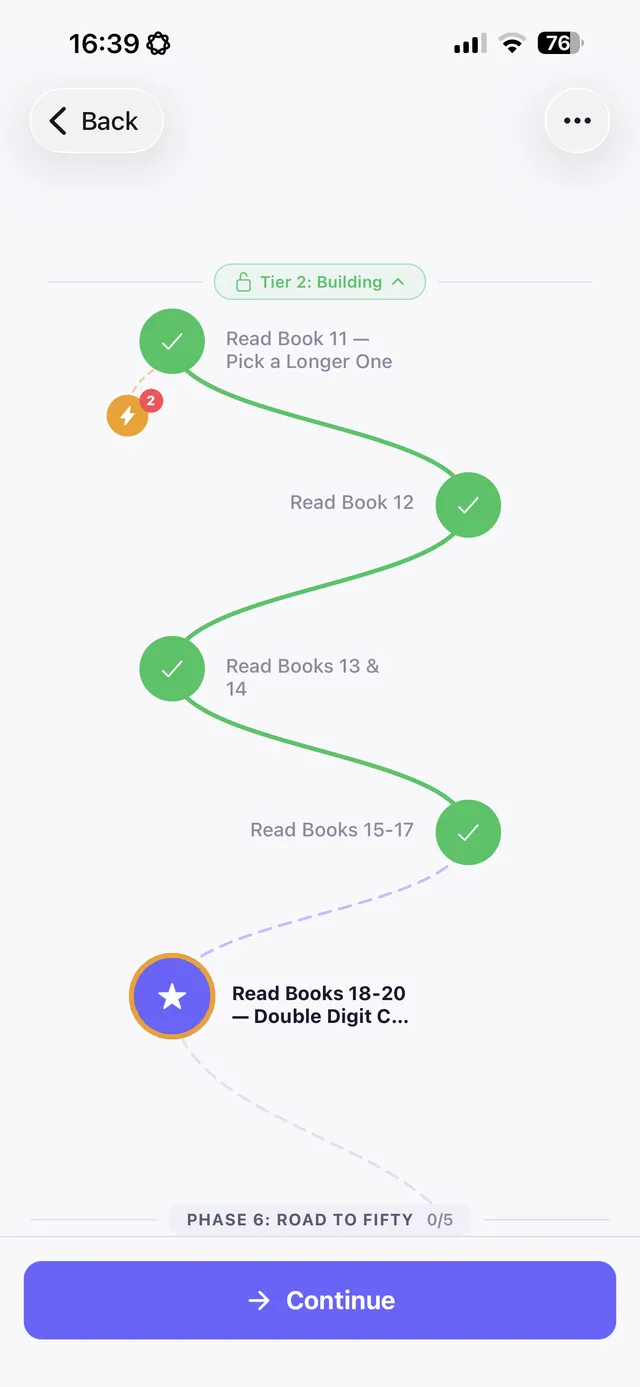
Replacify helps you swap a bad habit for a better one — with structured paths, an SOS button for cravings, a focus timer, and streaks that keep you going.


How to use habit stacking to replace a bad habit
Habit stacking isn't only for adding good habits. You can stack a replacement onto the cue of a bad habit:
- After I sit on the sofa after work (cue for scrolling), I'll put my phone on the charger and pick up a book.
- After I finish dinner (cue for sugar), I'll make a cup of tea and go for a short walk.
- After I feel stressed at work (cue for vaping), I'll do 60 seconds of box breathing.
This is replacement in action: same cue, new routine. How to break a bad habit and 60 replacement ideas.
Tips to make your stack stick
- Start tiny. One push-up, one page, one breath. Grow later.
- Stack one habit at a time. Add the next once the first is automatic.
- Make it obvious. Put the book on your pillow, the running shoes by the door.
- Celebrate immediately. A small "yes!" or a tick on your tracker reinforces the loop.
- Track it. Streaks make progress visible. Why streaks work.
Common mistakes
- Vague anchors ("in the morning").
- Anchors that don't happen daily.
- New habits that are too big to do right after the anchor.
- Stacking too many at once.
The bottom line
Habit stacking turns habits you already have into reminders for new ones. Use "After [anchor], I will [new habit]", keep the new habit tiny, pick specific anchors you never miss, and track it. You can also stack a healthy replacement onto the cue of a bad habit.
Replacify makes this practical: replacement paths break activities like running, reading, meditation or guitar into small steps you can stack onto your day, the focus timer turns "after I open my laptop" into a real session, and reminders per path (Pro) help you stay consistent.
Frequently asked questions
What is habit stacking?
Habit stacking is linking a new habit to an existing daily habit using the formula: After [current habit], I will [new habit].
What is an example of habit stacking?
After I pour my morning coffee, I'll write down my top priority for the day. Or: after I brush my teeth at night, I'll read one page of a book.
Who invented habit stacking?
It builds on implementation-intention research and BJ Fogg's Tiny Habits method; James Clear popularised the term in Atomic Habits.
Can habit stacking help break bad habits?
Yes. Stack a healthy replacement onto the cue of a bad habit — for example, after you sit on the sofa, put your phone away and pick up a book.
Replace the habit. Not yourself.
Replacify helps you swap a bad habit for a better one — with structured paths, an SOS button for cravings, a focus timer, and streaks that keep you going.