How to Quit Nicotine Pouches (Zyn and Others): A Step-by-Step Plan

Nicotine pouches — small white pouches you tuck under your lip, sold under brands such as Zyn — have exploded in popularity. They're smoke-free, vapour-free and easy to use anywhere, which is exactly the problem for many people: it's easy to have one in almost constantly. If you're figuring out how to quit nicotine pouches, you'll need a plan for both the nicotine and the habit.
The short answer
To quit nicotine pouches: count how many you use and at what strength, step down gradually (lower strength, fewer pouches, longer gaps) or pick a quit date, map your triggers, plan replacements for the mouth-and-hands habit, ride out cravings (they usually pass within minutes), and get support — free quitlines and a pharmacist or doctor can help with nicotine replacement options.
Why pouches are hard to quit
- Nicotine is highly addictive, and pouches come in a range of strengths.
- Constant use. Because they're discreet, many people keep one in for hours — at work, driving, gaming, even in bed.
- Oral habit. The physical act of placing a pouch becomes tied to cues like coffee, concentration or stress.
- Easy to escalate. People often move to stronger pouches or use more over time.
Step 1: Know your baseline
For three days, track:
| What to track | Why |
|---|---|
| Pouches per day | Your starting point |
| Strength (mg) | Total nicotine exposure |
| Time in mouth | Many people "stack" hours |
| Triggers | When and why you reach for one |
Step 2: Choose your approach
Step-down (tapering):
- Move to a lower strength.
- Reduce the number of pouches per day by one every few days.
- Increase the gap between pouches.
- Cut pouches in specific situations first (e.g. no pouches in bed, then no pouches while driving).
Quit date (cold turkey):
- Pick a date within two weeks, get rid of all tins on that day, and use support to get through withdrawal.
Both work. If you've tried one and failed, try the other. Talk to a pharmacist or doctor about nicotine replacement therapy if you're using a lot — they can advise on options; this article doesn't give dosing advice.
Step 3: Map your triggers
| Trigger | Replacement idea |
|---|---|
| Morning coffee | Sugar-free gum or mints with coffee |
| Focus work | A drink with a straw, a fidget, a timed focus session |
| Driving | Sunflower seeds or mints, a podcast |
| Gaming | Keep a water bottle; take breaks |
| Stress | 60 seconds of slow breathing, a short walk |
| After meals | Brush your teeth |
The habit loop — cue, routine, reward — explains why this matters. How the habit loop works.
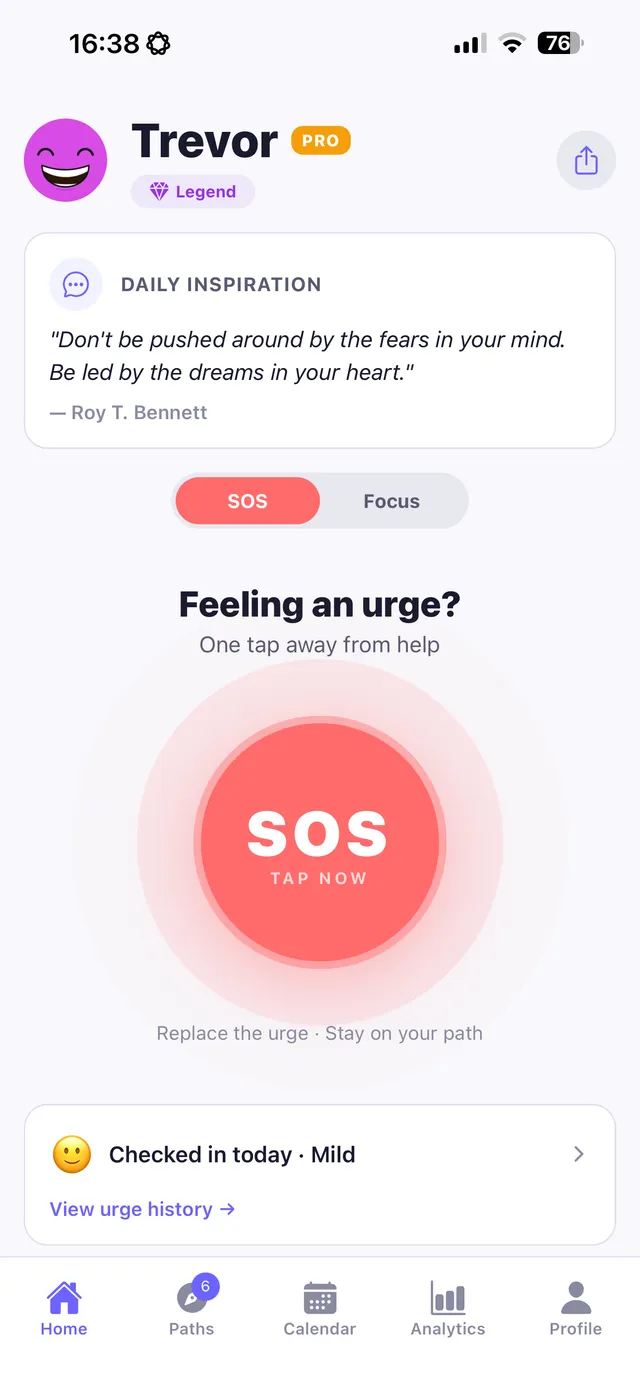
Replacify helps you swap a bad habit for a better one — with structured paths, an SOS button for cravings, a focus timer, and streaks that keep you going.


Step 4: Handle withdrawal
Nicotine withdrawal commonly causes irritability, anxiety, restlessness, poor concentration, increased appetite, sleep changes and strong cravings. Symptoms are usually most intense in the first few days and ease over the following weeks.
- Stay hydrated and eat regular meals.
- Exercise — even a short walk can take the edge off.
- Get extra sleep if you can.
- Warn people close to you that you might be irritable.
Step 5: Ride out cravings
A craving is a wave. When it hits: name it, delay five minutes, move, breathe slowly, and do your replacement. What to do when a craving hits.
Step 6: Get support
- US: call 1-800-QUIT-NOW for free support in your state, or text DITCHVAPE to 88709 for Truth Initiative's This is Quitting programme, which supports young people quitting nicotine.
- UK: your local NHS Stop Smoking Service and pharmacists can help.
- Tell a friend and ask them to check in.
If you slip
One pouch doesn't erase your progress. Don't "finish the tin" — get rid of it, note the trigger, and continue. What to do after you break your streak.
The bottom line
Quitting nicotine pouches means tackling both the nicotine and the constant, discreet habit. Know your baseline, step down or set a date, plan replacements for each trigger, ride out cravings and use free support. Withdrawal is temporary; the habit weakens every time you get through an urge.
Replacify can help with the habit side: choose Smoking or Vaping as the closest struggle, use the free, unlimited SOS button when a craving hits, log daily check-ins with an urge rating to see cravings fade, and build a replacement path to fill the moments pouches used to occupy.
Replacify is not a medical service. Talk to a pharmacist or doctor about nicotine replacement and withdrawal.
Frequently asked questions
How do I quit nicotine pouches?
Track your use, step down gradually or set a quit date, map your triggers and plan replacements, ride out cravings and get support from a quitline, pharmacist or doctor.
Are nicotine pouches addictive?
Yes. They contain nicotine, which is highly addictive, and their discreet design makes it easy to use them almost constantly.
How long does nicotine pouch withdrawal last?
Symptoms such as irritability, cravings and poor concentration are usually strongest in the first few days and ease over the following weeks.
Should I taper off nicotine pouches or quit cold turkey?
Both can work. Tapering — lower strength and fewer pouches — suits many people; others prefer a clean quit date. A pharmacist can advise on nicotine replacement.
Replace the habit. Not yourself.
Replacify helps you swap a bad habit for a better one — with structured paths, an SOS button for cravings, a focus timer, and streaks that keep you going.