You Broke Your Streak. Here's Exactly What to Do Next.

You had 34 days. Then you didn't. Now there's a red mark where the green ones used to be, and the instinct is to think the whole thing is ruined — so you might as well have another. This exact moment, not the slip itself, is where most people actually lose their habit for good.
Here's the thing nobody puts on the streak counter: a broken streak is data, not a verdict. What you do in the next 24 hours matters more than the 34 days that came before it.
Why the day after a slip is more dangerous than the slip itself
Psychologists call this the abstinence violation effect — a small slip triggers an all-or-nothing thought ("I already broke it, so today's a write-off too"), which turns one missed day into a full relapse. The slip breaks a routine. The thought is what breaks the habit.
This is the exact mechanism dopamine detox myths get wrong in the other direction too — treating willpower as a battery that's either full or empty, instead of a skill you rebuild one decision at a time. One missed day doesn't erase the neural pathways you built over the previous 34. It just means today needs a decision, same as any other day.
Step 1: separate the slip from your identity
"I broke my streak" is a fact. "I'm bad at this" is a story you're choosing to tell yourself, and it's the story that actually does the damage. Research on habit relapse consistently shows that people who treat a slip as a single event bounce back fast; people who treat it as proof of who they are spiral into giving up entirely.
Say the boring, accurate version out loud: "I did the old behavior once yesterday. That's it."
Step 2: don't try to make up for it
The second-most-common mistake, right after spiraling: over-correcting. Doubling a workout, promising to never slip again, adding extra rules. This sets a bar you can't sustain, which sets up the next slip. Building a habit takes 66 days on average, not 21 — the timeline was never a straight line to begin with. One missed rep doesn't need to be paid back; it just needs to be followed by the next one, on schedule, at the normal difficulty.
Step 3: figure out what actually triggered it — don't skip this
A slip is information about a gap in your plan, not a personal failing. Before you move on, spend two minutes answering:
- What was happening right before? Stress, boredom, a specific place, a specific person, a specific time of day.
- Did you have a replacement ready, or did you freeze? Cravings pass in about 15–20 minutes if you have something to do instead. Most slips happen in the gap where there's no plan B and the craving just... wins by default.
- Was this a one-off or a pattern? If the same trigger has caused three slips this month, that trigger — not your willpower — is the actual problem to solve.
Step 4: restart today, not "next Monday"
"I'll restart fresh on Monday" is the single biggest streak-killer in habit science, because it turns one missed day into five or six. There's no metabolic or psychological reason a Tuesday restart works worse than a Monday one — it's a made-up rule that just delays the thing that actually rebuilds the habit: doing it again, soon.
Replacify helps you swap a bad habit for a better one — with structured paths, an SOS button for cravings, a focus timer, and streaks that keep you going.


Step 5: look at the whole calendar, not the one red square
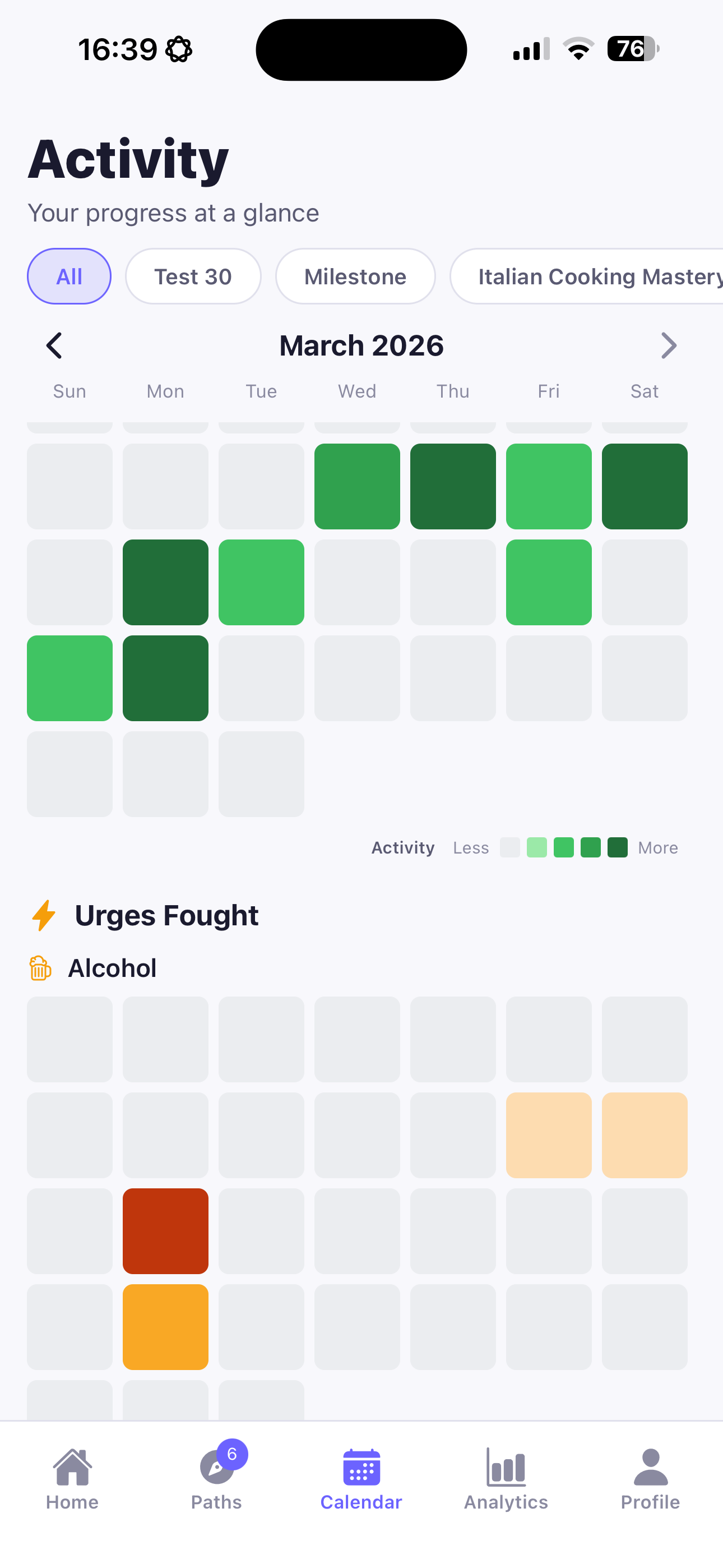
A single missed day in a month of green is a 97% success rate. Framed as "I broke my streak," it feels like 0%. This is exactly why habit streaks work as a mechanism but can backfire as a mindset — a pure streak counter makes one bad day feel like it erased the other 34, when it erased exactly one day. Looking at the month view instead of the counter is often enough to stop the spiral on its own.
What actually predicts whether you get back on track
It's not willpower, and it's not how long your previous streak was. The research points to one thing consistently: how fast you resume the behavior after a slip. People who go one day off then resume keep the habit. People who go one day off, feel bad about it, avoid thinking about it, and let a week pass — that's the group that doesn't come back.
Speed of recovery beats length of streak, every time.
The bottom line
A broken streak is not a broken habit — it's one missed rep in a much longer pattern. Name it plainly, skip the punishment, figure out the actual trigger so it doesn't repeat, and do the habit again today, not next Monday. The number that matters isn't how long your last streak was. It's how quickly you started the next one.
Frequently asked questions
Should I start my streak counter over at zero after a slip?
The counter resetting is just a number — it doesn't erase the habit you've built. What matters far more than the counter is resuming the behavior today rather than waiting for a symbolic 'fresh start' like next Monday.
Why do I want to give up completely after breaking a streak?
This is the abstinence violation effect — one slip triggers all-or-nothing thinking ('I already messed up, so today doesn't count either'), which turns a single missed day into a full relapse. Recognizing the thought pattern is usually enough to interrupt it.
How long should I wait before restarting a habit after a slip?
Same day, ideally. Waiting for Monday or 'a fresh start' is the most common reason a one-day slip turns into a week-long relapse. There's no benefit to delaying — resume as soon as the next opportunity comes up.
Is one missed day going to undo my progress?
No. A single slip in a month of consistent days is still a high success rate — the habit pathways you've built don't disappear after one lapse. The actual risk isn't the missed day itself, it's the spiral of skipped days that can follow it if you don't restart quickly.
Replace the habit. Not yourself.
Replacify helps you swap a bad habit for a better one — with structured paths, an SOS button for cravings, a focus timer, and streaks that keep you going.