How to Quit Sugar (or Cut Way Back): A Realistic Plan for Cravings and Habits
The biscuit with your coffee, the sweet treat after dinner, the chocolate at 3pm, the "just one" that turns into half a packet. Sugar habits are woven into daily routines, which is why "I'll just stop eating sugar" rarely survives the week. Here's how to quit sugar — or cut right back — by changing the routines around it, not just relying on willpower.
The short answer
To quit sugar: aim to cut added (free) sugar, not natural sugar in whole foods, find where your sugar comes from (including drinks and "healthy" snacks), cut sugary drinks first, change the routines that trigger sweet cravings, eat regular meals with protein and fibre, and have planned alternatives for your usual sugar moments. Cravings usually ease within a couple of weeks.
What "quitting sugar" should mean
Health guidance focuses on free sugars — sugars added to food and drinks, plus sugar in honey, syrups and fruit juice. The sugar naturally found in whole fruit, vegetables and milk isn't the target.
| Guideline | Recommendation |
|---|---|
| World Health Organization | Free sugars under 10% of daily energy; ideally under 5% |
| NHS (UK), adults | No more than 30 g of free sugars a day |
| American Heart Association | Limit added sugar to about 25 g/day for women and 36 g/day for men |
For context, a standard can of cola contains roughly 35 g of sugar — more than a whole day's recommended limit in the UK.
Step 1: Find your sugar
For a few days, note everything sweet you eat and drink. Look especially at:
- Drinks: fizzy drinks, energy drinks, sweetened coffees, juice, smoothies.
- Breakfast: cereals, flavoured yoghurts, granola.
- Snacks: biscuits, cereal bars, "protein" bars, dried fruit snacks.
- Sauces: ketchup, BBQ sauce, some pasta sauces and dressings.
Labels list sugar per 100 g; in the UK, over 22.5 g per 100 g is considered high.
Step 2: Cut drinks first
Sugary drinks are the easiest big win. Swap to water, sparkling water with citrus, unsweetened tea or coffee, or reduce the sugar you add gradually.
Step 3: Map your sugar moments
Sugar cravings are often more about habit and emotion than hunger.
| Sugar moment | Likely need | Replacement |
|---|---|---|
| 3pm at work | Energy, a break | Walk outside, protein snack, water |
| After dinner | Routine "dessert" signal | Tea, brushing teeth, a short walk |
| Stressed | Comfort | Breathing, a call to a friend |
| Watching TV | Something to do with hands | Nuts in a small bowl, fruit, sparkling water |
| Tired | Quick energy | Earlier bedtime, a proper meal |
The habit loop explains why swapping the routine matters.
Replacify helps you swap a bad habit for a better one — with structured paths, an SOS button for cravings, a focus timer, and streaks that keep you going.


Step 4: Eat to reduce cravings
- Regular meals. Skipping meals makes sugar cravings stronger later.
- Protein and fibre at each meal help keep you fuller for longer.
- Plan snacks — fruit with nuts, yoghurt, hummus with vegetables.
- Sleep. Short sleep is linked to stronger cravings for high-sugar foods.
Step 5: Change your environment
- Don't keep your trigger foods at home.
- Put fruit where the biscuits used to be.
- Shop with a list and not hungry.
- Take the long route past the vending machine.
Step 6: Handle cravings
A craving is a wave. Name it, wait five to ten minutes, drink some water, move, and have your planned alternative. Most pass. What to do when a craving hits.
Cold turkey or gradual?
Both work for different people. Some find it easier to cut added sugar completely for a few weeks; others prefer to reduce step by step — halving the sugar in coffee, then removing it. If you've tried one approach and failed, try the other. There's more on this trade-off in how to quit any habit — how to break a bad habit.
What to expect
- Days 1–5: strongest cravings, especially at your usual sugar times.
- Weeks 1–2: cravings usually start to ease; many people find sweet foods taste sweeter.
- Weeks 3+: new routines feel normal.
A note on health conditions
If you have diabetes, an eating disorder or another medical condition, speak to your doctor or a dietitian before making big changes to your diet. And if you find yourself in a cycle of restricting and then bingeing, a strict "quit sugar" approach may not be right for you — support from a professional can help.
The bottom line
Quitting sugar is about cutting free sugars, starting with drinks, changing the routines that trigger cravings, eating regular balanced meals and having alternatives ready. Cravings are strongest in the first days and fade as new habits take hold.
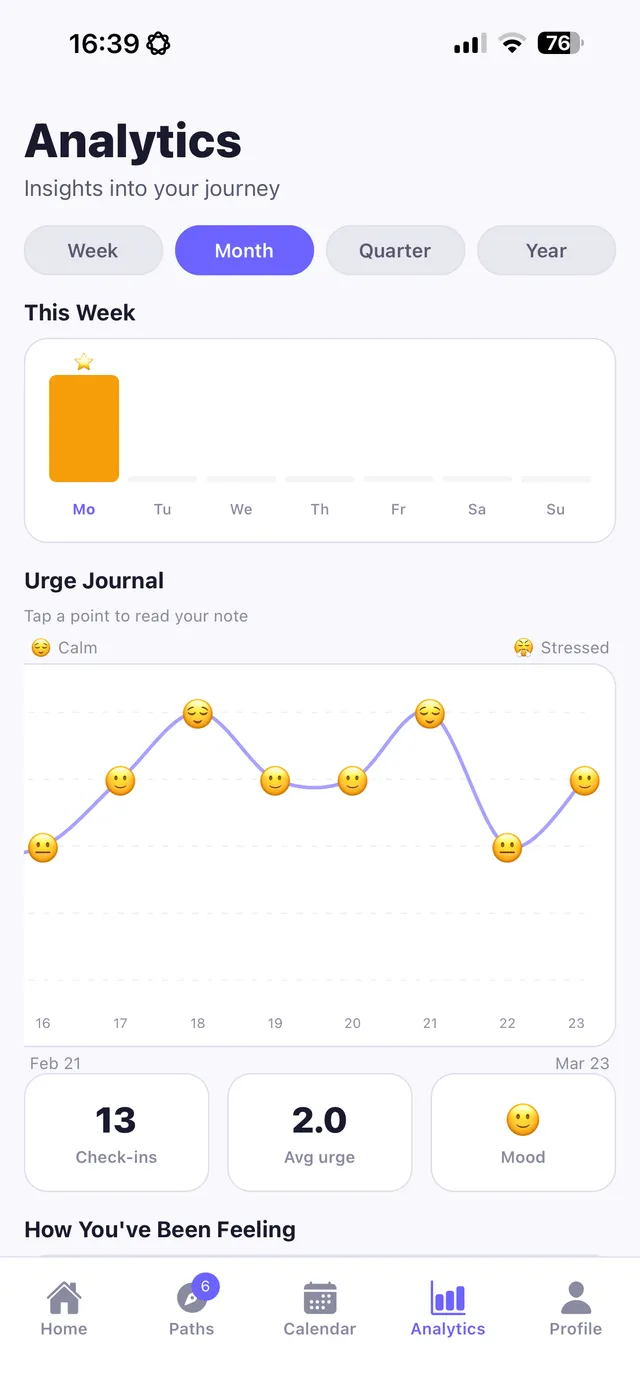
Replacify can support that change: choose Sugar (or Junk Food / Binge Eating, or Late-Night Snacking) as your struggle, log daily check-ins with an urge rating so you can see cravings fade, tap SOS for a quick activity when a craving hits, and try a replacement path like Indian, Italian or Chinese cooking.
Replacify is not a medical or nutrition service.
Frequently asked questions
How do I quit sugar?
Focus on cutting added (free) sugars, start with sugary drinks, identify the routines that trigger cravings, eat regular meals with protein and fibre, change your environment and have planned alternatives ready.
How much sugar should I eat per day?
The NHS recommends adults have no more than 30 g of free sugars a day. The WHO recommends free sugars below 10% of daily energy, ideally below 5%.
How long do sugar cravings last when you quit?
Cravings are usually strongest in the first few days and often ease within one to two weeks as your routines change.
Do I need to stop eating fruit to quit sugar?
No. Guidelines focus on free sugars — added sugars, honey, syrups and juice. Sugar naturally found in whole fruit isn't the target.
Replace the habit. Not yourself.
Replacify helps you swap a bad habit for a better one — with structured paths, an SOS button for cravings, a focus timer, and streaks that keep you going.