How to Stop Overthinking: 9 Techniques to Get Out of Your Head

You replay a conversation from three days ago. You rehearse ten versions of a message before sending it. You lie awake running through everything that could go wrong tomorrow. Overthinking feels like it's helping — like you're solving something — but mostly it just keeps you stuck. Here's how to stop overthinking and get back to actually living your life.
The short answer
Overthinking usually takes two forms: rumination (replaying the past) and worry (catastrophising about the future). To stop overthinking: notice and label it, give worries a scheduled slot, turn thoughts into one concrete action, get into your body with movement or breathing, limit reassurance-seeking, and fill your attention with absorbing activities. If it's constant and affecting your life, talk to a professional.
Rumination vs worry
| Rumination | Worry | |
|---|---|---|
| Focus | The past | The future |
| Sounds like | "Why did I say that?" | "What if it goes wrong?" |
| Feels like | Regret, self-criticism | Anxiety, dread |
| Helpful version | Learning a lesson once | Planning one next step |
Both are normal in small doses. They become a problem when they loop without producing anything useful.
Why we overthink
- It feels productive. Thinking about a problem feels like working on it, even when you're going in circles.
- Uncertainty is uncomfortable. Your brain tries to "solve" it by imagining every outcome.
- It's a habit. Rumination and worry can become automatic responses to certain cues — quiet moments, bedtime, social situations. How the habit loop works.
- Stress and low mood increase it.
9 techniques to stop overthinking
1. Notice and name it
Say to yourself: "I'm overthinking" or "This is worry." Labelling a thought creates a little distance between you and it.
2. Ask: is this solvable right now?
If yes → decide one next step and do it or schedule it. If no → it's a worry for later or something to let go. Circling doesn't change the answer.
3. Schedule worry time
Set aside 15 minutes each day — early evening works well — to write down worries and possible next steps. When a worry pops up outside that time, note it and postpone it. Research on "worry postponement" has found it can reduce how much time people spend worrying.
4. Write it out
Getting thoughts on paper stops them spinning. Try: What happened? What am I afraid of? What's one thing I can do? Writing a specific to-do list before bed has also been linked to falling asleep faster.
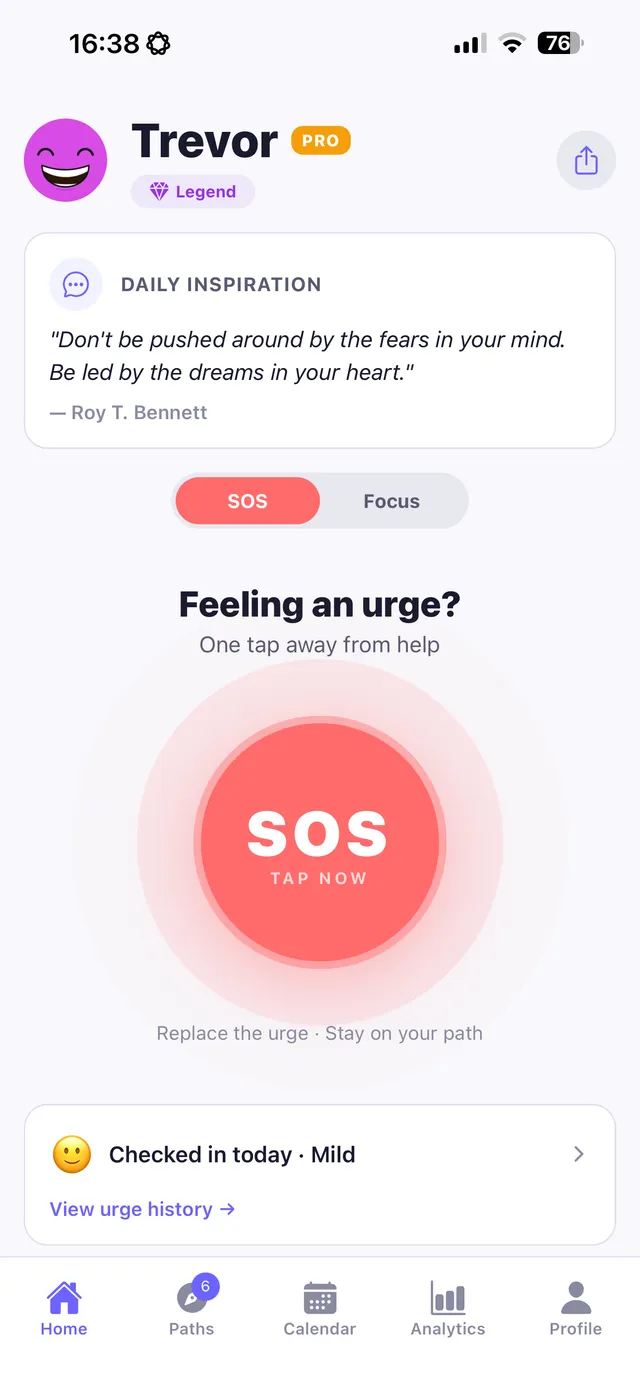
Replacify helps you swap a bad habit for a better one — with structured paths, an SOS button for cravings, a focus timer, and streaks that keep you going.


5. Move your body
A brisk walk, a workout, stretching or even cleaning pulls attention out of your head and lowers physical tension. Exercise is also consistently linked to better mood.
6. Slow your breathing
Long, slow exhales calm the body's stress response. Try breathing in for four and out for six to eight, for a minute or two.
7. Stop over-researching and over-asking
Endless googling or asking friends for reassurance brings short relief but feeds the loop. Set a limit: "I'll research this for 20 minutes, then decide."
8. Get absorbed in something
Overthinking thrives in idle moments. Activities that fully absorb your attention — a sport, music, drawing, cooking, a puzzle, a good book — give your mind something better to do. Replacement ideas by need.
9. Practise mindfulness
Mindfulness teaches you to notice thoughts without following each one. Even a few minutes a day of breath-focused meditation can make it easier to step out of a loop.
Overthinking at night
Nights are often the worst: no distractions, and a tired brain. Try a short wind-down with screens off, a quick brain-dump on paper, and a calming technique in bed. If you can't sleep after about 20 minutes, get up and do something calm until you feel sleepy.
When to get help
If overthinking is constant, comes with anxiety or low mood, affects your sleep, work or relationships, or you have intrusive thoughts that distress you, speak to a doctor or mental health professional. Cognitive behavioural therapy and other approaches are effective for rumination and worry. If you're in crisis, contact emergency services or a crisis line right away.
The bottom line
Overthinking feels like problem-solving but usually isn't. Name it, decide whether there's an action, give worries a scheduled slot, write things down, move, breathe and get absorbed in something that deserves your attention. With practice, the loops get shorter.
Replacify includes Overthinking as one of its struggles. When you're caught in a spiral, the free SOS button gives you a matched activity and a guided timer. Replacement paths like meditation, journaling, running or drawing give your mind somewhere better to go, and daily check-ins help you notice patterns over time.
Replacify is not a medical or therapy service.
Frequently asked questions
How do I stop overthinking?
Notice and label it, decide whether there's an action you can take, schedule worry time, write your thoughts down, move your body, slow your breathing and get absorbed in activities that hold your attention.
What is the difference between rumination and worry?
Rumination focuses on the past, replaying what happened. Worry focuses on the future, imagining what might go wrong.
Why do I overthink at night?
Night is quiet and free of distractions, so thoughts get your full attention, and tiredness makes it harder to step out of loops.
Is overthinking a sign of anxiety?
It can be. Constant worry or rumination that affects your daily life is worth discussing with a doctor or mental health professional.
Replace the habit. Not yourself.
Replacify helps you swap a bad habit for a better one — with structured paths, an SOS button for cravings, a focus timer, and streaks that keep you going.