How to Stop Procrastinating: 10 Science-Backed Strategies That Work Today

You know what you need to do. You have time to do it. And yet you're reorganising your desktop, checking your phone, or suddenly deep-cleaning the kitchen. Procrastination is one of the most common struggles there is — and it's rarely about laziness. Once you understand what's really going on, learning how to stop procrastinating becomes much more practical.
The short answer
Procrastination is mostly emotion avoidance: putting off a task because it makes you feel bored, anxious, confused or overwhelmed. To stop procrastinating: make starting tiny (two minutes), break tasks into concrete next steps, remove distractions, use timed focus sessions, be kind to yourself after slips, and plan when and where you'll do the work.
Why we procrastinate
Researchers increasingly describe procrastination as a problem of managing emotions, not time. The task triggers an unpleasant feeling — boredom, fear of failure, uncertainty, resentment — and avoiding it gives immediate relief. That relief rewards the avoidance, making it more likely next time. Classic habit loop: cue (the task), routine (avoidance), reward (relief).
Studies have also found that self-forgiveness after procrastinating can reduce future procrastination, while beating yourself up tends to feed the cycle.
10 strategies to stop procrastinating
| Strategy | Best for |
|---|---|
| Two-minute start | Can't get going |
| Next physical action | Vague, overwhelming tasks |
| Timeboxing / focus sessions | Drifting attention |
| Remove distractions | Phone and tab-switching |
| Implementation intentions | "I'll do it later" |
| Temptation bundling | Boring tasks |
| Make it public | Low urgency |
| Lower the bar | Perfectionism |
| Self-forgiveness | Guilt spirals |
| Reward progress | Long projects |
1. The two-minute start
Commit to working on the task for just two minutes. Starting is usually the hardest part; once you're in, momentum often carries you. If you stop after two minutes, that's still two minutes more than before.
2. Define the next physical action
"Write report" is overwhelming. "Open the doc and write three bullet points for the intro" is doable. Break tasks down until the next step is obvious and small.
3. Use timed focus sessions
Work for a set time — 25 minutes is popular, from the Pomodoro Technique — then take a short break. A timer makes the task finite and gives your brain permission to stop.
4. Remove distractions before you start
Put your phone in another room or in a focus mode, close unrelated tabs, and have everything you need ready. Every obstacle between you and distraction helps. How to quit doomscrolling.
Replacify helps you swap a bad habit for a better one — with structured paths, an SOS button for cravings, a focus timer, and streaks that keep you going.


5. Use "if–then" plans
Implementation intentions — "If it's 9:00 on Tuesday, then I'll open the budget spreadsheet at my desk" — are one of the best-studied tools in behaviour change. They turn vague intentions into automatic cues.
6. Bundle it with something you like
Pair the boring task with something enjoyable: your favourite playlist while doing admin, a special coffee only while studying.
7. Make it public
Tell someone what you'll finish and by when. A little social accountability goes a long way.
8. Lower the bar
Perfectionism fuels procrastination. Aim for a rough first draft, an ugly first version, "good enough for now". You can improve it later — but only once it exists.
9. Forgive yourself
Procrastinated all morning? Acknowledge it, don't spiral, and start with a two-minute task now. Guilt makes the task feel even worse, which makes avoiding it more tempting.
10. Reward progress, not just completion
Track small wins — sessions completed, steps done. Seeing a streak of focused days builds motivation for long projects. Why streaks work.
A 20-minute anti-procrastination routine
- Minute 0–2: Write the task on paper and underline the very next action.
- Minute 2–3: Phone into another room; close every unrelated tab.
- Minute 3–5: Two-minute start — just open the file and do the smallest piece.
- Minute 5–20: Keep going in a 15-minute timed session.
- Minute 20: Stop, tick it off, and decide if you'll do one more session.
Most days, the hardest part is the first two minutes. After that, you'll often keep going on your own.
When procrastination might be something more
If you struggle to start or finish tasks in almost every area of life, or procrastination comes with persistent low mood, anxiety or difficulty concentrating, it may be worth talking to a doctor. ADHD, depression and anxiety can all show up as chronic procrastination, and support is available.
The bottom line
Procrastination is avoidance of uncomfortable feelings, not a character flaw. Make starting tiny, define the next physical step, remove distractions, use timed focus sessions, plan when and where, and forgive yourself when you slip. Then do it again tomorrow.
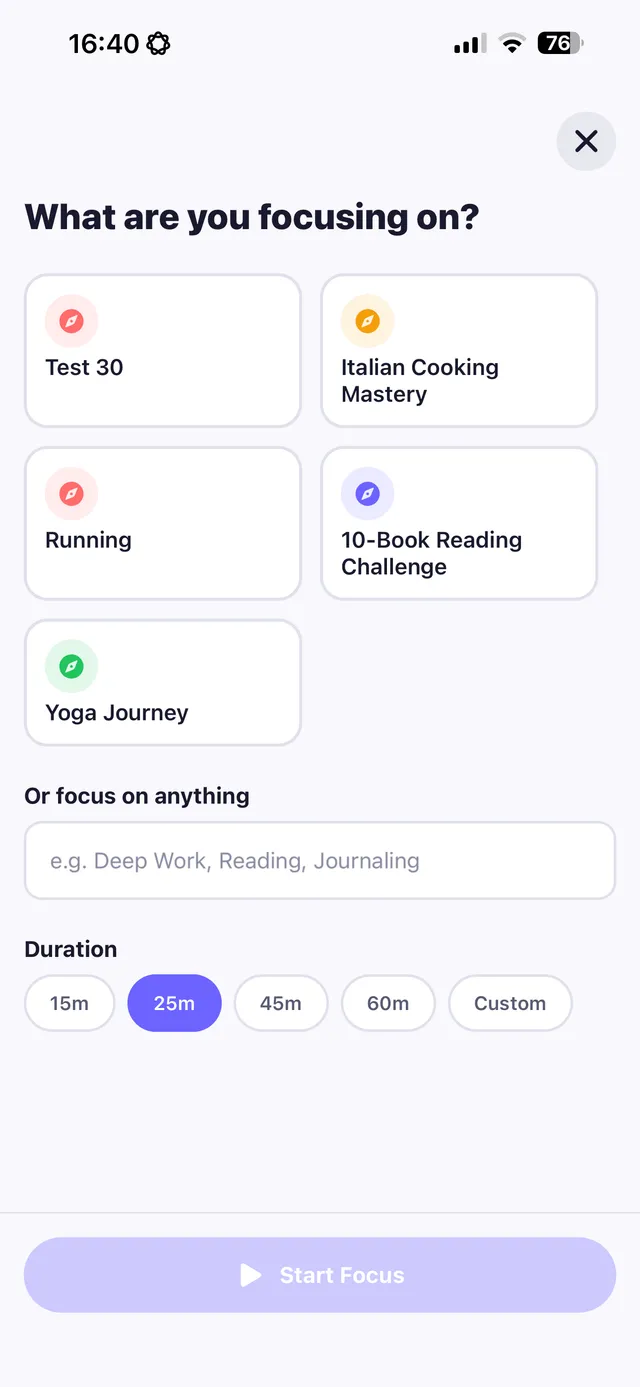
Replacify treats procrastination as a habit you can replace. Choose Procrastination as your struggle, use the focus timer (15, 25, 45 or 60 minutes) to work in short, phone-free blocks, link sessions to a replacement path so they automatically complete steps, and build a streak you can see on the heatmap calendar.
Frequently asked questions
Why do I procrastinate?
Usually to avoid an uncomfortable feeling linked to a task — boredom, anxiety, uncertainty or fear of failure. Avoiding it brings short-term relief, which reinforces the habit.
How do I stop procrastinating right now?
Commit to two minutes on the task, define the very next small action, put your phone out of reach and set a timer for a short focus session.
Does the Pomodoro Technique help with procrastination?
Many people find it helpful because it makes tasks feel finite: work for about 25 minutes, then take a short break.
Is procrastination a sign of ADHD?
Not necessarily — everyone procrastinates. But chronic difficulty starting and finishing tasks across many areas of life can be linked to ADHD, depression or anxiety, so it's worth talking to a doctor if it's persistent.
Replace the habit. Not yourself.
Replacify helps you swap a bad habit for a better one — with structured paths, an SOS button for cravings, a focus timer, and streaks that keep you going.