How to Stop Sports Betting: Practical Steps, Blocking Tools and Where to Get Help

A few years ago, betting on sports meant going somewhere. Now it's an app you can open during every match, with live odds changing by the second. Researchers and public health bodies — including the US National Institute on Drug Abuse — have raised concerns about rising gambling harm as mobile sports betting has expanded, particularly among young men. If you're searching for how to stop sports betting, that's already a meaningful step.
The short answer
To stop sports betting: be honest about the pattern, block access (self-exclusion, gambling blockers, delete apps, ask your bank to block gambling transactions), hand over financial control temporarily, replace the time and excitement betting filled, plan for game-day triggers, and get support — free, confidential helplines and counselling exist and work. You don't have to do this alone.
Signs betting has become a problem
- Betting more than you planned, or more often.
- Chasing losses — betting to win back what you lost.
- Hiding betting from partners, family or friends.
- Borrowing money or using money meant for bills.
- Feeling restless or irritable when you try to stop.
- Betting to escape stress or low mood.
- Thinking about betting a lot, even when you're not watching sport.
If several of these sound familiar, it's worth taking seriously. Gambling disorder is a recognised condition, and it's treatable.
Why sports betting is so hard to stop
- Always available. The app is in your pocket, every day, every match.
- Live betting. In-play bets create rapid cycles of tension and release.
- Near misses and "almost" wins feel like skill, keeping you going.
- Promotions and free bets pull you back in.
- It's tied to something you love. Watching football becomes a trigger.
Step-by-step: how to stop
1. Block access
Make betting physically harder:
| Tool | What it does |
|---|---|
| Operator self-exclusion | Blocks your account with a specific bookmaker |
| National self-exclusion (e.g. GAMSTOP in Great Britain) | Excludes you from all licensed online operators in that scheme |
| Gambling blocking software | Blocks gambling sites and apps on your devices |
| Bank gambling blocks | Many banks let you block gambling transactions in their app |
| Delete apps and accounts | Removes one-tap access |
In the US, self-exclusion programmes vary by state; check your state's gaming regulator.
2. Put someone else between you and the money
Temporarily let a trusted person help manage your finances, reduce card limits, or remove saved cards from your phone. It's not about shame — it's about adding friction.
3. Map your triggers
Common ones: big matches, weekends, payday, boredom, stress, group chats sharing tips, adverts. For each, decide what you'll do instead.
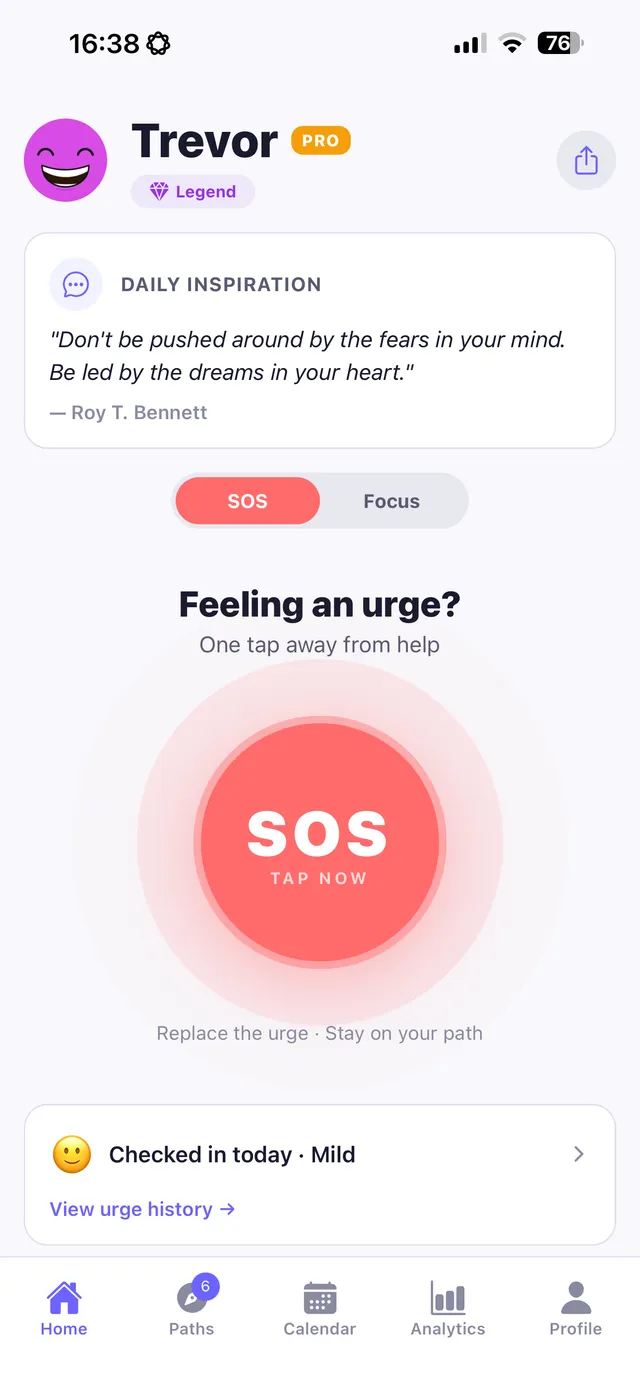
Replacify helps you swap a bad habit for a better one — with structured paths, an SOS button for cravings, a focus timer, and streaks that keep you going.
4. Replace the excitement and the time
Betting often fills a need for excitement, challenge or connection. Find something that gives some of that back:
- Play sport instead of betting on it — five-a-side, running, climbing.
- Fantasy leagues or predictions games without money, if they don't trigger you.
- A skill-based challenge: learning an instrument, a language, coding.
- Watching matches with friends who don't bet, or watching fewer.
Replacing a habit works better than just stopping.
5. Plan for game days
Before a big match: phone blocker on, apps gone, money access limited, a plan for who you're watching with. If an urge hits, use a short SOS routine — name it, delay five minutes, move, breathe, do something else. What to do when a craving hits.
6. Deal with debts early
Money problems create pressure to "win it back". Free debt advice services can help you make a plan and talk to creditors.
7. Get support
You don't have to do this alone:
- US: the National Problem Gambling Helpline, 1-800-MY-RESET, is free and confidential. 1-800-GAMBLER also connects you with local help.
- UK: the National Gambling Helpline (run by GamCare) on 0808 8020 133, free, 24/7.
- Gamblers Anonymous meetings are available in many countries, in person and online.
- Talk to a doctor. Counselling, including cognitive behavioural therapy, has good evidence for gambling problems.
If you're having thoughts of suicide, contact emergency services or a crisis line immediately — in the US call or text 988; in the UK call Samaritans on 116 123.
If you slip
A bet after a period of not betting doesn't wipe out your progress. Tell someone, check what triggered it, tighten your blocks and continue. What to do after you break your streak.
The bottom line
Stopping sports betting is about friction, replacement and support: block access, limit your money, plan for game-day triggers, replace the excitement with something that doesn't cost you, and use the free helplines. It's a recognised, treatable problem — and asking for help is a strength.
Replacify can support the daily side of that: select Gambling as your struggle, use the free SOS button when an urge hits during a match, build a replacement path like running or guitar, and track your struggle-free streak on the heatmap calendar.
Replacify is not a medical or treatment service. If gambling is affecting your finances, relationships or mental health, please contact a helpline or a doctor.
Frequently asked questions
How do I stop sports betting?
Block access with self-exclusion, blocking software and bank gambling blocks, limit your access to money, plan for game-day triggers, replace the excitement with other activities and get support from a helpline or counsellor.
How do I know if my betting is a problem?
Warning signs include chasing losses, betting more than planned, hiding it, borrowing money to bet, feeling irritable when you try to stop and betting to escape stress.
What is gambling self-exclusion?
Self-exclusion lets you block yourself from gambling with operators for a set period. In Great Britain, GAMSTOP covers licensed online operators; in the US, programmes vary by state.
Where can I get help for gambling?
In the US, call 1-800-MY-RESET (National Problem Gambling Helpline) or 1-800-GAMBLER. In the UK, call the National Gambling Helpline on 0808 8020 133. Gamblers Anonymous and your doctor can also help.
Replace the habit. Not yourself.
Replacify helps you swap a bad habit for a better one — with structured paths, an SOS button for cravings, a focus timer, and streaks that keep you going.