Stoptober 2026: How to Quit Smoking in 28 Days (and Stay Quit)

Every October, thousands of smokers in England try to quit together as part of Stoptober, the NHS-backed stop smoking campaign. The idea is simple: stop for 28 days. Get there and, according to the campaign, you're around five times more likely to stay smoke-free for good. Whether you started on 1 October or you're starting today, here's how to give yourself the best chance.
The short answer
Stoptober is a 28-day quit smoking challenge run by the Department of Health and Social Care in England through the NHS, starting on 1 October 2026. To quit successfully: set your quit day, get free support (the NHS Quit Smoking app, local stop smoking services, pharmacists), use stop-smoking aids if suitable, plan for triggers, and have a routine for cravings. Combining support with aids gives the best chance.
Why 28 days?
The first few weeks are when withdrawal and cravings are strongest and relapse is most common. Reaching the four-week mark means you've got through the worst of it and have started building new routines. That's why the campaign focuses on 28 days rather than "forever" — it's a goal you can actually picture.
What happens when you stop smoking
The NHS describes a timeline of benefits that start almost immediately:
| Time after your last cigarette | What starts to happen |
|---|---|
| 20 minutes | Pulse rate starts returning to normal |
| 8 hours | Oxygen levels recovering; harmful carbon monoxide levels in the blood halved |
| 48 hours | Carbon monoxide eliminated; taste and smell begin to improve |
| 72 hours | Breathing feels easier; energy levels increase |
| 2–12 weeks | Circulation improves |
| 3–9 months | Coughs, wheezing and breathing problems improve |
| 1 year | Risk of heart attack falls to about half that of a smoker |
| 10 years | Risk of lung cancer falls to about half that of a smoker |
Your Stoptober quit plan
1. Choose your quit day and prepare
Pick a day — ideally now, if you haven't already. Remove cigarettes, lighters and ashtrays from your home, car and bag. Tell people you're quitting.
2. Get free support
- The NHS Quit Smoking app gives daily support and a personal plan.
- Local stop smoking services offer free one-to-one or group support and access to aids.
- Pharmacists can advise on nicotine replacement therapy.
- NHS Smokefree National Helpline: 0300 123 1044.
Using support and a stop-smoking aid together gives you the best chance of quitting.
3. Consider stop-smoking aids
Options include nicotine replacement therapy (patches, gum, lozenges, sprays), prescription medicines, and — in England, where the NHS supports them as a quitting tool for adult smokers — vapes. Talk to a pharmacist, GP or stop smoking service about what suits you. The goal is to stop smoking; if you use a vape, many services will help you eventually stop that too. How to quit vaping.
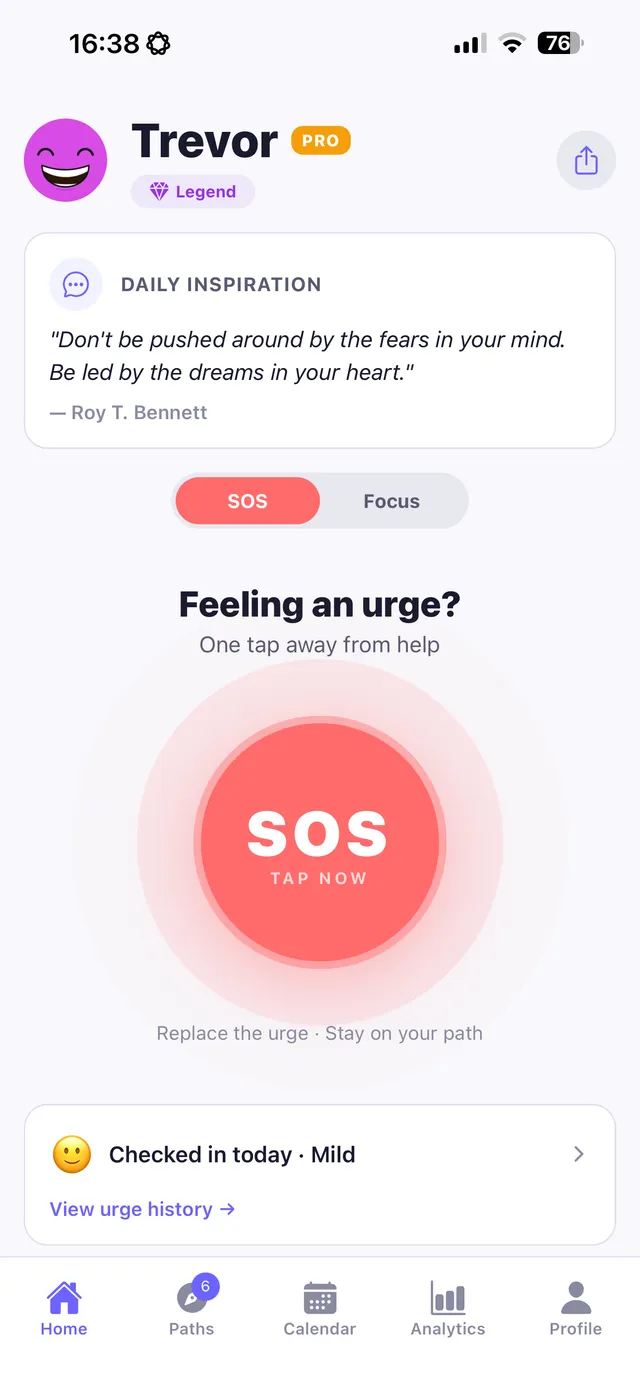
Replacify helps you swap a bad habit for a better one — with structured paths, an SOS button for cravings, a focus timer, and streaks that keep you going.


4. Plan for your triggers
Most cigarettes are attached to cues: first thing in the morning, with coffee, after meals, on breaks, with alcohol, when stressed. For each, decide in advance what you'll do instead:
| Trigger | Replacement |
|---|---|
| Morning coffee | Change the routine — have it somewhere else, or switch to tea for a while |
| After meals | Get up, brush your teeth, go for a short walk |
| Work break | Walk a different route, call someone |
| Stress | 60 seconds of slow breathing |
| Drinking | Avoid alcohol for the first weeks if you can |
Replacing the routine — not just removing the cigarette — is the core of breaking any habit.
5. Ride out cravings
Cravings usually peak and pass within minutes. When one hits: name it, delay five minutes, move, breathe slowly and do your replacement. What to do when a craving hits.
6. Reward yourself
Put the money you would have spent on cigarettes aside and watch it grow. Treat yourself at the one-week, two-week and 28-day marks.
What if you have one?
A slip isn't a failure. Don't use it as a reason to give up — throw away the rest, work out what triggered it, and continue. Many people who quit for good had several attempts first. What to do after you break your streak.
Not in England?
Stoptober is an England campaign, but the approach works anywhere. In the US, call 1-800-QUIT-NOW for free quitline support in your state.
The bottom line
Stoptober asks you to stop smoking for 28 days — a manageable goal that dramatically improves your chances of quitting for good. Get free support, consider stop-smoking aids, plan for triggers, ride out cravings with a simple routine, and reward yourself along the way.
Replacify can be your daily companion through Stoptober and beyond: pick Smoking as your struggle, use the free, unlimited SOS button when cravings hit, start a replacement path like running or kettlebell to fill the time, and watch your struggle-free streak build day by day.
Replacify is not a medical service. Speak to a pharmacist, GP or stop smoking service about stop-smoking aids.
Frequently asked questions
What is Stoptober?
Stoptober is an annual 28-day stop smoking challenge in England, run by the Department of Health and Social Care through the NHS. It starts on 1 October.
Why is Stoptober 28 days?
The first few weeks are when cravings and relapse are most common. According to the campaign, people who stop for 28 days are around five times more likely to quit for good.
What's the best way to quit smoking?
Combining support — such as a stop smoking service, the NHS Quit Smoking app or a quitline — with a stop-smoking aid like nicotine replacement therapy gives the best chance of success.
Can I still do Stoptober if I start late?
Yes. Any day is a good day to quit. Start your own 28 days today and use the same support.
Replace the habit. Not yourself.
Replacify helps you swap a bad habit for a better one — with structured paths, an SOS button for cravings, a focus timer, and streaks that keep you going.