The 4 Laws of Behavior Change, Explained With Real Examples

Most habit advice is vague — "just be more consistent," "find your motivation." James Clear's 4 Laws of Behavior Change, from Atomic Habits, are useful precisely because they're specific. They map onto the cue-craving-response-reward loop and give you four separate levers to pull, instead of one vague concept called "discipline."
The short answer
To build a habit: make the cue obvious, make the craving attractive, make the response easy, and make the reward satisfying. To break a habit: make the cue invisible, make it unattractive, make it difficult, and make it unsatisfying. Most stuck habits are failing at one specific law — find which one, and fix that specific stage instead of trying to "be more disciplined" in general.
Law 1: Make it obvious (or invisible)
Habits need a cue to trigger them. If the cue is missing or buried, the habit never starts — no matter how motivated you are.
To build: Put your running shoes by the door. Set out your vitamins next to the coffee maker. Use habit stacking — "after I pour my coffee, I will take my vitamins" — to attach the new habit to an existing, obvious cue. See habit stacking for the full formula.
To break: Remove the cue entirely. Delete the app instead of relying on willpower every time you see the icon. Keep cigarettes out of the house rather than "just not smoking them." If you can't see it, you can't crave it as easily.
Law 2: Make it attractive (or unattractive)
Craving is the motivational force behind a habit — how much you want the reward, not just whether you can access it.
To build: Pair a habit you need to do with one you want to do — listen to your favorite podcast only while doing chores. Join a group where the habit is the norm; watching other people do something makes it socially attractive. This is part of why an accountability partner works — the social reward makes the habit more appealing.
To break: Reframe the habit honestly. Instead of "I can't have this," try "this doesn't help me become who I want to be." Highlight the real downsides — how you feel an hour after doom-scrolling, not just in the moment.
Law 3: Make it easy (or difficult)
This is the law most people underestimate. Motivation fluctuates; friction is constant. Reduce the number of steps between you and the habit, and it happens far more often — regardless of how you feel that day.
To build: Use the two-minute rule — scale the habit down until the first step takes less than two minutes. Prep your gym bag the night before. Keep a book on your nightstand instead of your phone.
To break: Add friction. Log out of social apps so you have to re-enter a password each time. Leave your credit card at home if impulse spending is the issue. Put the junk food on a high shelf in the back of the pantry.
Law 4: Make it satisfying (or unsatisfying)
Humans repeat behaviors that feel rewarding immediately. The problem with many good habits is the payoff is delayed (fitness, saving money), while many bad habits pay off instantly (a snack, a scroll). Closing that gap matters.
To build: Give yourself an immediate, small reward after the habit — check a box, log it in an app, treat yourself to something small and unrelated to undoing the habit. Visible progress, like a streak, is its own reward. See how habit streaks work.
To break: Add an immediate cost. Tell a friend you'll owe them $5 every time you skip your plan. Make the habit visible to someone whose opinion you care about — public accountability makes the "reward" of cheating feel worse, not better.
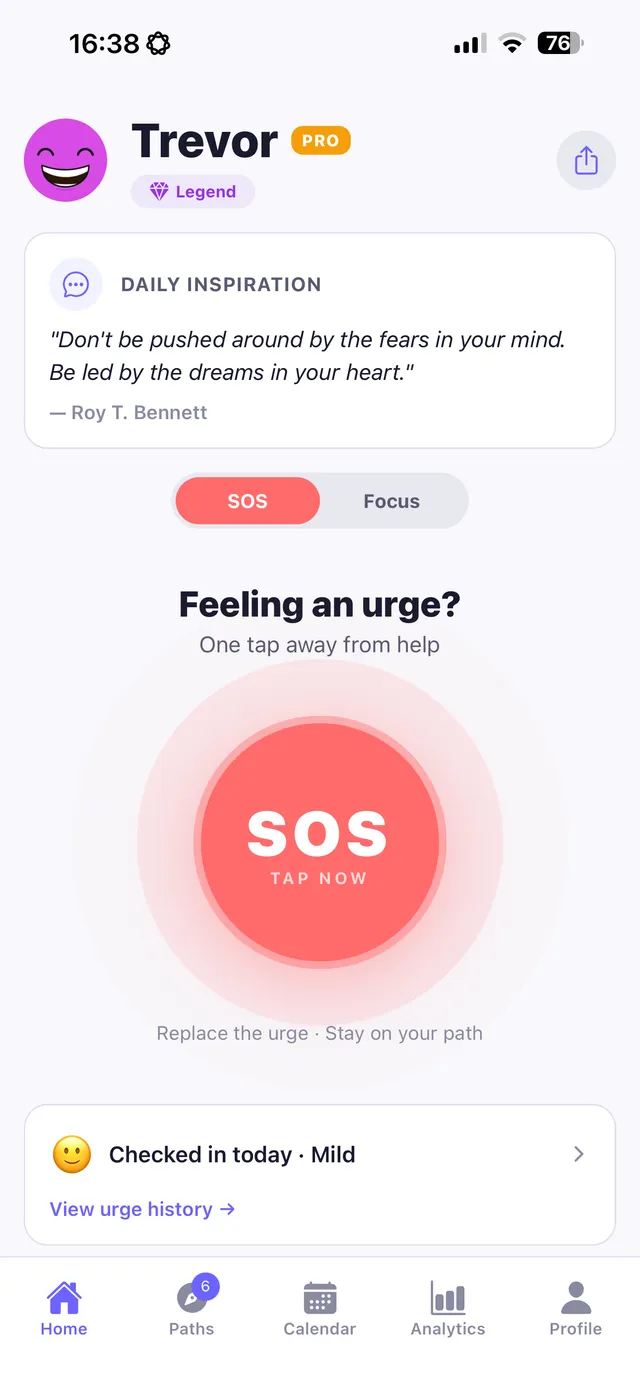
Replacify helps you swap a bad habit for a better one — with structured paths, an SOS button for cravings, a focus timer, and streaks that keep you going.


Putting all four together
| Law | To build | To break |
|---|---|---|
| Obvious | Visible cue, habit stacking | Remove the cue |
| Attractive | Pair with something you enjoy | Reframe the downside |
| Easy | Two-minute rule, reduce friction | Add friction, steps |
| Satisfying | Immediate small reward, streaks | Immediate cost, accountability |
When a habit isn't sticking, walk through the four laws in order and ask honestly which one is broken. Usually it's not motivation — it's that the cue never fires, or the first step is too big, or nothing makes it feel worth repeating.
The bottom line
The 4 Laws work because they treat habit change as a design problem, not a willpower problem. You don't need more discipline — you need the right cue, a genuine reason to want it, a low-friction first step, and a reward that arrives fast enough to matter. Replacify builds all four into the app itself: pick a struggle and a replacement path (obvious + attractive), get a two-minute SOS activity the moment an urge hits (easy), and watch your streak grow (satisfying).
Frequently asked questions
What are the 4 Laws of Behavior Change?
From James Clear's Atomic Habits: make it obvious, make it attractive, make it easy, and make it satisfying — for building a habit. Reversing each law helps break a bad habit.
Which law matters most?
None is universally most important — a habit usually fails at one specific law. Making the response easy (reducing friction) tends to have the biggest everyday impact because it doesn't depend on motivation.
How do I break a bad habit using the 4 Laws?
Invert each law: make the cue invisible (remove triggers), make the habit unattractive (reframe the downside), make it difficult (add friction), and make it unsatisfying (add an immediate cost, like accountability).
Can the 4 Laws work for quitting something like vaping or social media?
Yes — the framework applies to any habit. Removing cues, adding friction, reframing the craving and adding accountability all reduce how often the habit fires, which is exactly what apps like Replacify are built to support.
Replace the habit. Not yourself.
Replacify helps you swap a bad habit for a better one — with structured paths, an SOS button for cravings, a focus timer, and streaks that keep you going.