Decision Fatigue and Habits: Why Willpower Runs Out by Evening

You had every intention of cooking a healthy dinner. By 7pm, after a full day of small choices — what to wear, what to answer, what to prioritize, what to eat for lunch — you order takeout instead and tell yourself you'll do better tomorrow. This isn't a discipline problem. It's decision fatigue, and understanding it changes how you should think about willpower entirely.
The short answer
Decision fatigue is the idea that your capacity for careful, deliberate decision-making isn't fixed through the day — it tends to decline the more choices, especially effortful ones, you make. This is one reason healthy intentions collapse by evening even though nothing about your motivation "should" have changed. The practical fix isn't more willpower. It's reducing the number of decisions a given behavior requires — which is exactly what a habit does.
What decision fatigue actually is
Many psychologists describe decision-making as drawing on a limited resource that gets taxed by use — not unlike physical fatigue. Each choice, big or small, consumes a bit of that capacity: what to wear, which email to answer first, whether to speak up in a meeting, what to eat for lunch. None of these individually feels costly. But by late afternoon, after dozens of small decisions, your capacity for further deliberate choice is measurably lower, and you're more likely to default to whatever is easiest, most familiar, or most immediately rewarding — which is rarely the disciplined option.
This is worth hedging carefully: the exact mechanism is debated among researchers, and it's not a strict, literal fuel tank. But the pattern it describes — that good intentions are more likely to hold up early in the day and erode later — matches common experience closely enough that it's a useful practical model, even without pinning down a precise number.
Why habits are the fix, not more willpower
Here's the key insight: a habit, by definition, doesn't require a decision. Once a behavior is automatic, you're not choosing whether to do it each time — you're just doing it. That's why "just use more willpower" is bad advice for anything you're trying to do consistently. Willpower is a depleting resource used for decisions; habits bypass the decision entirely. This is also why how your brain automates habits matters here — the whole point of automaticity is removing a behavior from the deliberate, fatigue-prone system.
This explains a pattern a lot of people notice about their own bad habits, too: junk food, doomscrolling, and skipping workouts cluster disproportionately in the evening. It's not that evenings are inherently weaker moments morally — it's that your deliberate decision-making capacity has usually been spent by then, so automatic, low-effort defaults take over. If your default is a bag of chips and your phone, that's what wins. If your default is a short walk or a page of a book, that wins instead.
Replacify helps you swap a bad habit for a better one — with structured paths, an SOS button for cravings, a focus timer, and streaks that keep you going.


Practical ways to reduce decision load
You can't add hours to the day, but you can reduce how many decisions those hours demand:
| Strategy | Why it works |
|---|---|
| Build routines for repeated choices | A routine removes the decision — you're not re-deciding each time |
| Set defaults in advance | Deciding once ("I always do X after Y") beats deciding fresh every time |
| Design your environment | Removing tempting options (no junk food in the house) means fewer moments where willpower is needed at all |
| Batch similar decisions | Meal-planning once a week beats deciding what to eat every single evening |
| Protect your hardest tasks for early | Do the thing that needs real deliberation before your capacity is drained |
This is also why identity-based habits tend to hold up better under fatigue than motivation-based ones — "I'm someone who doesn't smoke" requires less active deliberation in the moment than weighing pros and cons each time a craving hits.
Environment design beats in-the-moment resolve
If decision fatigue is real, then the smartest time to make a hard decision is before you're tired — not in the moment of temptation. Deciding your replacement behavior in advance, removing triggers from your environment, and setting up defaults all move the decision earlier in the day, when your capacity is highest. By the time the craving or urge actually hits in the evening, you're not deciding anything — you're just executing a plan you already made.
The bottom line
Willpower isn't a character trait that some people have more of — it's a resource that gets taxed by the sheer number of decisions you make in a day, and it tends to be lowest exactly when bad habits are most likely to win. The fix isn't trying harder at 9pm. It's building habits and environments that remove the decision altogether, so your tired evening brain has nothing left to decide.
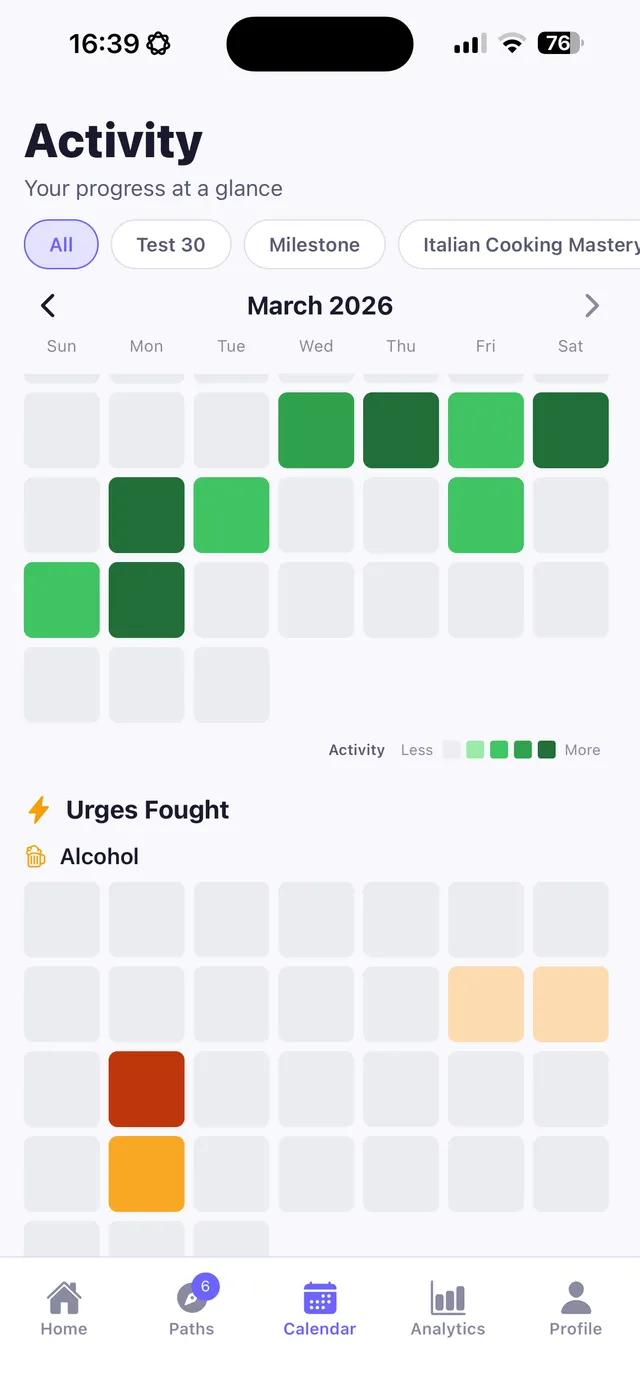
Replacify is designed around exactly this. Choose your struggle and a replacement path once, when your head is clear, so the decision is already made before the craving hits. When an urge shows up anyway, the SOS button gives you a pre-built next step instead of a fresh decision, and your streak tracks the routine holding — decision fatigue and all.
Frequently asked questions
What is decision fatigue?
Decision fatigue is the idea that your capacity for careful, deliberate decision-making tends to decline the more choices you make through the day, making it more likely you'll default to easy or familiar options later on.
Why do I have less willpower in the evening?
By evening you've typically made many small decisions already, which many psychologists believe reduces your remaining capacity for effortful choice. Automatic, low-effort defaults tend to take over as that capacity drops.
How can I reduce decision fatigue?
Build routines for repeated choices, set defaults in advance, design your environment to limit tempting options, batch similar decisions together, and tackle your hardest deliberate decisions earlier in the day.
Do habits really help with decision fatigue?
Yes — a defining feature of a habit is that it doesn't require an active decision each time. Automating a behavior removes it from the pool of choices competing for your limited decision-making capacity.
Replace the habit. Not yourself.
Replacify helps you swap a bad habit for a better one — with structured paths, an SOS button for cravings, a focus timer, and streaks that keep you going.