How Your Brain Automates Habits (and Why That's Hard to Undo)
The first time you drove a car, you were thinking about everything: mirrors, pedals, blinkers, the gap between your hands on the wheel. A year later you can hold a conversation while merging onto a highway and barely notice you did it. Nothing about the task changed. What changed is that your brain moved the whole routine from "effortful thinking" to "automatic execution." That shift — called automaticity — is the same mechanism behind your morning coffee, your habit of checking your phone the second you wake up, and the thirty seconds of chip-eating you didn't decide to start.
The short answer
Repetition changes how your brain runs a behavior, not just how good you get at it. Early on, a new behavior is controlled by slower, effortful, conscious circuits. With enough repetition in a consistent context, control shifts to faster, automatic circuits that fire with minimal conscious input. This is efficient — it frees up mental bandwidth — but it also means well-practiced bad habits can run before your deliberate, thinking brain gets a vote. That's why they feel involuntary, and why good habits eventually feel effortless too.
Two systems, one behavior
Psychologists and neuroscientists generally describe two loose modes of behavioral control:
- The deliberate system. Slow, effortful, flexible. It weighs options, considers consequences, and requires attention. This is what's active when you're learning something new.
- The automatic system. Fast, low-effort, triggered by context. It doesn't "decide" so much as react to a cue with a pre-loaded response.
Every habit starts in the deliberate system and, with repetition, migrates toward the automatic one. This general shift is closely associated with brain regions involved in routine and procedural behavior — often discussed in terms of the basal ganglia taking over from more effortful, prefrontal-driven decision-making. You don't need the anatomy to use the idea: the practical takeaway is that habits are, literally, behaviors your brain has stopped treating as decisions.
Why this makes bad habits feel involuntary
Once a behavior automates, it doesn't wait for permission. A cue appears — your phone buzzes, you sit on the couch, you feel bored — and the response fires before your slower, deliberate system has fully caught up. This is why people describe habitual snacking, scrolling, or nail-biting as something that "just happens." In a real sense, it does. The habit loop of cue, routine, reward is the map of this automatic circuit, and understanding it is the first step to interrupting it.
This isn't a character flaw. It's the same efficient machinery that lets you brush your teeth, tie your shoes, and drive to work without narrating every step to yourself. The problem is that the machinery doesn't discriminate between habits that serve you and ones that don't — it automates whatever gets repeated in a consistent context, good or bad.
Why automaticity is also good news
The same process that locks in a bad habit is what eventually makes a good one feel effortless. Early attempts at a new routine — going for a run, journaling, drinking water instead of soda — require real willpower because they're still running on the slow, deliberate system. That's the hardest stretch, and it's exactly where most people quit. But automaticity doesn't care which direction you're building in. Keep the repetition consistent — same cue, same context, same response — and the behavior gradually moves toward automatic too. This is the whole logic behind how long it takes to build a habit: you're not waiting to "feel motivated," you're waiting for a neural handoff.
Replacify helps you swap a bad habit for a better one — with structured paths, an SOS button for cravings, a focus timer, and streaks that keep you going.


Working with automaticity instead of against it
A few practical implications follow directly from how automaticity works:
| If you want to... | Do this |
|---|---|
| Break an automatic bad habit | Change the cue or context, not just your intentions — willpower alone fights the automatic system on its own turf |
| Build a new automatic good habit | Repeat it in the exact same context every time, even in a small form |
| Stop relying on motivation | Recognize motivation is a deliberate-system resource — automatic habits don't need it |
| Recover after a slip | Understand one slip doesn't erase automaticity that's already partly built — what to do after you break your streak |
Because automatic behavior is triggered by context, one of the most effective moves is deliberately inserting a new response into an old cue — a technique sometimes called habit stacking. You're not fighting the automatic system; you're redirecting it.
The bottom line
Habits feel automatic because they are automatic — your brain deliberately shifts well-practiced behavior out of effortful, conscious control and into fast, low-effort circuits. That's why bad habits feel hard to resist in the moment, and why good ones eventually stop requiring willpower at all. The way through isn't more self-discipline in the heat of the moment; it's consistent repetition of a specific replacement behavior, tied to the same cue, until your brain automates that instead.
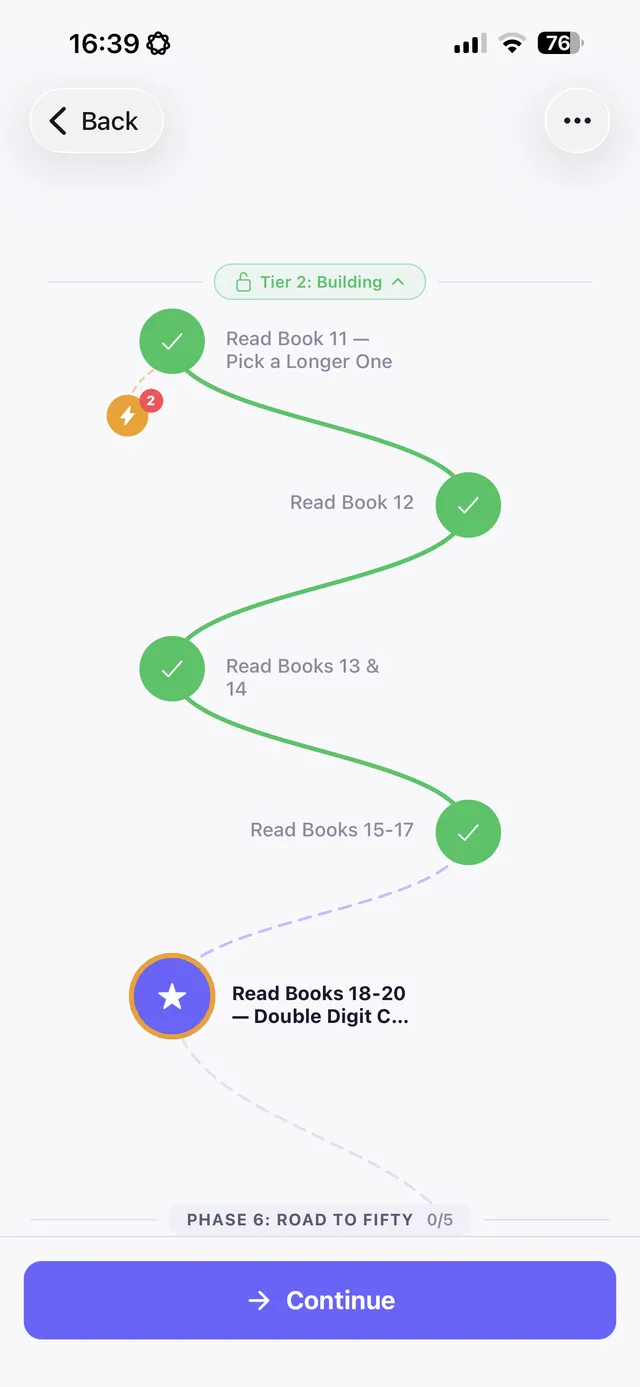
That's the exact mechanism Replacify is built around. Pick a struggle, choose a replacement path with a clear, repeatable action, hit the SOS button when an old cue fires and the automatic urge shows up, and watch your streak build as the new behavior takes over the circuit the old one used to run.
Frequently asked questions
Why do bad habits feel automatic or involuntary?
Repeated behavior shifts from effortful, conscious control to fast, automatic control in the brain. Once a habit is well-practiced, it can fire in response to a cue before your slower, deliberate thinking catches up — which is why it feels involuntary.
Can you reverse a habit that's become automatic?
Yes. The same process that automated the habit can automate a replacement. Consistently pairing the same cue with a new response, repeated over time, gradually shifts control toward the new behavior instead.
How long does it take for a new behavior to become automatic?
It varies by person and behavior complexity — there's no single universal number. What matters more than counting days is consistent repetition in the same context every time.
Is automaticity the same as willpower running out?
No, they're different mechanisms. Automaticity is about which brain system controls a behavior; decision fatigue is about a separate, limited capacity for effortful choice. Both make habits easier once they're automatic, since automatic behavior doesn't draw on willpower at all.
Replace the habit. Not yourself.
Replacify helps you swap a bad habit for a better one — with structured paths, an SOS button for cravings, a focus timer, and streaks that keep you going.