How to Drink Less Alcohol: 12 Practical Strategies (Without Giving Up Completely)

Not everyone who wants to change their drinking wants to stop completely. Maybe you want fewer hungover Saturdays, better sleep, or to stop that nightly glass becoming a nightly bottle. Learning how to drink less alcohol is about deciding your own rules, tracking honestly and changing the routines that make drinking automatic.
The short answer
To drink less alcohol: track what you actually drink, set specific limits (drink-free days, a maximum per occasion), change your default routines (after work, dinner, weekends), have better alcohol-free options, slow your pace when you do drink, and plan for social pressure. If you can't cut down despite trying, or you drink heavily every day, talk to a doctor.
Know the guidelines
In the UK, the Chief Medical Officers advise that to keep health risks low, it's safest not to regularly drink more than 14 units a week, spread over three or more days, with several drink-free days. Other countries' guidance varies, and many health bodies now emphasise that less is better for long-term health.
| Drink | Approx. UK units |
|---|---|
| Pint of lower-strength beer (4%) | 2.3 |
| Pint of stronger beer (5.2%) | 3 |
| 175 ml glass of wine (12%) | 2.1 |
| 250 ml glass of wine (12%) | 3 |
| Single 25 ml spirit (40%) | 1 |
| Bottle of wine (750 ml, 13%) | ~9.75 |
A bottle of wine across an evening is roughly two-thirds of the weekly guideline.
12 strategies to drink less
1. Track honestly for two weeks
Write down every drink, where, when and with whom. Most people underestimate. The patterns tell you where to focus.
2. Choose drink-free days
Pick specific days — say Monday to Thursday — and make them the default. It's easier than deciding every evening.
3. Set a limit before you start
"Two drinks tonight" decided at 6pm is much more likely to hold than a decision made on your third glass.
4. Don't keep it at home
If it's in the fridge, it's easy. Buy for occasions, not "just in case".
5. Change the after-work ritual
For many people the first drink is a signal that the day is over. Replace the signal: a walk, a shower, changing clothes, cooking, a workout. How the habit loop works.
6. Upgrade your alternatives
Good alcohol-free beer, sparkling water with fresh lime, kombucha, a proper glass. Make the non-drinking option feel like a treat. What being sober curious looks like.
Replacify helps you swap a bad habit for a better one — with structured paths, an SOS button for cravings, a focus timer, and streaks that keep you going.


7. Slow down
Alternate each alcoholic drink with water. Choose smaller measures and lower-strength drinks. Put your glass down between sips.
8. Eat first
Drinking on an empty stomach makes it easier to drink more, faster.
9. Plan for social situations
Order an alcohol-free drink first. Have a simple line ready ("I'm driving", "I'm taking it easy tonight"). Suggest plans that aren't centred on drinking.
10. Watch your emotional triggers
If you drink to cope with stress, loneliness or low mood, find other ways to meet that need — exercise, talking to someone, a hobby. 60 replacement ideas.
11. Try a break
A dry month — like Sober October — resets habits and shows you how much drinking is routine.
12. Track your progress
Seeing a streak of drink-free days or a lower weekly total is motivating. Why streaks work.
Signs it's time for more support
Consider talking to a doctor if:
- You regularly drink more than you intended and can't cut down.
- You need a drink to feel normal or to start the day.
- You get shaky, sweaty or anxious when you don't drink.
- Drinking is causing problems at work, at home or with your health.
- People close to you are worried.
Don't stop suddenly if you drink heavily every day — alcohol withdrawal can be dangerous and may need medical support. In the UK, call Drinkline on 0300 123 1110; in the US, the SAMHSA National Helpline (1-800-662-4357) is free, confidential and open 24/7.
The bottom line
Drinking less is about defaults and routines: track honestly, set drink-free days and limits in advance, change the rituals around drinking, upgrade your alternatives and plan for social situations. If cutting down feels impossible, that's important information — and help is available.
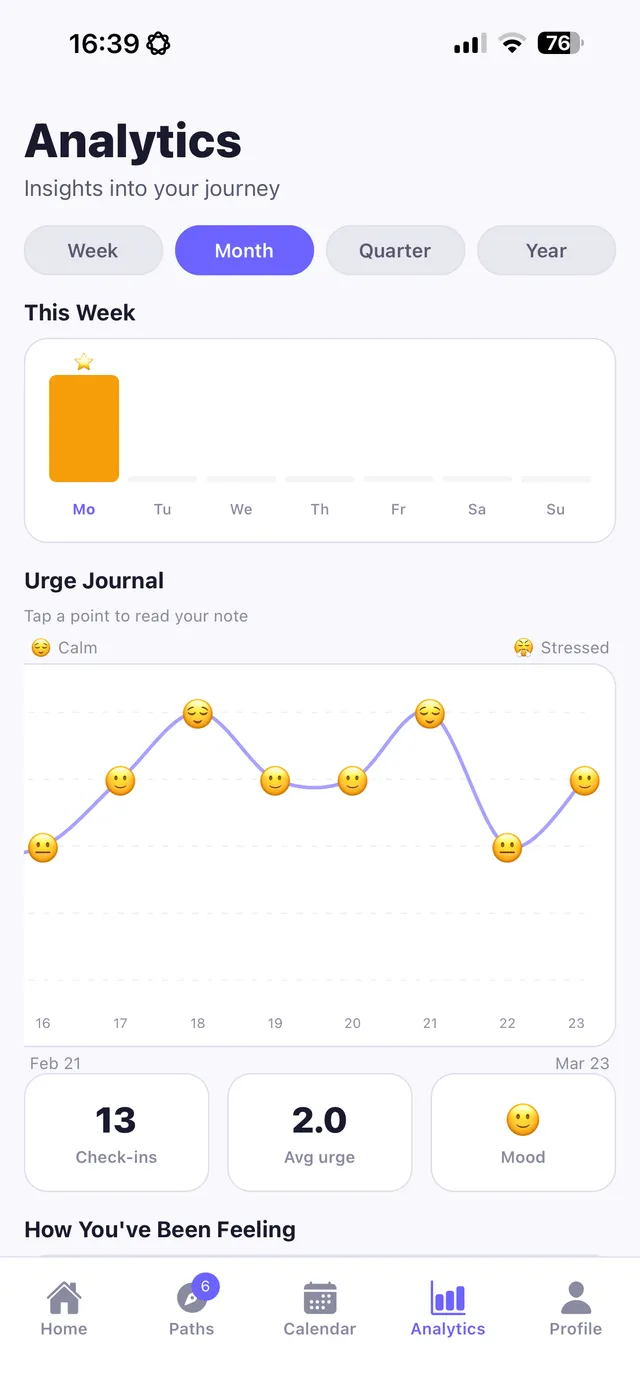
Replacify can support a cut-down plan: choose Alcohol as your struggle, log daily check-ins with an urge rating, see your drink-free days on the heatmap calendar, fill the old drinking time with a replacement path like cooking, running or meditation, and use SOS for moments when an urge hits.
Replacify is not a medical service. If you drink heavily or daily, talk to a doctor before stopping.
Frequently asked questions
How can I drink less alcohol?
Track what you drink, set drink-free days and limits in advance, don't keep alcohol at home, change the routines around drinking, choose good alcohol-free alternatives and slow your pace when you do drink.
How much alcohol is safe to drink?
UK guidance advises not regularly drinking more than 14 units a week, spread over three or more days. Many health bodies emphasise that less is better for long-term health.
How do I stop drinking every night?
Pick specific drink-free days, remove alcohol from home, and replace the evening drink with another end-of-day ritual such as a walk, a shower or cooking.
When should I get help for drinking?
If you can't cut down despite trying, need a drink to feel normal, or get withdrawal symptoms, talk to a doctor. Don't stop suddenly if you drink heavily every day.
Replace the habit. Not yourself.
Replacify helps you swap a bad habit for a better one — with structured paths, an SOS button for cravings, a focus timer, and streaks that keep you going.