How to Stop Gossiping: Why We Do It and 9 Ways to Break the Habit

It starts innocently: "Did you hear about…?" Before you know it, you're deep in a conversation about someone who isn't there — and afterwards you feel a bit uneasy. Gossiping is one of the most human habits there is, but it can quietly damage trust, relationships and how you feel about yourself. Here's how to stop gossiping without becoming the person who never talks about anyone.
The short answer
To stop gossiping: notice your triggers (certain people, boredom, stress, wanting to belong), use the "would I say this to their face?" test, redirect conversations, change the subject to ideas or plans, step away from gossip-heavy groups, and replace the need gossip meets — connection, belonging, stimulation — with other forms of conversation.
Why we gossip
Researchers have argued that gossip has social functions: it helps people bond, learn social norms and navigate groups. Talking about others isn't always negative — sharing good news about someone or checking how a friend is doing are forms of "gossip" too.
The problem is harmful gossip: spreading rumours, judging, mocking, or sharing things said in confidence. It can:
- Damage trust (people wonder what you say about them).
- Hurt the person being discussed.
- Create a negative atmosphere at work or in friendships.
- Leave you feeling guilty afterwards.
Harmless chat vs harmful gossip
| Harmless | Harmful |
|---|---|
| "Sam got promoted — so happy for them!" | "Sam only got promoted because…" |
| "Is Alex okay? They seemed stressed." | "Alex is a mess, did you see…" |
| Sharing public, positive news | Sharing private information or rumours |
| You'd say it in front of them | You'd never say it in front of them |
Why it's a habit
Gossip gives an instant reward: a feeling of closeness, a bit of excitement, a sense of being in the know. Cues are often predictable — a specific colleague, a group chat, the coffee break, boredom. That's the habit loop, and like any habit, it can be changed.
9 ways to stop gossiping
1. Notice your triggers
Who, where and when do you gossip most? Often it's the same people and situations.
2. Use the "face test"
Before you say something about someone, ask: Would I say this if they were standing here? If not, don't say it.
3. Redirect the conversation
Try: "I don't really know the full story," or "I'd rather not guess about that," then change the subject.
Replacify helps you swap a bad habit for a better one — with structured paths, an SOS button for cravings, a focus timer, and streaks that keep you going.


4. Say something positive instead
If someone brings up a person, share something good about them. It's hard to keep gossiping when someone adds genuine praise.
5. Change the topic to ideas and plans
Conversations about ideas, projects, books, films or plans are just as engaging and don't leave you feeling uneasy afterwards.
6. Leave gossip-heavy spaces
Mute or leave group chats that thrive on gossip. At work, take your coffee break with different people now and then.
7. Address issues directly
If you're gossiping because someone's behaviour bothers you, consider talking to them directly — or to a manager if appropriate — rather than venting to others.
8. Meet the need another way
If gossip gives you connection and excitement, find it elsewhere: deeper conversations with friends, a shared hobby, a team activity. 60 replacement ideas by need.
9. Track your progress
Try a no-gossip week, or a 30-day challenge. Notice how it changes your relationships — and how you feel.
If you slip
Everyone gossips sometimes. If you catch yourself, stop mid-sentence, redirect, and move on. If you've said something hurtful, consider apologising.
The bottom line
Gossip meets real social needs, which is why it's so tempting. But harmful gossip erodes trust. Notice your triggers, use the face test, redirect conversations, add something positive, and meet your need for connection in better ways.
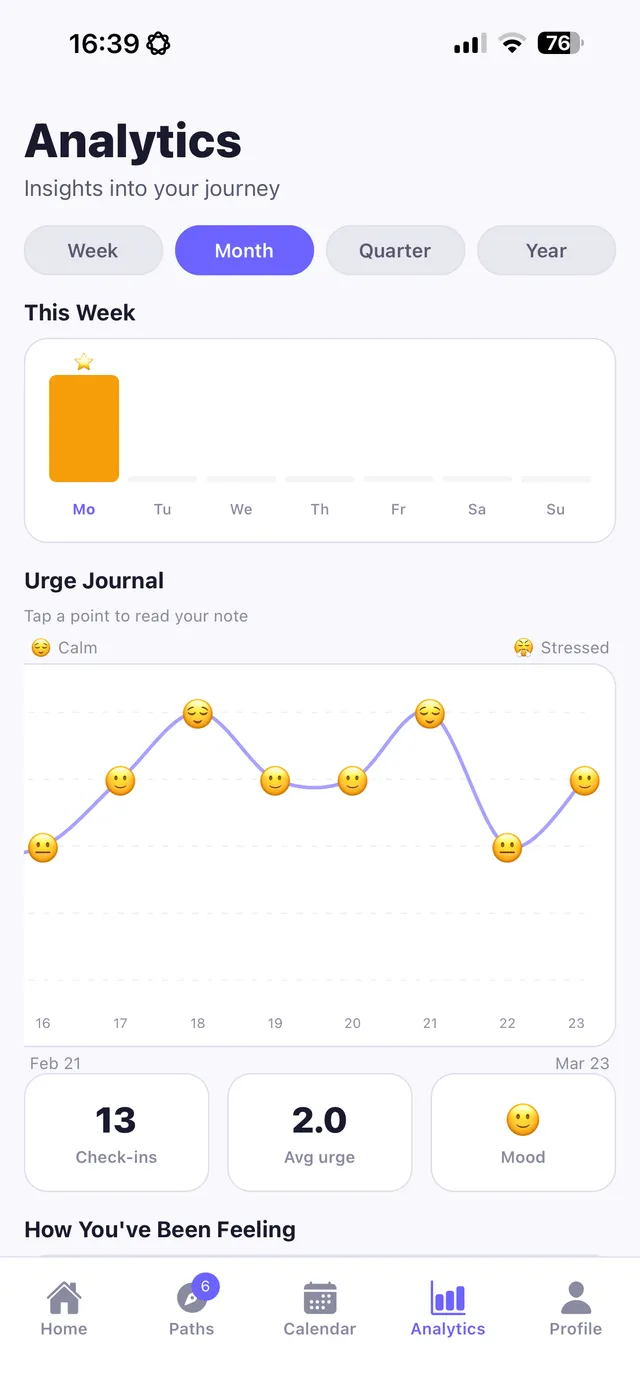
Replacify includes Gossip / Drama as one of its struggles. Log daily check-ins to notice when you're most tempted, use the SOS button for a quick reset when you feel pulled into drama, and build a replacement path — journaling, reading or a new skill — that gives you better things to talk about.
Frequently asked questions
How do I stop gossiping?
Notice your triggers, ask whether you'd say it to the person's face, redirect conversations, say something positive instead, leave gossip-heavy group chats and meet your need for connection in other ways.
Why do people gossip?
Gossip can help people bond, feel included and learn social norms. It becomes harmful when it spreads rumours, judges people or shares private information.
How do I avoid gossip at work?
Change the subject, say something neutral or positive, avoid gossip-heavy break groups and group chats, and raise real concerns directly or with a manager.
Is all gossip bad?
No. Sharing good news about someone or checking on a friend is harmless. Gossip becomes harmful when you'd be uncomfortable saying it in front of the person.
Replace the habit. Not yourself.
Replacify helps you swap a bad habit for a better one — with structured paths, an SOS button for cravings, a focus timer, and streaks that keep you going.