What Happens When You Stop Drinking? A Realistic Timeline of the Changes
Whether you're doing Sober October, taking a break, or quitting for good, it helps to know what to expect. People often expect instant transformation — and then feel disappointed when the first few days are just… harder. Here's a realistic look at what happens when you stop drinking, and roughly when.
The short answer
When you stop drinking, the first few days can bring cravings, restlessness and disrupted sleep — and for heavy drinkers, withdrawal that may need medical support. Over the first few weeks, many people report better sleep, more energy, improved mood and fewer "lost" mornings. Over months, benefits can include lower health risks and better overall wellbeing. Everyone is different, and results depend on how much you were drinking.
Important safety note first
If you drink heavily or every day, don't stop suddenly without talking to a doctor. Alcohol withdrawal can cause shaking, sweating, anxiety, nausea, and in severe cases seizures or confusion. It can be dangerous. A doctor can help you stop safely.
- UK: Drinkline, 0300 123 1110.
- US: SAMHSA National Helpline, 1-800-662-4357 (free, confidential, 24/7).
A realistic timeline
| Time | What many people notice |
|---|---|
| Days 1–3 | Cravings at usual drinking times; restlessness; sleep may be disrupted at first. Heavy drinkers may experience withdrawal symptoms |
| Days 4–7 | Cravings often start to ease; routines feel strange without a drink |
| Weeks 1–2 | Many people report deeper sleep and waking up more refreshed |
| Weeks 2–4 | More energy, better mood, clearer mornings; money saved becomes noticeable |
| 1–3 months | New routines feel normal; many people feel better overall and report improved wellbeing |
| Longer term | Lower long-term health risks linked to alcohol |
What changes, and why
Sleep
Alcohol can help you fall asleep, but it disrupts sleep in the second half of the night and reduces REM sleep. Many people notice better, more restful sleep within the first couple of weeks — although the first few nights can be restless as your body adjusts.
Mood and anxiety
Many drinkers know "hangxiety" — the anxious, low feeling the day after drinking. Without it, mood often becomes more stable. If you were drinking to manage anxiety or low mood, those feelings may feel more noticeable at first; that's a good time to find other support.
Energy and mornings
Fewer hangovers, better sleep and more hydration usually mean more energy — and weekends that start on Saturday morning rather than Saturday afternoon.
Replacify helps you swap a bad habit for a better one — with structured paths, an SOS button for cravings, a focus timer, and streaks that keep you going.


Money and time
Drinks add up quickly. Many people are surprised by how much they save, and by how much time they get back.
Physical health
Alcohol affects the liver, heart, blood pressure and more, and is linked to several types of cancer. Health bodies increasingly emphasise that drinking less lowers long-term risk. Some studies of short breaks from alcohol have reported improvements in measures like blood pressure and liver health, but results vary and depend on how much people drank before.
Your relationship with alcohol
Perhaps the biggest change: you see how much of your drinking was habit, ritual or social expectation. Research on people completing Dry January has found that many drink less in the months afterwards, even after the challenge ends.
Making it easier
- Replace the ritual. An alcohol-free drink in a nice glass, a walk, a shower — whatever marks the end of the day. How the habit loop works.
- Plan for triggers — Friday evenings, social events, stress.
- Ride out cravings — they rise and fall. What to do when a craving hits.
- Track your days — seeing a streak is motivating. How habit streaks work.
- Fill your evenings with something you enjoy. Hobbies to replace bad habits.
If you drink again
A drink after a period of not drinking doesn't erase the benefits. Notice the trigger and decide what's next. What to do after you break your streak.
The bottom line
Stopping drinking isn't instant magic, but the changes are real: the first days can be hard, and then many people notice better sleep, steadier mood, more energy and money in the bank. If you drink heavily or daily, talk to a doctor before stopping — withdrawal can be dangerous.
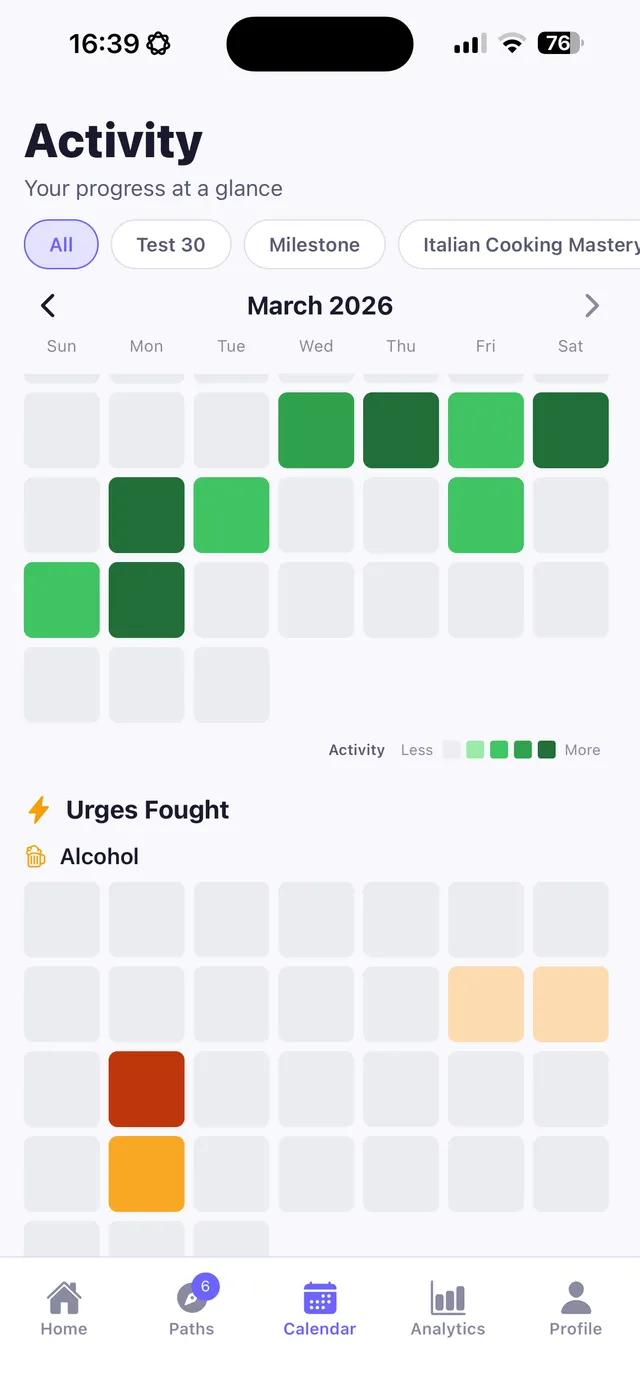
Replacify can support you through the timeline: choose Alcohol as your struggle, log daily check-ins with urge ratings to watch cravings ease, sync Apple Health to see how your sleep responds, and fill evenings with a replacement path like cooking, running or meditation.
Replacify is not a medical service. If you drink heavily or daily, talk to a doctor before stopping.
Frequently asked questions
What happens when you stop drinking alcohol?
The first few days can bring cravings, restlessness and disrupted sleep. Over the following weeks, many people report better sleep, more energy, steadier mood and saving money.
How long after quitting alcohol does sleep improve?
Many people notice better sleep within one to two weeks, though the first few nights can be restless as the body adjusts.
Is it dangerous to stop drinking suddenly?
For heavy or daily drinkers, yes — alcohol withdrawal can be dangerous. Talk to a doctor before stopping.
What are the benefits of a month without alcohol?
People commonly report better sleep, more energy, fewer hangovers, improved mood and saving money, and many drink less in the months afterwards.
Replace the habit. Not yourself.
Replacify helps you swap a bad habit for a better one — with structured paths, an SOS button for cravings, a focus timer, and streaks that keep you going.