How to Use a Habit Tracker So It Actually Works

Most people who download a habit tracker app use it for about two weeks. Not because the app was wrong for them, but because they used it in a way that was set up to fail — too many habits at once, logging from memory at the end of the day, and quietly giving up the first time they missed one. None of that is about the app. It's about how it's used.
The short answer
To make a habit tracker actually work: track 1–3 habits, not ten, log immediately after doing the habit, not at the end of the day from memory, focus on consistency over perfection — the rule "never miss twice" matters more than a perfect streak — review your data weekly, not just glance at it, and pair tracking with an actual plan for what replaces the habit you're trying to change, since checking a box doesn't do the work of behavior change on its own.
Track 1–3 habits, not ten
It's tempting to add every habit you want to improve on day one — more water, less phone, more reading, earlier bedtime, gym three times a week. In practice, tracking ten things at once means checking in becomes a chore, and the chore is usually the first thing to get abandoned. Pick the one or two habits that matter most right now. You can always add more once the first ones are automatic. This is one of the most common habit tracking mistakes — starting too broad and burning out before any single habit sticks.
Log immediately, not at the end of the day
Logging right after you do (or don't do) the habit is far more reliable than trying to reconstruct your day at 10pm. Same-day recall is genuinely bad — by evening, a missed morning walk or an afternoon of doomscrolling blurs into "I think I was mostly fine today," which defeats the purpose of tracking at all. If your app supports reminders tied to the actual moment (after a meal, before bed), use them — that's the single highest-leverage setting most people never touch.
Focus on consistency, not perfection
A perfect streak feels good, but it's a fragile goal — one bad day and the whole thing can feel ruined, which is exactly when people quit tracking altogether. A better frame: never miss twice in a row. Missing one day is normal life. Missing two starts to become a new pattern. If you center your tracking around that rule instead of an unbroken streak, one bad day stops feeling like a reason to give up. How habit streaks work explains the psychology behind why an all-or-nothing streak mindset backfires for a lot of people.
Replacify helps you swap a bad habit for a better one — with structured paths, an SOS button for cravings, a focus timer, and streaks that keep you going.


Review weekly, not just glance daily
Daily check-ins tell you what happened today. A weekly review tells you the pattern — which days you consistently miss, what tends to precede a skip, whether a specific trigger keeps showing up. Five minutes once a week looking at your week's data is where the real insight lives, far more than any single day's checkbox. If you notice a specific time or situation causing most of your misses, that's the trigger worth planning around directly.
Pair tracking with an actual replacement plan
This is the piece that separates a tracker that works from one that gets abandoned. Checking a box records what happened — it doesn't do anything about the moment you're tempted to skip. If the habit you're tracking is one you're trying to stop, decide in advance what you'll do instead in the situations that usually trigger it. Replacement behaviors that actually work is a good starting list if you haven't planned this out yet, and pairing a specific replacement with habit stacking — attaching the new action to something you already do — makes it far more likely to actually happen in the moment, not just on paper.
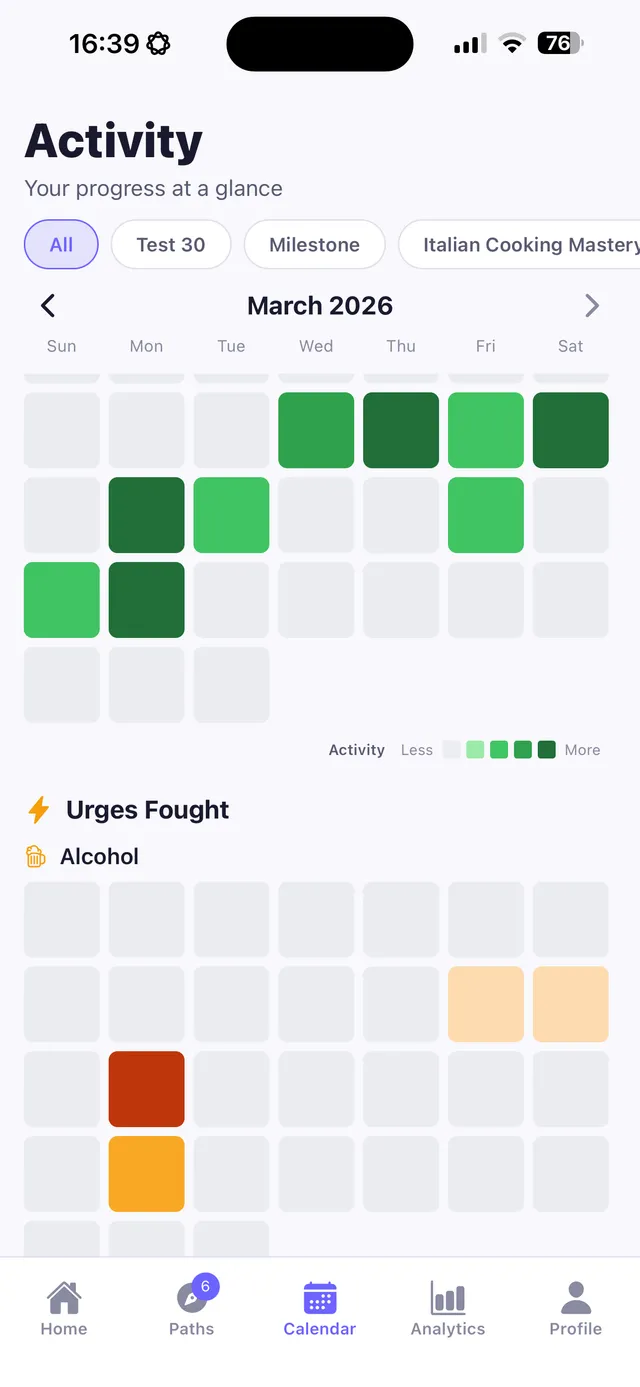
A simple weekly routine
Put together, a habit tracker that actually works looks like this: pick 1–3 habits, log the moment you do (or skip) them, apply the never-miss-twice rule when you slip, review the week's pattern once, and have a specific replacement ready for your known triggers. None of this requires a complicated app — it requires using whatever tracker you have this way.
The bottom line
A habit tracker only works as well as the habits you build around using it: few habits, immediate logging, consistency over perfection, a weekly review, and — critically — an actual plan for what replaces the old behavior, not just a record of whether it happened.
Replacify is built around that last piece specifically. Beyond daily check-ins, you choose a struggle, get a guided replacement path, and have the free SOS button ready for the moment an urge hits — so tracking isn't the only thing the app does for you.
Frequently asked questions
How many habits should I track at once?
One to three is usually the sweet spot. Tracking too many habits at once turns checking in into a chore, which is one of the most common reasons people abandon a habit tracker within the first few weeks.
When should I log a habit tracker entry?
As close to the moment as possible, not at the end of the day. Same-day recall from memory is unreliable, and reminders tied to the actual trigger moment tend to work much better than a single end-of-day check-in.
What if I miss a day on my habit tracker?
Missing one day is normal — the rule worth following is never miss twice in a row. Chasing a perfect, unbroken streak tends to backfire, because one bad day can feel like a reason to quit tracking altogether.
Is checking a box in a habit tracker enough to change a behavior?
Not usually on its own. Tracking records what happened, but pairing it with a specific plan for what you'll do instead of the habit you're trying to change — and something for the moment of temptation — makes a much bigger difference than logging alone.
Replace the habit. Not yourself.
Replacify helps you swap a bad habit for a better one — with structured paths, an SOS button for cravings, a focus timer, and streaks that keep you going.