7 Habit Tracking Mistakes That Quietly Kill Your Streaks

If you've started tracking a habit before and quietly stopped a few weeks in, you're not unusual — most habit trackers get abandoned early. The reason is rarely a lack of willpower. It's usually one of a small set of specific, fixable mistakes in how the tracking itself was set up. Here are the seven that come up most often.
The short answer
The most common habit tracking mistakes are: tracking too many habits at once, all-or-nothing thinking after a single miss, tracking outcomes instead of actions, having no plan for triggers or urges, tracking without ever reviewing the data, choosing vague habits, and giving up after breaking a streak instead of just restarting. Each one is fixable once you can name it.
1. Tracking too many habits at once
It's tempting to add everything you want to change on day one — more water, less phone, earlier bedtime, more reading, three gym sessions. In practice, a long list turns daily check-ins into a chore, and the chore is usually the first thing abandoned. Start with one or two habits. Add more only once the first ones feel automatic.
2. All-or-nothing thinking after one miss
A missed day on a 40-day streak can feel like the whole effort is ruined, which is exactly the moment a lot of people quit tracking entirely rather than just logging an honest miss and continuing. The better mindset is "never miss twice" — one missed day is normal, two in a row is the pattern worth catching early. How habit streaks work covers why this reframe matters more than it sounds.
3. Tracking outcomes instead of actions
"Lost weight" or "felt less anxious" are outcomes — they're affected by dozens of factors outside your control and are slow to move, which makes them discouraging to track daily. "Walked 20 minutes" or "didn't check my phone before breakfast" are actions — things you directly control and can log honestly every day. Track the action you're actually doing, not the result you're hoping it produces.
4. No plan for triggers or urges
This is the mistake that quietly undermines habit trackers used for breaking a habit specifically. A tracker can tell you whether you skipped the habit yesterday, but it has nothing to offer in the actual moment you're tempted today, unless you've planned for it. Map your specific triggers in advance and decide what you'll do instead — see replacement behaviors that actually work for a practical starting list.
Replacify helps you swap a bad habit for a better one — with structured paths, an SOS button for cravings, a focus timer, and streaks that keep you going.


5. Tracking without ever reviewing
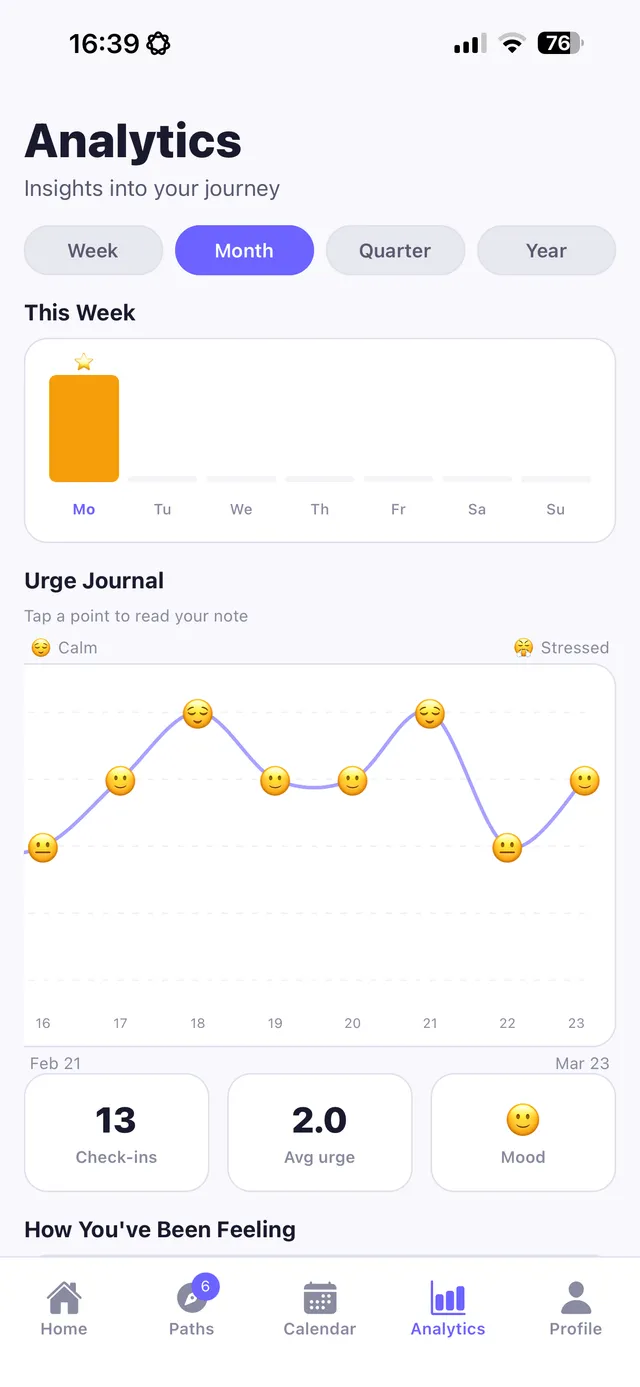
Logging daily without ever looking back at the pattern means you miss the most useful part of tracking — noticing that Tuesdays are consistently hard, or that a specific mood or situation precedes most of your misses. A five-minute weekly review turns a pile of checkmarks into actual insight.
6. Choosing vague habits
"Exercise more" or "eat healthier" are hard to log honestly because they're not specific enough to check off with a clear yes or no. "20-minute walk" or "one vegetable at dinner" are specific enough that you always know whether you did it. Vague habits also make it harder to know what to actually do each day, which quietly increases the odds you skip. Pairing a specific habit with something you already do — see habit stacking — makes both the habit and the tracking clearer.
7. Giving up after breaking a streak
This is the mistake that turns a temporary slip into a permanent stop. Breaking a 30-day streak stings, but the habit itself — the actual behavior — hasn't disappeared, only the number has reset. People who restart immediately tend to end up further ahead a year later than people who quietly stop tracking the moment a streak breaks. What to do after you break your streak walks through exactly how to restart without spiraling.
How to fix all seven at once
You don't need seven separate fixes — most of these come from the same underlying habit: pick a small number of specific, action-based habits, log them promptly, review weekly, plan for your known triggers in advance, and treat a broken streak as a restart, not an ending. That's the whole system.
The bottom line
Most abandoned habit trackers aren't a willpower problem — they're a setup problem: too many habits, all-or-nothing thinking, vague goals, no plan for urges, and no review. Fix the setup and the tracking itself gets much easier to sustain.
Replacify is built to sidestep several of these by default — a focused replacement path instead of an open-ended list, a free SOS tool for the moment an urge hits instead of leaving triggers unplanned, and a streak that's designed to be restarted, not treated as ruined the moment it breaks.
Frequently asked questions
Why do most people stop using a habit tracker?
Usually it's one of a handful of setup mistakes, not a lack of willpower: tracking too many habits at once, all-or-nothing thinking after a missed day, vague habits that are hard to log honestly, or no plan for the moment an urge or trigger hits.
What's the biggest habit tracking mistake?
Tracking too many habits at once is one of the most common, since it turns daily check-ins into a chore. A close second is all-or-nothing thinking, where one missed day causes people to abandon tracking entirely instead of just continuing.
Should I track outcomes or actions in a habit tracker?
Actions. Outcomes like weight loss are affected by many factors and move slowly, which is discouraging to track daily. Actions like a 20-minute walk or a skipped cigarette are things you directly control and can log honestly every day.
What should I do if I break my habit streak?
Restart as soon as possible rather than stopping tracking altogether. A broken streak resets a number, not the underlying progress you've made — people who restart immediately tend to do better long-term than people who quit the moment a streak breaks.
Replace the habit. Not yourself.
Replacify helps you swap a bad habit for a better one — with structured paths, an SOS button for cravings, a focus timer, and streaks that keep you going.