Keystone Habits: The One Habit That Changes Everything Else

Ask people who exercise consistently what changed after they started, and you'll rarely hear "I got fitter" as the whole answer. You'll hear that they started sleeping better, eating differently, feeling less anxious, and somehow getting more done at work — despite never setting out to change any of those things directly. That's the signature of a keystone habit: one behavior that pulls a chain of unrelated improvements along with it.
The short answer
A keystone habit is a single habit whose effects spread beyond its own domain, indirectly improving other, seemingly unrelated areas of your life. Exercise, sleep, and making your bed are commonly cited examples — not because the act itself is magic, but because each one tends to trigger downstream changes in mood, discipline, or momentum that make other good habits easier to adopt. The practical value isn't picking the "correct" keystone habit off a list — it's identifying which specific habit tends to create ripple effects for you.
Why some habits ripple and others don't
Most habits are self-contained: flossing improves your dental health and not much else. A keystone habit is different because it changes something upstream of many other behaviors — your energy, your identity, your daily structure, or your sense of momentum — and those upstream shifts quietly make several other habits easier at once.
This connects to identity-based habits: a keystone habit often works by shifting how you see yourself. Someone who exercises consistently doesn't just get fitter — they start to think of themselves as someone who follows through on commitments, and that self-image bleeds into other areas without any separate effort.
Commonly cited keystone habits
These show up repeatedly in habit-change writing, not because they're the only options, but because their ripple effects are well documented anecdotally and structurally easy to explain:
| Keystone habit | Common ripple effects |
|---|---|
| Exercise | Better sleep, improved mood, more consistent eating, more energy for other tasks |
| Consistent sleep schedule | Better focus, less impulsive snacking or scrolling, more stable mood |
| Making your bed | A small early "win" that builds momentum and structure into the rest of the day |
| Meal planning | Less decision fatigue, healthier eating, less money spent on impulse takeout |
| Daily journaling or check-ins | Better self-awareness, which makes other habit changes easier to notice and adjust |
| Tracking spending | Increased awareness that spills into other areas of self-discipline |
None of these work identically for everyone — the ripple effect depends on what was actually holding other habits back in the first place.
Finding your own keystone habit
Rather than picking one off a list, it's more useful to look at your own patterns:
- Look at your best weeks. What was different about them? Often there's one habit — good sleep, a workout, meal prep — present in nearly all of them.
- Look at your worst weeks. What was missing? The habit whose absence tends to predict a bad stretch is frequently your keystone.
- Ask what's upstream of your other struggles. If poor sleep consistently precedes overeating, doomscrolling, and low motivation, sleep is likely doing keystone-level work for you, even if it doesn't look dramatic on its own.
Replacify helps you swap a bad habit for a better one — with structured paths, an SOS button for cravings, a focus timer, and streaks that keep you going.


Why this matters for replacing a habit
If you're trying to quit or replace a habit, a keystone habit can do more work than tackling the target behavior head-on. Improving sleep or adding regular movement often reduces the underlying stress, boredom, or low energy that was fueling the habit you're trying to change in the first place — which is part of why a replacement behavior that also functions as a keystone habit (like exercise) tends to outperform a replacement that doesn't ripple into anything else.
The bottom line
Not all habits are created equal — some quietly improve everything around them, while others stay contained to their own lane. Finding your own keystone habit, by looking honestly at what's present in your best weeks and missing in your worst, gives you outsized leverage compared to trying to fix every habit individually.
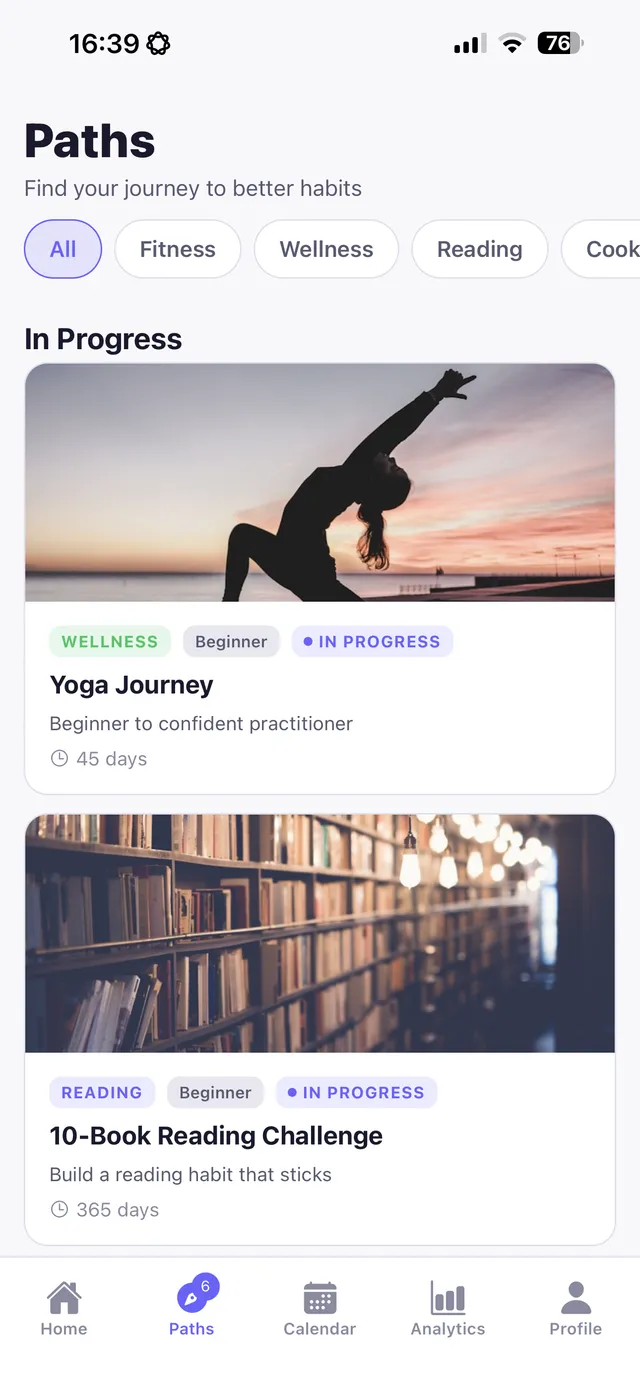
Replacify's paths are built with this in mind. Fitness, wellness, and several other categories are exactly the kind of habits known for ripple effects — so when you choose a replacement path for a struggle, you're not just filling the gap the old habit left, you're often building a keystone habit that makes the rest of your routine easier too. The SOS button and streak tracking keep that keystone habit consistent enough to actually generate the ripple.
Frequently asked questions
What is a keystone habit?
A keystone habit is a single habit whose effects spread beyond its own area, indirectly improving other seemingly unrelated parts of life — for example, exercise often also improves sleep, mood, and eating patterns.
What are common examples of keystone habits?
Frequently cited examples include exercise, a consistent sleep schedule, making your bed, meal planning, and daily journaling — each tends to create ripple effects in areas beyond its direct domain.
How do I find my own keystone habit?
Look at what was present in your best weeks and what was missing in your worst weeks. The habit that shows up most consistently in your good stretches, or is most consistently absent in your bad ones, is likely doing keystone-level work for you.
Can a keystone habit help me quit a bad habit?
Often, yes. A keystone habit like exercise or better sleep can reduce the stress, boredom, or low energy fueling a bad habit, making it easier to replace — especially when the replacement habit is itself a keystone habit.
Replace the habit. Not yourself.
Replacify helps you swap a bad habit for a better one — with structured paths, an SOS button for cravings, a focus timer, and streaks that keep you going.