The Habit Scorecard: How to Audit Every Habit You Have

Most people can name one or two habits they're actively trying to change. Almost nobody can list the forty or fifty habits actually running their day — the automatic ones that are too small or too routine to notice: the order you get ready in the morning, what you reach for when you're bored, how you respond to a notification. A habit scorecard exists to drag all of that into view at once, because you can't change what you never notice.
The short answer
A habit scorecard is a simple audit exercise: list your daily habits, one by one, as specifically as you can, and mark each one +, neutral, or − based on whether it moves you toward or away from who you want to be. The point isn't the score itself — it's the act of noticing habits that were previously running on autopilot. Once you have the list, the next step is picking just one negative habit to work on replacing, rather than trying to overhaul everything at once.
Why most habits are invisible by default
Habits become habits precisely because they stop requiring conscious attention — that's the whole mechanism behind habit formation. The tradeoff is that once a behavior becomes automatic, it also becomes very hard to notice, let alone evaluate. You don't consciously decide to check your phone the moment you wake up; you just find yourself doing it. A scorecard interrupts that invisibility on purpose.
How to actually build one
Walk through a typical day, in order. Start from waking up and move through the day hour by hour: what do you do first, what do you do while eating, what do you do when you're bored, what do you do before bed. Write down every recurring behavior you can identify, even ones that seem too small to matter.
Be specific, not general. "Eating" isn't a habit you can evaluate — "eating breakfast standing up while scrolling" is. Specificity is what makes the exercise useful; vague entries can't be marked honestly.
Mark each one.
| Mark | Meaning |
|---|---|
| + | Moves you toward who you want to be |
| Neutral | Doesn't clearly help or hurt |
| − | Moves you away from who you want to be |
Judge without editing yet. The scoring step is just honest observation — resist the urge to start fixing things while you're still building the list. Mixing evaluation with action too early tends to make people skip entries that feel uncomfortable to admit.
Look for patterns, not individual entries. A single − habit rarely matters much on its own. What matters is whether several of your − habits cluster around the same trigger — stress, boredom, a specific time of day — because that cluster is usually more fixable as one problem than as five separate ones.
What to do with the results
The scorecard's value comes entirely from what happens next, and the most common mistake is trying to fix everything marked − at once. That's a reliable way to burn out and abandon the whole effort within a week. Instead:
- Pick one − habit — ideally the one that shows up most often or seems to trigger other − habits.
- Decide its replacement in advance, using something like an implementation intention: "if [trigger], then [replacement]."
- Leave the rest of the list alone for now. The scorecard isn't a to-do list to clear in one sitting — it's a map you can return to once the first habit is under control.
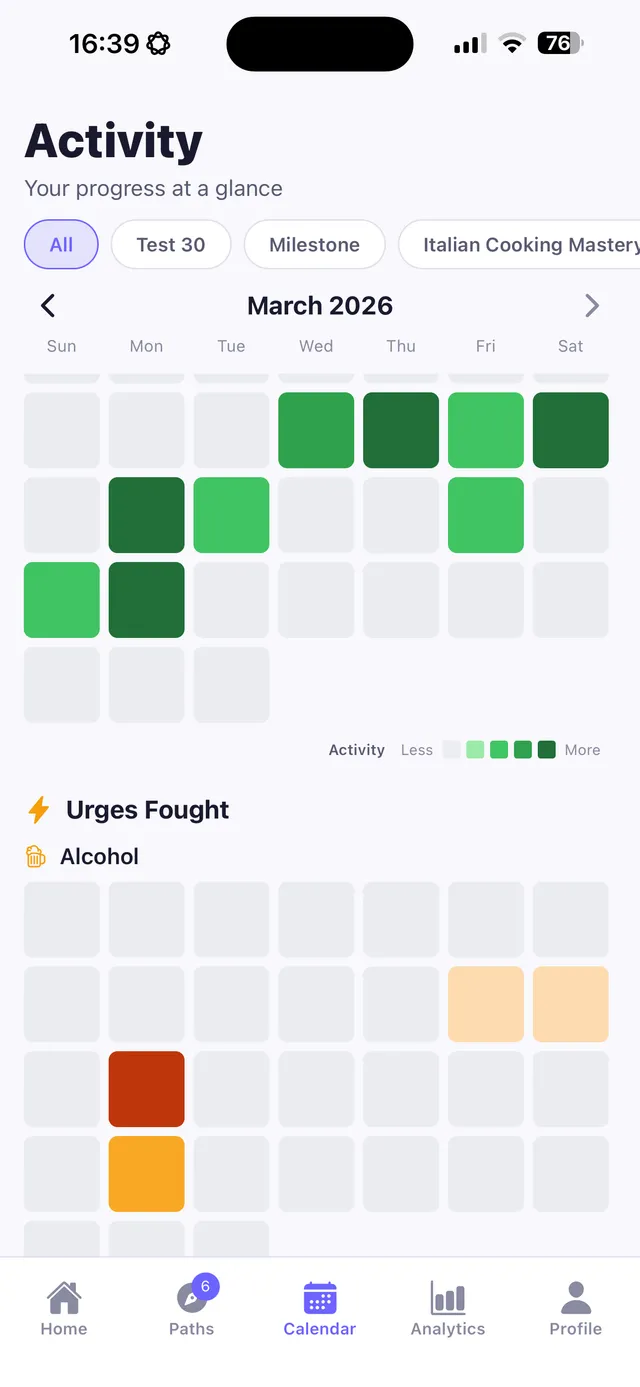
Replacify helps you swap a bad habit for a better one — with structured paths, an SOS button for cravings, a focus timer, and streaks that keep you going.


Revisit it periodically
A scorecard isn't a one-time exercise. Habits shift as your context changes — a new job, a move, a stressful period — so revisiting the scorecard every few months catches new automatic behaviors before they've had time to root in, and shows you which past − habits have genuinely become + or neutral. This pairs well with a habit tracker for the specific habit you're actively working on, while the scorecard stays the wider, periodic check-in.
The bottom line
You can't change a habit you haven't noticed, and most habits are specifically designed by your brain to go unnoticed. A scorecard forces a full, honest list into view, marks what's helping and what isn't, and — most importantly — gives you one clear starting point instead of an overwhelming pile of everything at once.
Replacify is a natural next step after building your scorecard. Once you've identified a − habit worth working on, choose it as your struggle and pick a replacement path to pair with it. Daily check-ins keep the awareness from the scorecard going day to day, the SOS button is there for the moments the old habit's trigger fires, and your streak shows the − habit actually shifting toward neutral or +.
Frequently asked questions
What is a habit scorecard?
A habit scorecard is an audit exercise where you list your daily habits as specifically as possible and mark each one as +, neutral, or − based on whether it moves you toward or away from who you want to be.
How do I build a habit scorecard?
Walk through a typical day hour by hour, write down every recurring behavior as specifically as you can, and mark each one honestly without trying to fix anything yet. Then look for patterns across the − habits rather than treating each one separately.
What should I do after completing a habit scorecard?
Pick just one negative habit to work on first, ideally one that shows up often or triggers other negative habits, and decide its replacement in advance rather than trying to overhaul every habit on the list at once.
How often should I redo my habit scorecard?
Every few months, or after a significant life change like a new job or a move, since new automatic habits can form quickly and old ones may have already improved without you noticing.
Replace the habit. Not yourself.
Replacify helps you swap a bad habit for a better one — with structured paths, an SOS button for cravings, a focus timer, and streaks that keep you going.