Am I Addicted to My Phone? 12 Signs of Phone Addiction (and What to Do Next)

You pick up your phone to check the time and 40 minutes later you're deep in a video feed. You feel a jolt of anxiety when you can't find it. You check it before you've opened your eyes properly. If you've ever wondered "am I addicted to my phone?", you're asking a question millions of people ask — and the answer is usually less about labels and more about control.
The short answer
"Phone addiction" isn't a formal medical diagnosis, but compulsive smartphone use is widely studied. The key signs are loss of control (using it more than you intend), preoccupation (thinking about it or checking constantly), withdrawal-like discomfort when you can't use it, and continuing despite negative effects on sleep, work, relationships or mood. If several signs fit, it's worth making changes — starting with notifications, phone-free zones and replacement habits.
Is phone addiction real?
Researchers often use terms like "problematic smartphone use" rather than addiction. It's not listed as a disorder in the major diagnostic manuals, though related patterns — like gaming disorder — are. What matters practically is whether your phone use is getting in the way of the life you want.
12 signs of phone addiction
- You use your phone much longer than you planned — often.
- You've tried to cut down and couldn't.
- You check it within minutes of waking — before getting out of bed.
- You reach for it automatically in any idle moment: queues, lifts, the bathroom.
- You feel anxious or irritable when your battery is low or you can't find it.
- You feel phantom vibrations — thinking it buzzed when it didn't.
- It's the last thing you look at at night and cuts into your sleep.
- You check it during conversations, meals or time with family.
- You use it to escape difficult feelings, almost every time.
- Your work, study or hobbies suffer because of time on your phone.
- You've had conflict with people about your phone use.
- You feel worse after long sessions but keep doing it anyway.
Quick self-check
| Question | Yes / No |
|---|---|
| Do you regularly use your phone longer than intended? | |
| Have you tried and failed to cut down? | |
| Does phone use regularly cut into your sleep? | |
| Do you feel uneasy without your phone? | |
| Has your phone use caused problems at work, school or home? | |
| Do you mostly feel worse, not better, after long sessions? |
This isn't a diagnostic tool. But if you answered "yes" to three or more, it's a strong sign that changing your habits would help.
Why phones are so compulsive
- Variable rewards: you never know what a notification or refresh will bring.
- Infinite content: feeds and autoplay remove stopping points.
- Always available: the phone is in your pocket all day.
- Many cues: boredom, stress, notifications, waiting, bedtime.
Doomscrolling follows the same pattern, and the popular idea of a dopamine detox oversimplifies what's really going on.
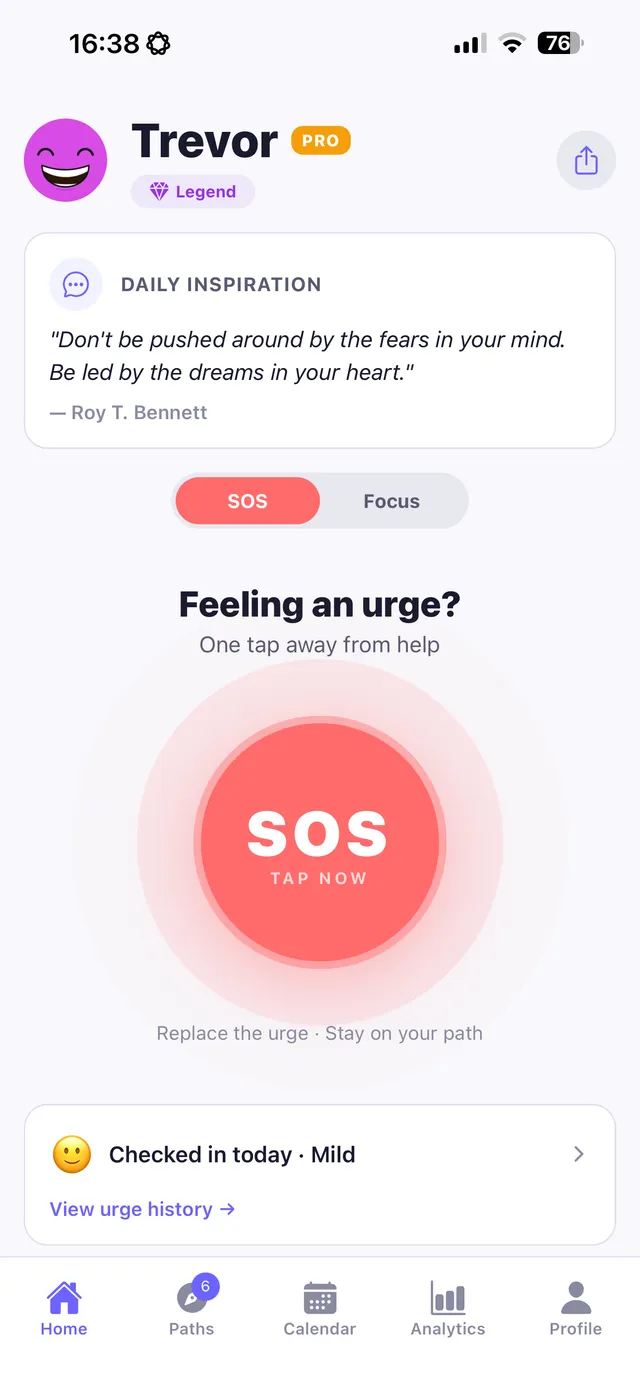
Replacify helps you swap a bad habit for a better one — with structured paths, an SOS button for cravings, a focus timer, and streaks that keep you going.


What to do next
1. Check your data
Look at Screen Time or Digital Wellbeing for the last week: total time, pickups, and your top apps. That's your baseline.
2. Cut the cues
Turn off all non-essential notifications. Move social apps off your home screen. Use grayscale in the evenings.
3. Create phone-free zones
The bedroom and mealtimes are the best places to start. Charge your phone outside the bedroom and use a separate alarm.
4. Replace the reach
Your hand will reach for the phone in idle moments. Decide what it reaches for instead: a book, a notebook, a fidget, a glass of water. 60 replacement ideas.
5. Schedule phone-free blocks
Use a timer for 25–45 minutes of focused work or a hobby with the phone in another room. How to reduce screen time has 15 more changes.
When to get help
If your phone use feels completely out of control, is seriously affecting your work, relationships or sleep, or you use it to cope with anxiety or low mood, talk to a doctor or therapist. The underlying issues are often very treatable.
The bottom line
You don't need a diagnosis to know your phone use isn't working for you. If you're using it more than you intend, reaching for it automatically and feeling worse afterwards, start with notifications, phone-free zones and specific replacements — and track your progress.
Replacify includes Phone Addiction as one of its struggles. Use the free SOS button or the SOS widget when the urge to pick up your phone hits, run focus timer sessions for phone-free blocks, and pick a replacement path — reading, drawing, running, a language — to fill the time with something you'll be proud of.
Frequently asked questions
Is phone addiction a real diagnosis?
Phone addiction isn't a formal diagnosis, but problematic or compulsive smartphone use is widely studied and can seriously affect sleep, work and relationships.
What are the signs of phone addiction?
Common signs include using your phone longer than intended, failing to cut down, checking it constantly, anxiety without it, and continuing despite negative effects on sleep, work or relationships.
How do I stop being addicted to my phone?
Turn off non-essential notifications, create phone-free zones like the bedroom, move tempting apps off your home screen, replace idle checking with other activities and schedule phone-free blocks.
When should I get help for phone addiction?
If your phone use feels out of control or seriously affects your life, or you use it to cope with anxiety or low mood, talk to a doctor or therapist.
Replace the habit. Not yourself.
Replacify helps you swap a bad habit for a better one — with structured paths, an SOS button for cravings, a focus timer, and streaks that keep you going.