How to Make a Relapse Prevention Plan (With a Free Template)

The first days after quitting a habit get most of the attention. But many people slip weeks or months later — on a stressful day, at a party, after a bad night's sleep — when they least expect it. A relapse prevention plan is a simple document you write in advance that prepares you for exactly those moments. It's widely used in addiction treatment, and it works just as well for everyday habits.
The short answer
A relapse prevention plan lists your reasons for changing, your personal triggers, your early warning signs, your high-risk situations, what you'll do instead in each, who you can contact, and what you'll do if you slip. Writing it down while you're calm means you don't have to invent a plan in the middle of a craving.
Why relapse happens
Relapse is common when changing any habit, and it's usually not a sudden event. Often there's a build-up: stress, tiredness, isolation, skipping the routines that were working, "just one" thinking. Relapse prevention approaches, including the model developed by psychologists G. Alan Marlatt and colleagues, focus on recognising high-risk situations and responding differently before a slip happens.
A useful shorthand is HALT — are you Hungry, Angry, Lonely or Tired? These states make urges stronger.
Step 1: Write your reasons
Why are you changing? Be specific: "I want to sleep properly", "I want to be present with my kids", "I want to stop wasting money".
Step 2: List your triggers
| Type | Examples |
|---|---|
| Emotions | Stress, boredom, anger, loneliness, celebration |
| People | Certain friends, family members, colleagues |
| Places | Bars, your bedroom, the car, certain shops |
| Times | Friday evening, late at night, payday |
| Situations | Parties, conflicts, travel, big sporting events |
| Physical states | Tired, hungry, hungover, in pain |
Step 3: Spot your early warning signs
These are the changes that often come before a slip:
- Skipping your new routines (exercise, sleep, wind-down).
- Isolating yourself.
- Romanticising the old habit ("it wasn't that bad").
- "Just one" or "I deserve it" thinking.
- Keeping the habit a secret again.
- Putting yourself in high-risk situations "by accident".
Replacify helps you swap a bad habit for a better one — with structured paths, an SOS button for cravings, a focus timer, and streaks that keep you going.


Step 4: Plan your responses
For each trigger and high-risk situation, write down exactly what you'll do.
| High-risk situation | My plan |
|---|---|
| Friday night after a hard week | Pre-planned activity; alcohol-free drink; leave early |
| Stressful call at work | 5-minute walk; slow breathing; message a friend |
| Alone late at night | Phone outside the bedroom; read; go to bed |
| Strong craving | Name it, delay 5 minutes, move, breathe, do my replacement |
For cravings, use a short routine every time. What to do when a craving hits.
Step 5: List your support
- Two or three people you can contact.
- A helpline or support group if relevant.
- Your doctor, therapist or counsellor if you have one.
- Tools that help — an app, a journal, a meditation practice.
Step 6: Decide what you'll do if you slip
A slip doesn't have to become a full relapse. Write down:
- Stop and get away from the situation.
- Don't make it worse with "I've blown it now" thinking.
- Contact someone on your support list.
- Work out the trigger.
- Update this plan.
- Restart your routine the next day.
What to do after you break your streak goes deeper.
A simple template
MY REASONS:
1.
2.
3.

MY TRIGGERS:
Emotions:
People:
Places:
Times:

MY WARNING SIGNS:
-
-

MY HIGH-RISK SITUATIONS AND PLANS:
Situation → Plan
Situation → Plan

WHEN A CRAVING HITS I WILL:
1.
2.
3.

MY SUPPORT:
Name / number:
Name / number:
Helpline:

IF I SLIP, I WILL:
1.
2.
3.
Keep it somewhere you'll see it — your phone notes, the fridge, your wallet.
Review it regularly
Update your plan every few weeks and after any slip. New triggers appear; old ones fade.
When to get extra support
If you're recovering from alcohol, drug or gambling addiction, a relapse prevention plan works best alongside professional support. If you drink heavily, don't stop suddenly without medical advice. Helplines like SAMHSA (1-800-662-4357) in the US and Drinkline (0300 123 1110) or the National Gambling Helpline (0808 8020 133) in the UK can help.
The bottom line
A relapse prevention plan prepares you for the moments that would otherwise catch you off guard. Write down your reasons, triggers, warning signs, high-risk situations, specific responses, support and what you'll do if you slip. Keep it visible and update it often.
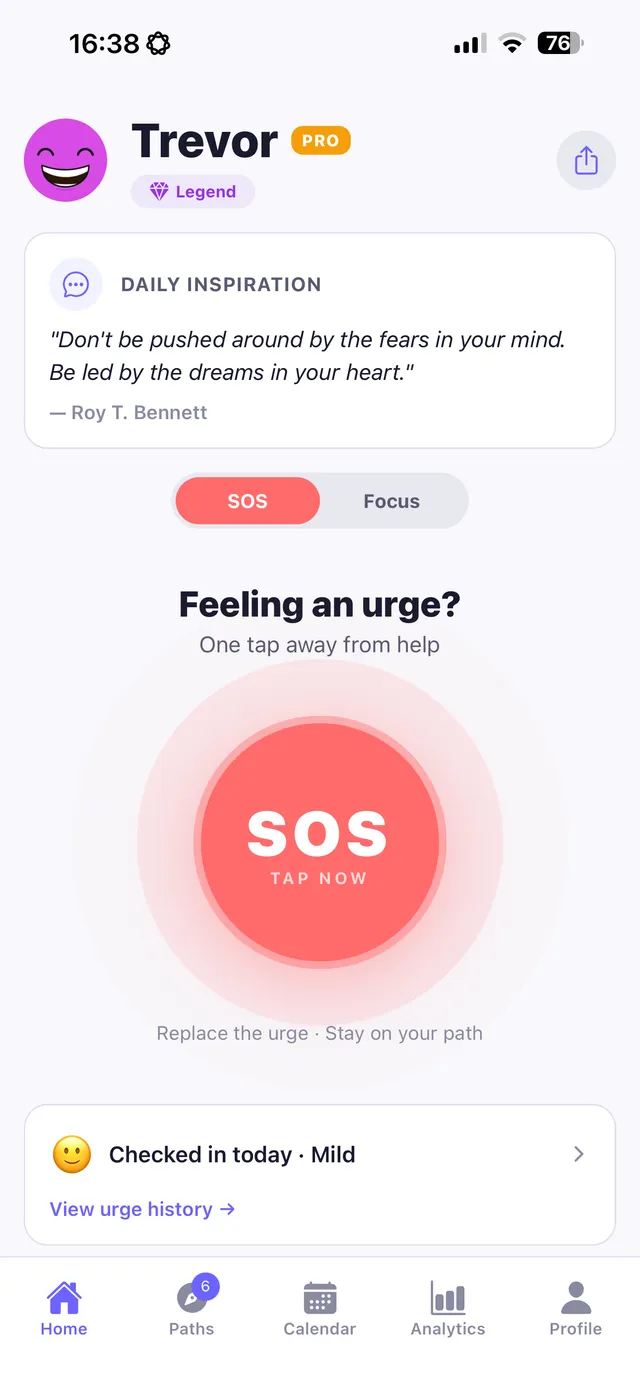
Replacify puts parts of this plan in your pocket: sign a commitment contract with your reasons, use the free SOS button as your go-to craving response, log daily check-ins to spot early warning signs in your urge ratings, and use streak shields as a buffer for tough days.
Replacify is not a medical or treatment service.
Frequently asked questions
What is a relapse prevention plan?
A written plan that lists your reasons for changing, triggers, warning signs, high-risk situations, specific responses, support contacts and what you'll do if you slip.
What are early warning signs of relapse?
Skipping new routines, isolating, romanticising the old habit, 'just one' thinking, secrecy and putting yourself in high-risk situations.
What does HALT stand for?
Hungry, Angry, Lonely, Tired — states that make urges stronger and relapse more likely.
What should I do if I relapse?
Get away from the situation, avoid all-or-nothing thinking, contact someone on your support list, identify the trigger, update your plan and restart your routine.
Replace the habit. Not yourself.
Replacify helps you swap a bad habit for a better one — with structured paths, an SOS button for cravings, a focus timer, and streaks that keep you going.