What Happens When You Quit Vaping? A Day-by-Day and Week-by-Week Guide
Knowing what's coming makes quitting easier. If you've decided to stop — or you're already a few days in and wondering why you feel so irritable — here's a realistic guide to what happens when you quit vaping, from the first hours to the months after.
The short answer
After you quit vaping, nicotine cravings and withdrawal usually start within hours and are strongest in the first few days to a week: irritability, anxiety, restlessness, trouble concentrating, increased appetite and sleep changes. Most physical symptoms ease over two to four weeks, while occasional cravings in trigger situations can last longer. Many people notice more stable mood, better focus, money saved and freedom from constantly needing a hit.
A realistic timeline
| Time after your last vape | What many people experience |
|---|---|
| First few hours | First cravings; restlessness |
| Days 1–3 | Cravings often peak; irritability, anxiety, poor concentration, headaches, increased appetite |
| Days 4–7 | Still tough, but many notice cravings becoming less constant |
| Weeks 2–4 | Physical withdrawal usually eases; mood and concentration improve |
| 1–3 months | Cravings mostly tied to specific triggers (stress, alcohol, certain people) |
| Longer term | Occasional urges may appear in trigger situations; they get weaker with time |
Everyone is different. Heavy use, high-strength devices and using a vape constantly throughout the day can make withdrawal stronger.
Common withdrawal symptoms
- Cravings — the most common and persistent.
- Irritability and frustration.
- Anxiety or low mood.
- Restlessness.
- Difficulty concentrating.
- Increased appetite.
- Sleep changes.
These are signs your body is adjusting to life without nicotine — uncomfortable, but temporary.
What improves after quitting
Many people who quit notice:
- No more constant need to take a hit or check where the vape is.
- More stable mood once withdrawal passes — nicotine dependence can create a cycle of mini-withdrawals and relief throughout the day.
- Money saved.
- Better sense of taste and smell for some people.
- Less coughing or throat irritation for some people.
Research on the long-term health effects of vaping is still developing, but health bodies agree that for non-smokers, not vaping is healthier than vaping — and that nicotine is highly addictive.
Replacify helps you swap a bad habit for a better one — with structured paths, an SOS button for cravings, a focus timer, and streaks that keep you going.


How to get through the hardest days
Days 1–3
- Get rid of all devices and pods.
- Plan replacements for your biggest triggers: mornings, after meals, driving, stress.
- Drink water, eat regular meals and move.
- Warn close friends or family that you might be irritable.
Days 4–14
- Use a craving routine every time: name it, delay, move, breathe, replace. What to do when a craving hits.
- Avoid alcohol and vaping friends if you can — both are common relapse triggers.
- Celebrate small milestones: 3 days, 1 week, 2 weeks.
Weeks 3+
- Watch for "just one" thoughts — they're a classic relapse trap.
- Build a longer-term replacement habit to fill the time. Hobbies to replace bad habits.
Get support
- US: text DITCHVAPE to 88709 for Truth Initiative's free This is Quitting programme, or call 1-800-QUIT-NOW.
- UK: your local NHS Stop Smoking Service and pharmacists.
- Nicotine replacement therapy can help some people — talk to a pharmacist or doctor.
If you slip
A puff doesn't mean you've failed. Get rid of the device, note what triggered it, and continue. What to do after you break your streak. For the full quitting plan, see how to quit vaping.
The bottom line
When you quit vaping, the first few days are usually the hardest, with cravings, irritability and restlessness. Physical withdrawal typically eases over a few weeks, and cravings become occasional and tied to triggers. Plan for triggers, ride out cravings, get support, and keep going after any slip.
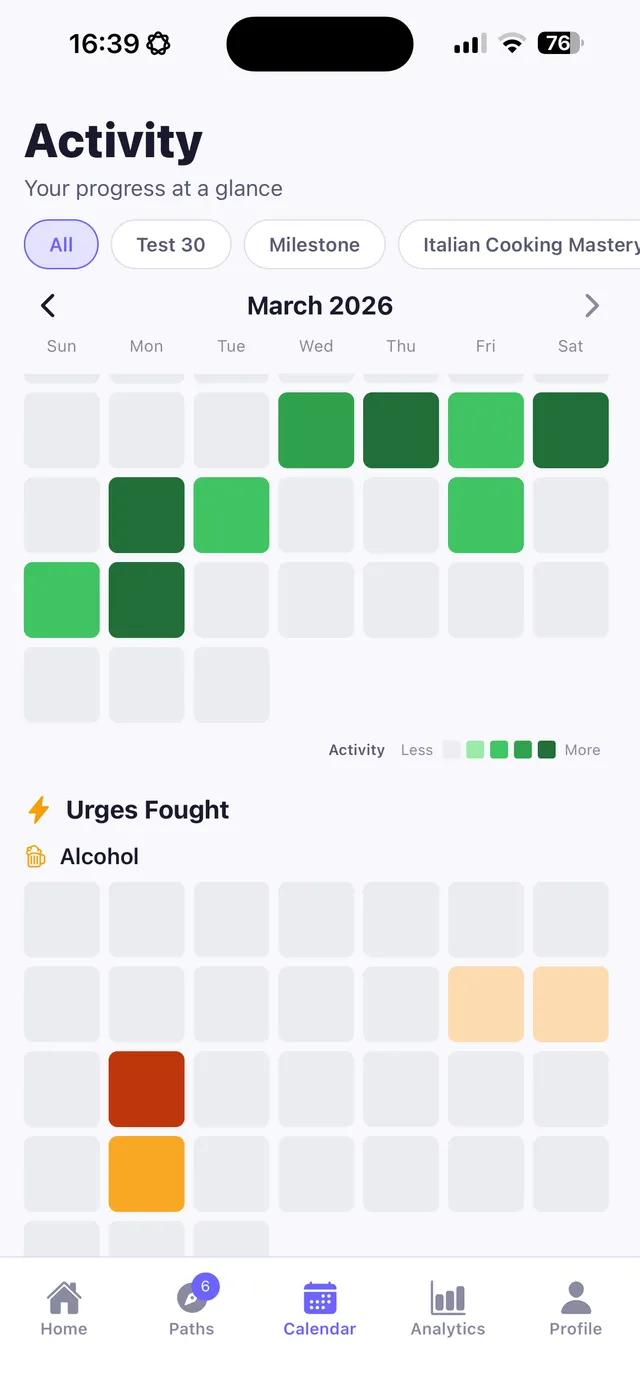
Replacify helps you through each stage: choose Vaping as your struggle, tap the free, unlimited SOS button when cravings peak, log check-ins with urge ratings to watch them fall, and see every vape-free day on your streak and heatmap calendar.
Replacify is not a medical service. Talk to a pharmacist or doctor about nicotine replacement and withdrawal.
Frequently asked questions
What happens when you quit vaping?
Cravings and withdrawal usually start within hours and are strongest in the first few days to a week. Physical symptoms usually ease over two to four weeks, and many people feel more stable and free once they pass.
How long does vape withdrawal last?
Physical withdrawal typically eases over two to four weeks. Occasional cravings in trigger situations can last longer but get weaker over time.
What are the symptoms of quitting vaping?
Cravings, irritability, anxiety, restlessness, trouble concentrating, increased appetite and sleep changes are common.
What helps with vape withdrawal?
Removing devices, planning replacements for triggers, a routine for riding out cravings, avoiding alcohol early on, and support such as a quitline or nicotine replacement therapy.
Replace the habit. Not yourself.
Replacify helps you swap a bad habit for a better one — with structured paths, an SOS button for cravings, a focus timer, and streaks that keep you going.