The Psychology of Breaking Bad Habits (and Why Willpower Isn't Enough)

You've told yourself "I just need more willpower" before. Maybe this morning. It's the most common explanation people give for why a habit sticks around, and it's also one of the least useful. Willpower isn't a character trait you either have or lack — it behaves more like a resource that gets used up, and habits are wired into your brain in a way that mostly bypasses it anyway. Understanding what's actually happening changes how you approach breaking one.
The short answer
Willpower fails because it's a limited, fatigue-prone resource, not a fixed trait — and because habits run on automatic cue-response loops that don't wait for conscious decisions. What works better: removing or avoiding the trigger, substituting a replacement behavior that meets the same need, changing your environment so the old habit is harder to start, and building an identity around the person who doesn't do this anymore. None of these require you to "want it" more in the moment a craving hits.
Why willpower runs out
Self-control draws on limited mental resources — after a long day of decisions, resisting temptation gets measurably harder for most people. This is why bad habits so often win in the evening, or during stressful weeks, even for people who "have willpower" during calmer stretches. If your plan for breaking a habit depends on having strong resolve every single time the urge shows up, you're betting against your own biology on your worst days, not your best ones.
There's a second problem: habits aren't decisions. Once a behavior is well-practiced, it runs largely automatically, triggered by a cue in your environment — a location, a time of day, an emotion, another person. By the time you consciously notice the urge, the habit loop is already halfway executed. Willpower is a tool for stopping a decision; it's a much weaker tool for interrupting something that never felt like a decision in the first place. Understanding the habit loop — cue, craving, response, reward — is the first step to seeing why this happens.
What actually works instead
1. Remove or avoid the trigger
The easiest craving to resist is the one you never have. If a habit is reliably triggered by a specific cue — a route home that passes a certain shop, a phone sitting on your nightstand, a friend who always suggests the same thing — changing your exposure to that cue does more work than any amount of resisting in the moment.
2. Substitute, don't just subtract
Trying to leave a hole where the habit used to be rarely works, because the underlying craving or need doesn't disappear just because you've decided to stop. A replacement behavior that serves a similar function — stress relief, boredom relief, social connection, a sense of reward — gives the craving somewhere to go. This is the core idea behind how to break a bad habit the sustainable way.
3. Change your environment
Environment design does more of the heavy lifting than most people expect. Making the habit physically harder to do — leaving the credit card at home, logging out of an app, putting temptations out of reach — reduces how often you even have to rely on in-the-moment self-control.
4. Anchor it to identity
Behavior that's tied to who you believe you are tends to outlast behavior that's just a goal. "I'm someone who goes for a walk when I'm stressed" is a more durable driver than "I'm trying to stop snacking." Identity-based habits shift the question from "can I resist this?" to "does this match who I am?" — which needs far less willpower to sustain.
| Approach | What it targets | Why it beats raw willpower |
|---|---|---|
| Remove the trigger | The cue | No cue, no automatic craving to resist |
| Substitute a replacement | The craving/reward | Gives the urge somewhere to go instead of a void |
| Change environment | Friction | Makes the habit slower or harder to start |
| Identity anchor | Motivation | Runs on self-concept, not depletable resolve |
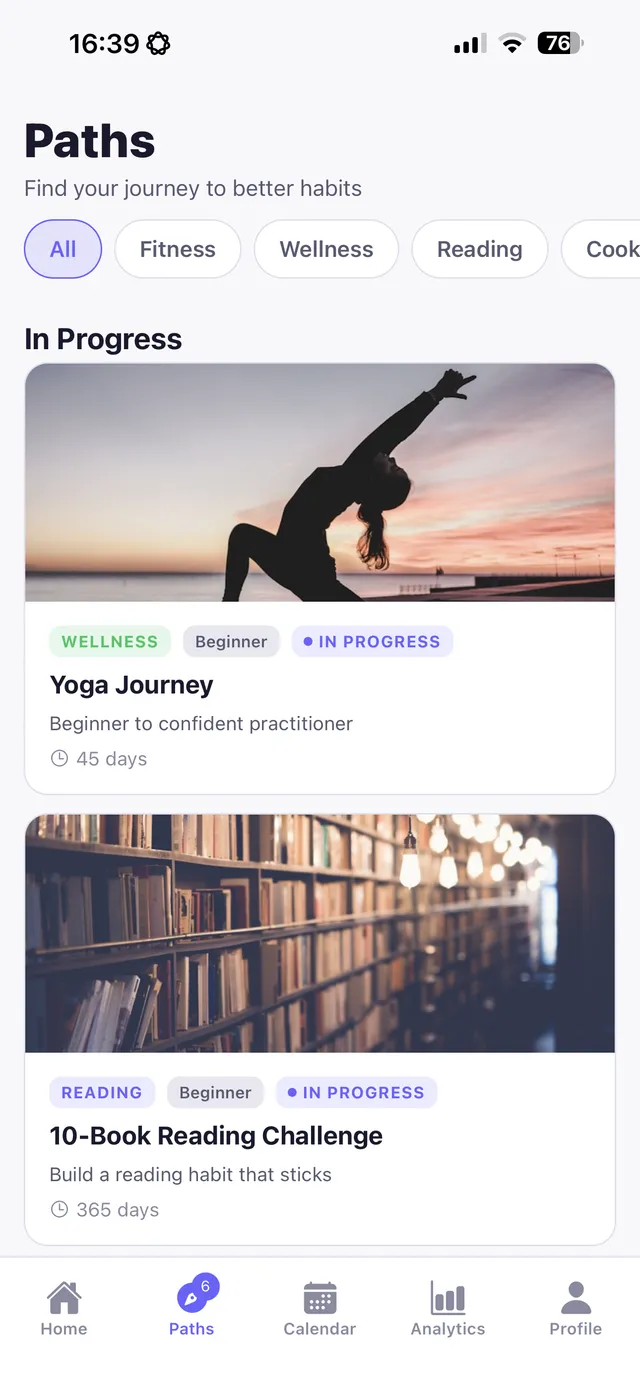
Replacify helps you swap a bad habit for a better one — with structured paths, an SOS button for cravings, a focus timer, and streaks that keep you going.


Willpower still has a role — just a smaller one
None of this means willpower is useless. You'll still need a burst of it to set the plan up: to actually remove the trigger, to actually put the replacement behavior in place, to get through the first uncomfortable days. The difference is that willpower becomes a one-time setup cost instead of something you have to spend fresh every single time the craving hits. That's a much more sustainable trade, especially since research on why habits are so hard to quit points to the same conclusion: habits that formed slowly through repetition don't unwind through a single act of resolve.
The bottom line
Willpower isn't nothing, but it's the wrong tool to lean on for the whole job — it's limited, it fatigues, and habits are largely automatic by the time you notice the urge. What holds up better is removing triggers, substituting a real replacement, redesigning your environment, and anchoring the change to identity rather than pure resolve.
That's the actual mechanism Replacify is built around: you choose your struggle and a replacement path that fits — fitness, reading, cooking, whatever actually appeals to you — so cravings have somewhere real to go. When an urge hits anyway, the SOS button gives you a fast, structured way to ride it out instead of relying on willpower alone. And tracking your streak reinforces the identity piece, day by day, without needing constant heroics.
Frequently asked questions
Why doesn't willpower alone work to break a bad habit?
Willpower is a limited, fatigue-prone resource, and habits run largely on automatic cue-response loops that are triggered before you consciously decide anything. Relying on willpower means betting on your resolve holding up on your worst days, not just your best ones.
What works better than willpower for breaking habits?
Removing or avoiding the trigger, substituting a replacement behavior that meets the same underlying need, redesigning your environment to add friction, and anchoring the change to your identity rather than pure resolve.
Is willpower completely useless for behavior change?
No — it's useful for the initial setup, like actually removing a trigger or putting a replacement behavior in place. The goal is to make willpower a one-time cost rather than something you need fresh every time a craving hits.
How does the habit loop relate to willpower?
A habit is a cue-craving-response-reward loop that runs largely automatically once it's well practiced. By the time you notice the craving, part of the loop has already fired, which is why interrupting it upstream — at the cue — works better than resisting it downstream.
Replace the habit. Not yourself.
Replacify helps you swap a bad habit for a better one — with structured paths, an SOS button for cravings, a focus timer, and streaks that keep you going.