Why Is It So Hard to Quit a Bad Habit? 7 Reasons (and What Actually Helps)
You've promised yourself — again — that this time you'll quit. Maybe it lasts a day, maybe three weeks. Then a stressful afternoon, a certain friend or a quiet evening, and you're back where you started. If you're wondering why it's so hard to quit a bad habit, the answer is reassuring: it's not a character flaw. Habits are built to be hard to break. Once you understand why, you can work with your brain instead of against it.
The short answer
Quitting is hard because habits are automatic (triggered by cues before you decide), rewarding (they meet real needs), reinforced by cravings, tied to your environment and identity, and harder under stress — and some involve physical dependence. What helps: change your environment, replace the routine rather than just stopping, plan for cravings, reduce stress, build a new identity with small wins, and treat slips as data.
1. Habits run on autopilot
Habits are designed to save mental effort. After enough repetitions, a cue — a time, place, emotion or action — triggers the behaviour automatically. That's why you can find yourself scrolling or reaching for a snack without having decided to. The habit loop explained.
What helps: Change or remove the cues. Move the phone, clear the cupboard, avoid the trigger situation while the new habit forms.
2. The habit meets a real need
Every habit does something for you: relief, comfort, stimulation, connection, escape. Remove it without meeting that need, and the pull returns.
What helps: Replace, don't just remove. 60 replacement behaviors matched to the need behind the habit.
3. Cravings feel like they'll never end
Cravings create a strong, uncomfortable pull. In the moment, it feels like it will only get worse until you give in. In reality, most cravings rise, peak and pass within minutes.
What helps: A pre-planned response — name it, delay, move, breathe, do something else. What to do when a craving hits.
4. Stress makes old habits stronger
Research suggests that under stress, people tend to fall back on habitual behaviour rather than deliberate choices. That's why relapses often happen on the hardest days.
What helps: Build stress-relief options that aren't the habit: exercise, breathing, sleep, talking to someone. Plan for high-stress situations in advance.
Replacify helps you swap a bad habit for a better one — with structured paths, an SOS button for cravings, a focus timer, and streaks that keep you going.


5. Your environment is working against you
Habits are tied to places and people. If you live, work and socialise in the same environment as before, the cues are everywhere.
What helps: Change what you can: rearrange spaces, change routes, spend time in new places, spend less time with people who encourage the habit.
6. The habit is part of your identity
"I'm a smoker." "I'm not a morning person." "I'm a gamer." When a habit is part of how you see yourself, quitting can feel like losing part of who you are.
What helps: Build a new identity with small wins — each action is a vote for who you're becoming. Identity-based habits.
7. Some habits involve physical dependence
Nicotine, alcohol and caffeine cause physical dependence, with withdrawal when you stop. That makes the first days or weeks especially hard.
What helps: Plan for withdrawal and get support — a pharmacist, doctor or quitline. For heavy alcohol use, talk to a doctor before stopping, as withdrawal can be dangerous. Cold turkey vs cutting down.
The 7 reasons at a glance
| Reason | What helps most |
|---|---|
| Autopilot cues | Change or remove the cues |
| The habit meets a need | Replace the routine |
| Cravings | A pre-planned SOS response |
| Stress | Other stress-relief options |
| Environment | New spaces, routes and routines |
| Identity | Small wins that build a new identity |
| Physical dependence | Support, and medical advice where needed |
Why "willpower" isn't the answer
Relying on willpower means fighting the same battle every day, in every trigger situation. People who seem to have great self-control often simply structure their lives so they face fewer temptations. Design beats discipline.
How long does it take?
Longer than most people think. Research suggests forming a new habit takes on average around two months, with a very wide range between people and behaviours. How long it takes to build a habit.
Slips are part of the process
Most people who change a habit for good have several attempts. A slip isn't failure; it's information about a trigger you haven't planned for yet. What to do after you break your streak.
The bottom line
It's hard to quit a bad habit because habits are automatic, rewarding, craving-driven, tied to your environment and identity, stronger under stress and sometimes physical. None of that means you can't change. Change your cues, replace the routine, plan for cravings, manage stress, build a new identity and treat slips as data.
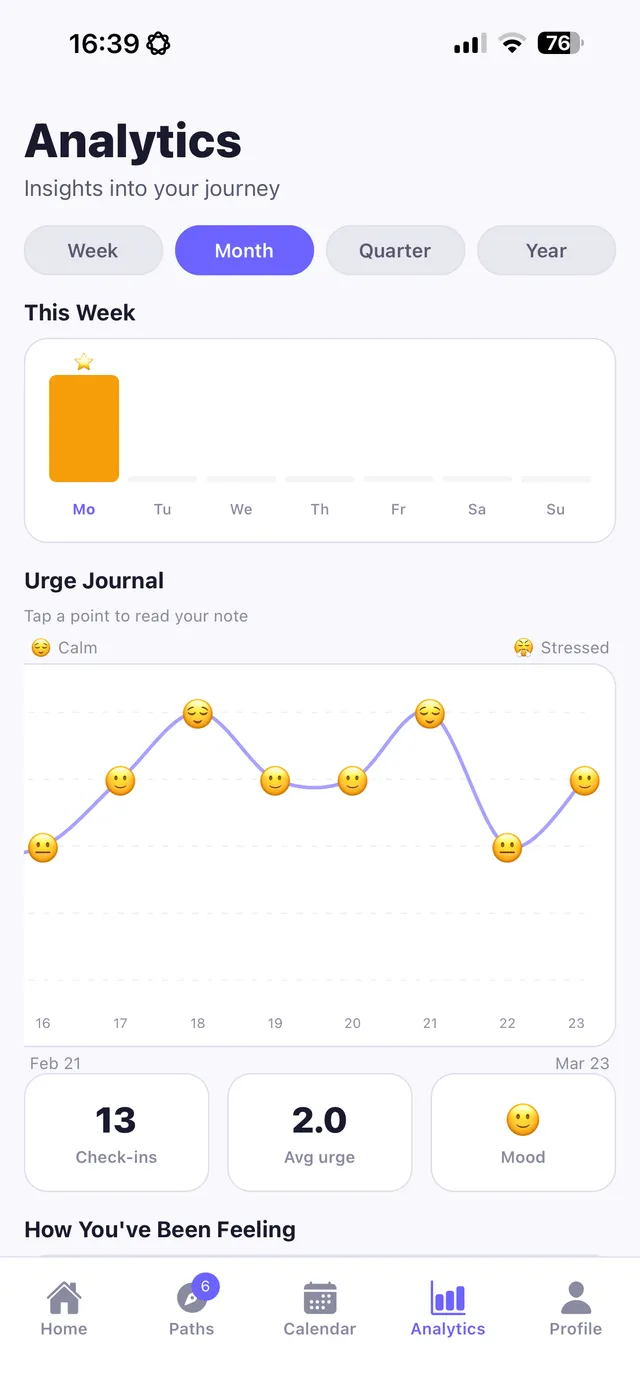
That's the thinking behind Replacify: "You don't quit a habit. You replace it." Pick your struggle, enroll in a replacement path, use the free SOS button when cravings hit, and track your streaks, urges and progress over time.
Frequently asked questions
Why is it so hard to quit a bad habit?
Habits are automatic, rewarding and triggered by cues in your environment. Cravings, stress, identity and sometimes physical dependence make them even harder to break.
Why do I keep relapsing?
Relapses often happen under stress or in trigger situations you haven't planned for. Each slip shows you a trigger to prepare for next time.
Is willpower enough to quit a habit?
Usually not on its own. Changing your environment, replacing the routine and planning for cravings are more reliable than relying on willpower.
How long does it take to break a habit?
It varies widely. Research suggests forming a new habit takes around two months on average, with a wide range between people and behaviours.
Replace the habit. Not yourself.
Replacify helps you swap a bad habit for a better one — with structured paths, an SOS button for cravings, a focus timer, and streaks that keep you going.