Classical vs Operant Conditioning: How Both Shape Your Habits

Two names come up constantly in any discussion of behavioral psychology: Pavlov and Skinner. Their experiments are decades old, but the two types of conditioning they described — classical and operant — are still the clearest lens for understanding why certain cues trigger cravings automatically, and why certain behaviors keep getting repeated even when you'd rather they didn't.
The short answer
Classical conditioning (associated with Ivan Pavlov) is about involuntary associations — a neutral cue gets paired with something meaningful until the cue alone triggers a response, like a craving. Operant conditioning (associated with B.F. Skinner) is about voluntary behavior being shaped by its consequences — actions followed by reinforcement happen more often, actions followed by punishment happen less. Most real habits involve both: classical conditioning explains why a cue makes you crave something before you've decided anything, and operant conditioning explains why you keep choosing the behavior once the craving hits.
Classical conditioning: cues that trigger a response automatically
Pavlov's original experiments paired a neutral stimulus (a bell) with something that naturally produced a response (food, which produced salivation). After enough repetitions, the neutral stimulus alone — the bell — began triggering the response on its own, with no food required. The key feature of classical conditioning is that the response is involuntary: it happens automatically once the association is learned, without a conscious decision.
This is exactly why certain situations trigger a craving before you've even registered choosing anything. If you've always scrolled your phone on the couch after dinner, "sitting on the couch after dinner" becomes a cue that triggers the craving to scroll — automatically, the same way Pavlov's bell triggered salivation. The couch didn't used to mean anything; repetition built the association. This is the psychological basis of the "cue" stage in the habit loop, and it's why simply removing yourself from a cue-heavy environment (a different seat, a different route home) can reduce cravings before you've used any willpower at all.
Operant conditioning: consequences that shape voluntary behavior
Skinner's work looked at a different mechanism: how the consequences of a voluntary action change how often that action is repeated. A behavior followed by a reward (reinforcement) becomes more frequent. A behavior followed by an unpleasant consequence (punishment), or one that simply stops being rewarded (extinction), becomes less frequent. Unlike classical conditioning, operant conditioning is about actions you actually choose to take, shaped over time by what happens afterward.
This is the mechanism behind almost every practical habit-change tactic: a streak counter is a form of reinforcement (visible, immediate reward for repeating the behavior). Telling a friend you'll owe them money if you skip your plan is a form of punishment attached to not doing the habit. An accountability partner works largely through operant conditioning — social approval and disapproval are strong, reliable reinforcers and punishers for most people.
How they work together in a real habit
| Classical conditioning | Operant conditioning | |
|---|---|---|
| Associated with | Ivan Pavlov | B.F. Skinner |
| Governs | Involuntary responses (cravings, emotional reactions) | Voluntary behavior (actions and choices) |
| Mechanism | Neutral cue paired repeatedly with a meaningful stimulus | Behavior shaped by reinforcement or punishment afterward |
| Habit example | The couch after dinner automatically triggers a scrolling craving | Checking your phone gets reinforced by a quick dopamine hit, so you do it more |
| Practical lever | Change or avoid the cue | Change the consequence — add reinforcement or friction |
Take a habit like late-night snacking: classical conditioning explains why standing in the kitchen at 10pm produces a craving before you've thought about food at all — the location has been paired with snacking so many times it now triggers the craving on its own. Operant conditioning explains why you keep opening the pantry once the craving hits — the behavior has been reliably reinforced by the taste and by relief from boredom, night after night. Understanding both means understanding both intervention points: you can change the cue (a different evening routine) and change the reinforcement (make the alternative action rewarding instead).
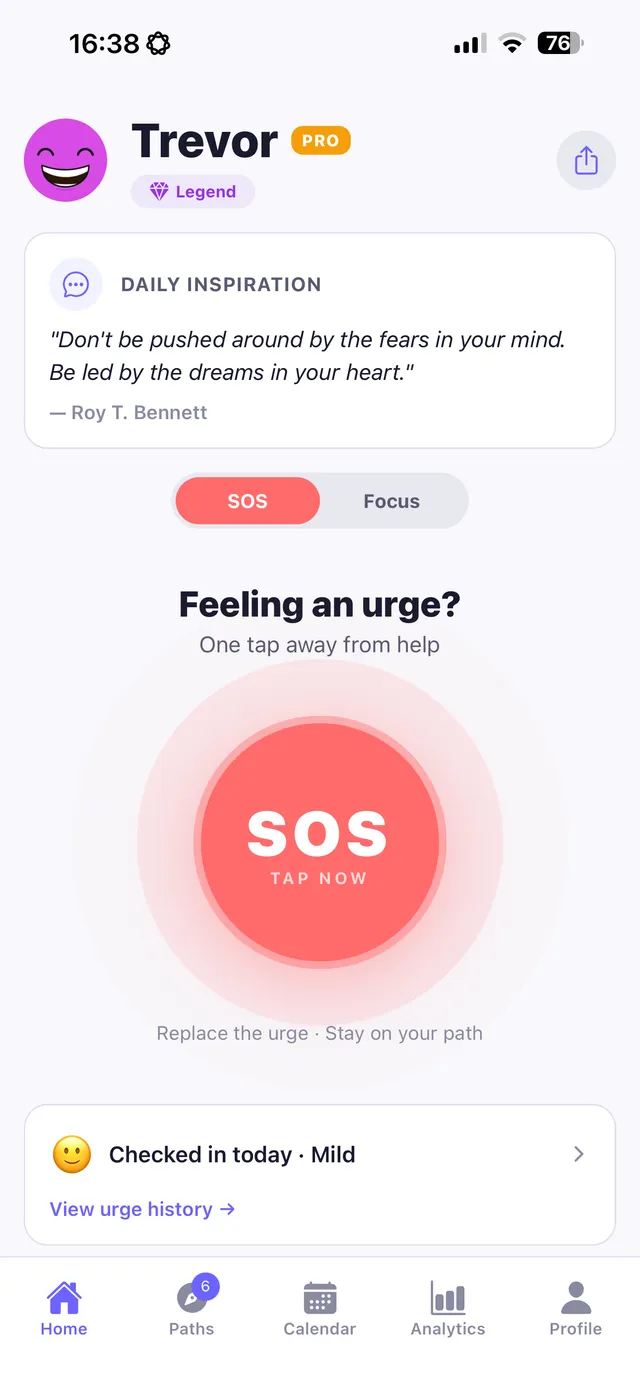
Replacify helps you swap a bad habit for a better one — with structured paths, an SOS button for cravings, a focus timer, and streaks that keep you going.


Using both to actually change a habit
Because classical conditioning creates the craving and operant conditioning maintains the behavior, effective habit change usually needs to work on both levels — not just one. This is the same logic behind cold turkey vs. cutting down: removing the cue entirely (classical) is often more effective than trying to resist the same cue every day while relying on willpower alone (fighting an operant pattern head-on, over and over).
The bottom line
Classical conditioning explains why certain places, times and situations trigger a craving automatically, before you've made any conscious choice. Operant conditioning explains why you keep repeating a behavior once the craving hits — because it's been reinforced. Real habit change usually needs to address both: change your exposure to the cue, and change what happens after the behavior. Replacify is built around both mechanisms — choosing a replacement path changes what a familiar cue now leads to, the free SOS button interrupts the automatic response, and your streak provides the immediate reinforcement that keeps the new behavior building.
Frequently asked questions
What is the difference between classical and operant conditioning?
Classical conditioning (Pavlov) shapes involuntary responses by pairing a neutral cue with a meaningful stimulus. Operant conditioning (Skinner) shapes voluntary behavior through the consequences that follow it — reinforcement increases behavior, punishment decreases it.
How does classical conditioning relate to cravings?
A location, time or situation repeatedly paired with a habit becomes a learned cue that can trigger a craving automatically, even before you've consciously thought about the habit — the same mechanism as Pavlov's bell triggering salivation.
How does operant conditioning relate to habit tracking apps?
Streaks, progress bars and visible milestones act as reinforcement — an immediate reward that makes you more likely to repeat the behavior, which is a direct application of operant conditioning.
Do I need to address both types of conditioning to change a habit?
Usually, yes. Classical conditioning explains why the craving fires; operant conditioning explains why the behavior keeps happening. Changing your exposure to the cue and changing the consequences of the behavior together tends to work better than addressing only one.
Replace the habit. Not yourself.
Replacify helps you swap a bad habit for a better one — with structured paths, an SOS button for cravings, a focus timer, and streaks that keep you going.