Cold Turkey vs Cutting Down: Which Is Better for Quitting a Habit?

When you decide to quit something — smoking, sugar, social media, caffeine — one of the first questions is how. Do you stop completely, overnight? Or cut down step by step? People feel strongly about both, and both can work. The right answer depends on the habit, your history and, crucially, your safety.
The short answer
Cold turkey means stopping completely from a set date. Cutting down (tapering) means reducing gradually. For smoking, a well-known randomised trial found stopping abruptly led to higher quit rates than cutting down first. For caffeine, tapering usually avoids withdrawal headaches. For heavy alcohol use and some medications, stopping suddenly can be dangerous — talk to a doctor. For behaviours like social media, either can work; pick based on your past attempts and personality.
The two approaches
| Cold turkey | Cutting down | |
|---|---|---|
| How | Stop completely on a set day | Reduce step by step |
| Pros | Clear rule; no daily negotiation; quicker end to withdrawal | Gentler; less intense withdrawal; builds confidence |
| Cons | Intense first days; can feel overwhelming | Easy to stall; more decisions; can drag on |
| Good for | Clear, all-or-nothing habits; people who like firm rules | Physical dependence (e.g. caffeine); people who prefer steady progress |
| Not safe for | Heavy alcohol use, some medications, without medical advice | — |
What the research suggests
Smoking
A 2016 randomised trial in England published in Annals of Internal Medicine compared smokers who quit abruptly with those who cut down over two weeks before quitting (both with support and nicotine replacement). The abrupt-quit group had higher abstinence rates at four weeks and six months. Cutting down still worked for some — and for people who prefer it, it's better than not trying at all.
Caffeine
Caffeine withdrawal commonly causes headaches and fatigue. Gradually reducing intake over a week or two tends to reduce these symptoms. How to quit caffeine.
Alcohol
For moderate drinkers, a dry month is usually fine. For heavy or daily drinkers, stopping suddenly can trigger dangerous withdrawal and should be done with medical advice. How to drink less alcohol.
Behaviours (social media, gaming, shopping, sugar)
There's less direct research comparing methods. In practice:
- All-or-nothing rules ("no social media apps on my phone") are easy to follow because there's nothing to decide.
- Gradual limits work when you want to keep something in your life in moderation.
Replacify helps you swap a bad habit for a better one — with structured paths, an SOS button for cravings, a focus timer, and streaks that keep you going.


How to choose
Ask yourself:
- Is there a safety issue? Alcohol, benzodiazepines and other medications: talk to a doctor.
- What happened last time? If gradual reduction kept stalling, try a clean stop. If cold turkey felt overwhelming, try a planned taper.
- Do you like firm rules or steady progress? Some people find "never" easier than "sometimes".
- Can you remove access? If you can delete the app or clear the cupboard, cold turkey is much easier.
- Is withdrawal likely? Physical withdrawal (caffeine, nicotine) often favours a planned approach with support.
Making cold turkey work
- Pick a date and prepare.
- Remove access completely.
- Plan replacements for every trigger. 60 replacement ideas.
- Expect the first few days to be hardest.
- Use support: a friend, an app, a quitline.
Making cutting down work
- Set a clear schedule with an end date — "reduce by one a day each week, finish by the 30th".
- Cut specific situations first (e.g. no vaping in the car, then no vaping at work).
- Track your numbers weekly.
- Don't let "cutting down" become "staying the same".
Whichever you choose
Both approaches rely on the same fundamentals: understanding your habit loop, replacing the routine, handling cravings as they come, and getting back on track after a slip. What to do after you break your streak.
The bottom line
Neither cold turkey nor cutting down is always better. For smoking, research favours stopping abruptly with support; for caffeine, tapering is gentler; for heavy drinking, get medical advice before stopping. For everything else, choose based on your past attempts and personality — then plan your replacements.
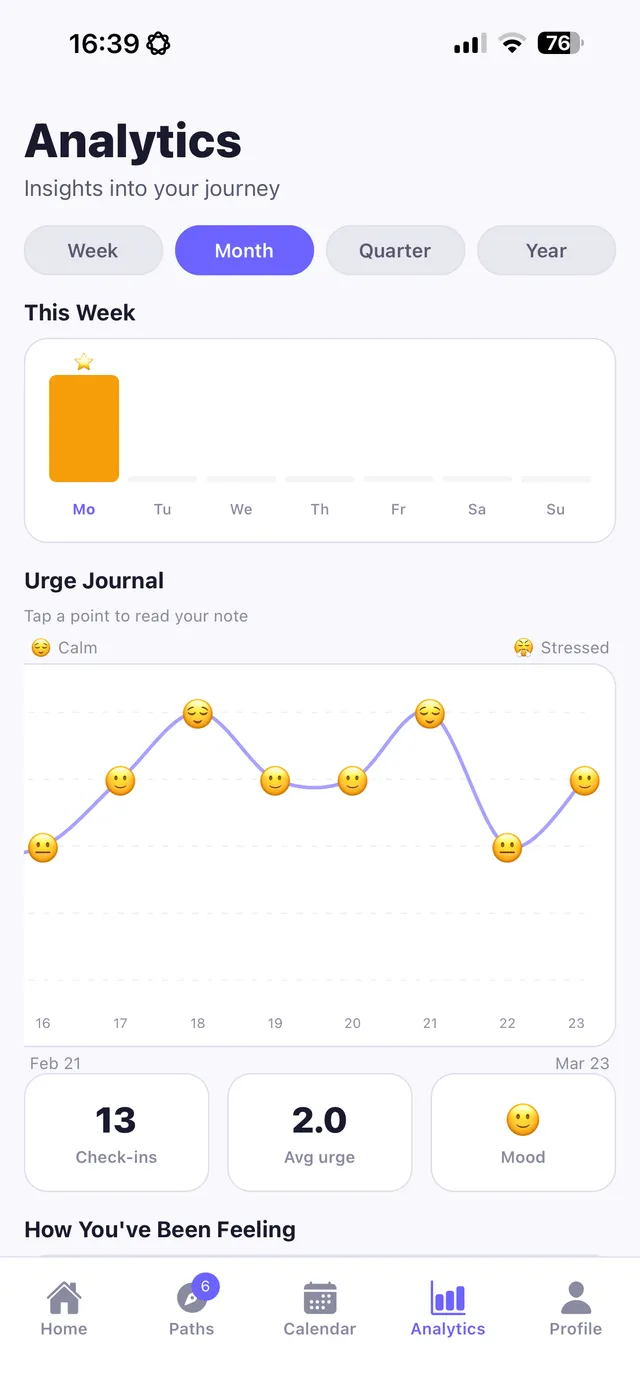
Replacify supports both: go cold turkey with a struggle-free streak and the free SOS button for tough moments, or cut down gradually while logging daily check-ins and urge ratings to watch your progress in the analytics and heatmap calendar.
Replacify is not a medical service. If you drink heavily or take prescription medication, talk to a doctor before stopping.
Frequently asked questions
Is it better to quit cold turkey or gradually?
It depends. For smoking, a randomised trial found quitting abruptly led to higher quit rates than cutting down first. For caffeine, tapering reduces withdrawal. For heavy drinking, talk to a doctor before stopping.
Is quitting alcohol cold turkey dangerous?
For heavy or daily drinkers, yes — withdrawal can be dangerous. Get medical advice before stopping.
How do I cut down on a habit gradually?
Set a clear reduction schedule with an end date, cut specific situations first, track your numbers and make sure the plan keeps moving forward.
Why does cold turkey work for some people?
A clear, all-or-nothing rule removes daily negotiation, and withdrawal ends sooner. It works best when you can remove access completely and plan replacements.
Replace the habit. Not yourself.
Replacify helps you swap a bad habit for a better one — with structured paths, an SOS button for cravings, a focus timer, and streaks that keep you going.