Habit Friction: Make Good Habits Easier and Bad Habits Harder
You'd think the difference between doing a workout and skipping it would come down to motivation. Often, it comes down to something much smaller: whether your gym clothes were already laid out, or whether you had to go find them first. That extra 90 seconds of searching is friction, and friction is one of the most underrated forces in whether a habit actually happens.
The short answer
Friction is the amount of effort — physical, mental, or logistical — standing between you and a behavior. Lowering friction on a good habit (prepping the night before, making it one click away) makes it far more likely to happen, especially on low-motivation days. Raising friction on a bad habit (deleting the app, leaving your phone in another room, unplugging the TV) makes the automatic version of that habit harder to fire, buying you the few extra seconds needed to make a different choice.
Why small amounts of friction matter so much
It's tempting to assume friction only matters for people with weak willpower, but the effect shows up in everyone, because most habitual behavior isn't run by careful deliberation — it's run by the habit loop reacting automatically to a cue. Automatic responses are fast and effortless by definition, which means even a small amount of added effort is enough to interrupt them, because friction forces a moment of conscious attention that an automatic habit is specifically designed to skip.
This cuts both ways. A tiny bit of friction added to a bad habit is often enough to break the automatic chain and give you a chance to choose differently. And removing a tiny bit of friction from a good habit is often enough to get it started on days when motivation alone wouldn't have been enough.
Reducing friction on habits you want
The goal is to shrink the gap between deciding and doing to almost nothing:
- Prep the night before. Clothes laid out, gym bag by the door, ingredients pre-chopped — future-you inherits a head start instead of a decision.
- Make it one click, not five. A workout app already open, a playlist already queued, a document already open to the right page.
- Default to the easy version. A 10-minute walk you'll actually take beats a 45-minute workout you'll keep postponing.
- Remove unnecessary steps. If a habit requires driving somewhere, packing a bag, and changing clothes, look for a version that cuts one of those steps out entirely.
This is closely related to environment design — reducing friction is often just a matter of putting the right object in the right place ahead of time.
Adding friction on habits you don't want
The same lever, run in reverse, works on habits you're trying to shrink:
- Delete the app instead of just trying to use it less — reinstalling it is a deliberate decision, which is exactly the pause you want.
- Leave your phone in another room while working or before bed, so checking it requires physically getting up.
- Unplug the TV after watching, so turning it back on takes more than one click.
- Don't keep the trigger item in the house — if it's not there, reaching for it takes a trip, not a step.
- Log out of accounts instead of staying signed in permanently.
None of these make the bad habit impossible. They just make it slightly slower and slightly more deliberate, which is frequently enough to interrupt the automatic version of it — see how to break a bad habit for how this fits into a fuller strategy.
Replacify helps you swap a bad habit for a better one — with structured paths, an SOS button for cravings, a focus timer, and streaks that keep you going.


Friction and cravings
Friction is especially useful in the exact moment a craving hits, because a craving is trying to trigger the fast, automatic version of a habit — and a few seconds of delay is often all it takes for the urge to lose momentum. This is part of why a structured response matters more than raw willpower when you're deciding what to do when a craving hits: the delay itself, even a short one, does real work.
The bottom line
Friction is a lever you can pull without needing more discipline. Make the habit you want slightly easier to start, and make the habit you don't want slightly harder to start, and you'll notice both shift — not because you tried harder, but because you changed how much effort each one required.
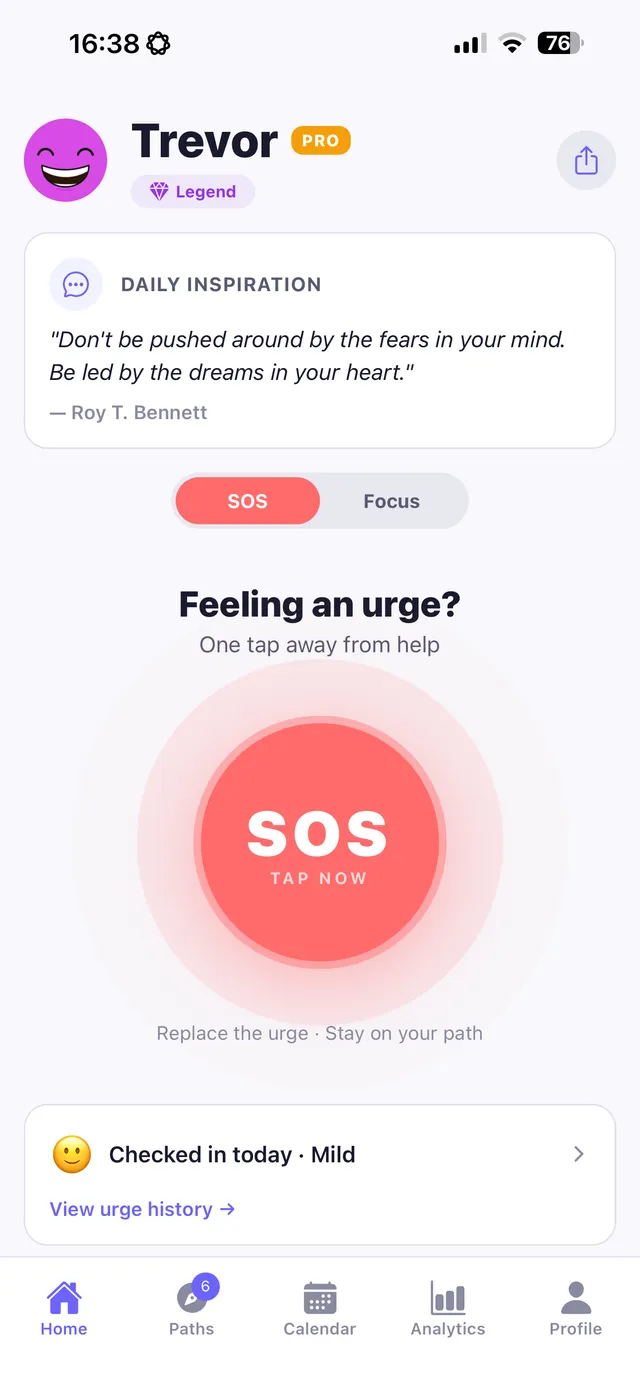
Replacify builds this into how it works. The SOS button exists to lower the friction on doing something other than the old habit the instant an urge hits — no searching for what to do, no decision required. And choosing a struggle with a specific replacement path removes the friction of figuring out your alternative from scratch every single time, so the new behavior is genuinely the path of least resistance.
Frequently asked questions
What is friction in the context of habits?
Friction is the amount of effort — physical, mental, or logistical — required to start a behavior. Lower friction makes a habit easier to start; higher friction makes it harder, which is a useful lever for both good and bad habits.
How do I reduce friction for a habit I want to build?
Prep the elements the night before, cut unnecessary steps, and default to an easy version of the habit rather than an ambitious one. The goal is to shrink the gap between deciding and doing.
How do I add friction to a habit I want to quit?
Remove or hide the trigger — delete the app, leave your phone in another room, unplug the device, or don't keep the item in the house. Small added effort is often enough to interrupt the automatic response.
Why does a few seconds of friction matter so much?
Most habitual behavior runs automatically, without much conscious thought. Even a small delay forces a moment of attention that an automatic habit is designed to skip, which is often enough to change the outcome.
Replace the habit. Not yourself.
Replacify helps you swap a bad habit for a better one — with structured paths, an SOS button for cravings, a focus timer, and streaks that keep you going.