Habit Reversal Training: The Technique Therapists Use to Break Habits

Some habits resist every willpower-based strategy you throw at them — nail biting, skin picking, hair pulling, tics, and similarly automatic body-focused behaviors barely respond to "just stop." That's not a personal failing; these behaviors are often so automatic that the person doing them has limited conscious awareness of starting. Decades ago, behavioral therapists developed a structured technique specifically for this problem: habit reversal training, or HRT. It's still one of the most well-established, evidence-based approaches used clinically today.
The short answer
Habit reversal training is a structured behavioral technique built around three core components: awareness training (learning to notice the habit and its early warning signs), a competing response (a specific, incompatible action you do instead, the moment you notice the urge), and social support (someone who helps reinforce the new response and notices when you slip). It's used clinically for habits like nail biting, skin picking, and tics, and the underlying logic — notice earlier, insert a specific incompatible action, get support — applies more broadly to everyday habit change too.
This article is educational, not medical advice. If a habit is causing you significant distress or physical harm, talk to a licensed therapist — HRT is often delivered as part of professional treatment, and this isn't a substitute for that.
The three components of HRT
1. Awareness training. Many body-focused habits happen with little conscious awareness — you don't decide to bite your nails, you just notice you've been doing it. Awareness training closes that gap. It typically involves describing the behavior in detail (what it looks like, feels like, when it tends to happen) and practicing catching it earlier and earlier — ideally at the first physical urge, before the behavior itself starts. This overlaps closely with mapping habit triggers: the more precisely you can name the moment right before the habit, the more room you have to intervene.
2. Competing response. This is the core mechanic of HRT. The moment you notice the urge, you perform a specific, predetermined action that is physically incompatible with the habit — something that occupies the same body part or attention in a way that makes the old behavior impossible to do at the same time. For nail biting, a common competing response is clenching a fist or gripping something for a set period. For skin picking, it might be balling the hands or applying pressure elsewhere. The competing response isn't meant to be a punishment — it's a specific, practiced substitute that fills the exact moment the old habit used to occupy, which is the same underlying logic behind a good replacement behavior for any habit, not just clinical ones.
3. Social support. A support person — a partner, family member, or friend — is told about the plan and asked to gently point out both instances of the habit and successful uses of the competing response. This isn't about shame; it's about closing the awareness gap from the outside, since automatic behaviors are, by definition, hard to catch on your own every time. This mirrors why an accountability partner works so well for habit change generally — someone else's outside perspective catches what your own awareness misses.
Replacify helps you swap a bad habit for a better one — with structured paths, an SOS button for cravings, a focus timer, and streaks that keep you going.


Why HRT works better than willpower alone for these habits
Body-focused repetitive behaviors tend to be especially automatic, often functioning almost like a physical reflex tied to boredom, stress, or focus. Telling yourself to "just stop" gives your deliberate, effortful thinking brain a job it isn't well positioned to do — that system is comparatively slow, and these habits fire fast, often below conscious notice. HRT works instead by targeting the actual mechanism: it improves detection (awareness training), it gives the automatic system something specific to do instead (competing response), and it adds an outside check the automatic system can't override (social support). This structure is a big part of why HRT has one of the stronger evidence bases among behavioral techniques for habits like these — it addresses the habit loop directly rather than relying on resisting it after the fact. For more on that mechanism generally, see the habit loop.
| HRT component | What it targets |
|---|---|
| Awareness training | The automatic, low-awareness nature of the habit |
| Competing response | The moment of urge, before the habit can execute |
| Social support | Blind spots your own awareness misses |
Applying the same logic beyond clinical habits
You don't need a formal diagnosis to use the core structure of HRT. Any habit benefits from the same three moves: get sharper at noticing the early warning sign, have a specific competing action ready in advance rather than improvising in the moment, and involve someone else who can help you stay honest about both slips and wins.
The bottom line
Habit reversal training is a real, structured, evidence-based technique — not a self-help slogan — and its three components (awareness, competing response, social support) work because they target how automatic habits actually operate, rather than asking willpower to do a job it's poorly suited for. If a body-focused habit is significantly affecting your life, a licensed therapist can deliver HRT properly; this article is meant to explain the concept, not replace that care.
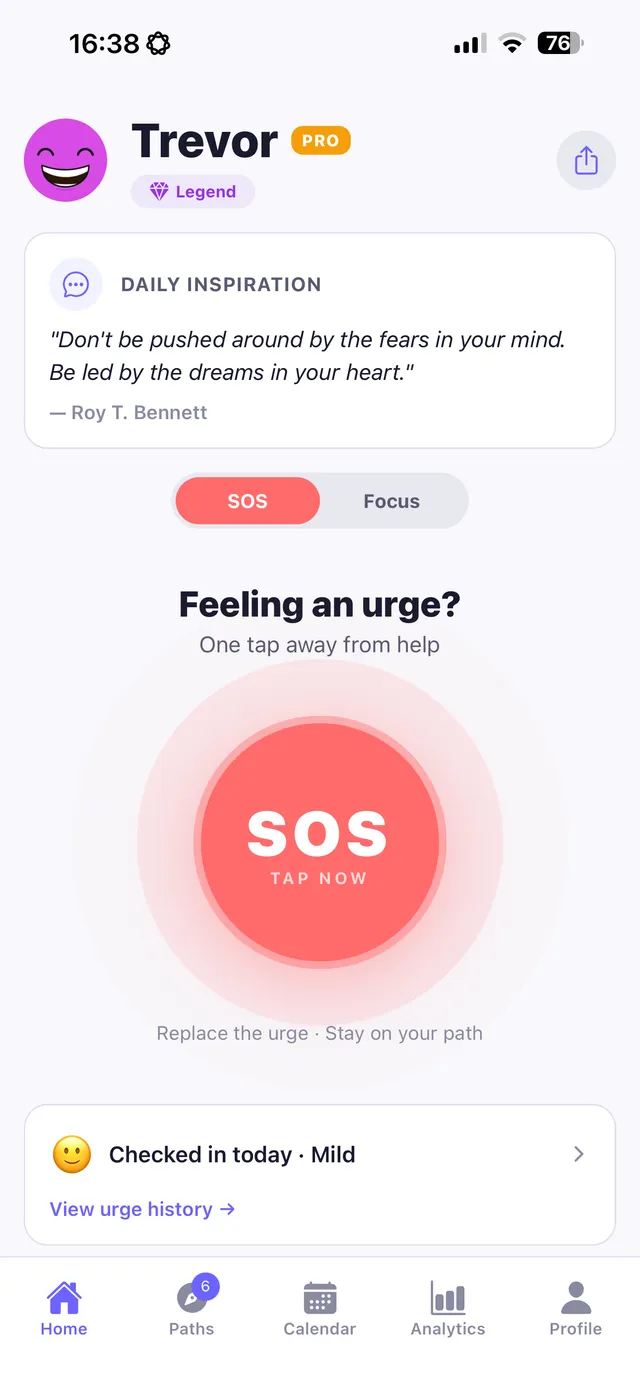
Replacify borrows the same core logic for everyday habit change. Choose your struggle and a replacement path built around a specific competing action, use the SOS button the moment an urge hits instead of improvising, and track your streak — a built-in form of the accountability that makes HRT-style techniques work.
Frequently asked questions
What is habit reversal training (HRT)?
HRT is an established behavioral technique with three components: awareness training to notice the habit and its early cues, a competing response — a specific incompatible action performed the moment an urge is noticed — and social support from someone who helps reinforce the new response.
What habits is HRT typically used for?
HRT is commonly used clinically for body-focused repetitive behaviors like nail biting, skin picking, hair pulling, and tics, though the underlying structure can be applied to other automatic habits too.
Is habit reversal training something I can do on my own?
The basic structure — noticing early cues, using a specific competing action, and getting outside support — can be self-applied for everyday habits. For significant or distressing habits, it's best delivered by a licensed therapist as part of professional treatment.
Is this article a substitute for therapy?
No. This article explains the concept for educational purposes. If a habit is causing significant distress or physical harm, talk to a licensed therapist rather than relying solely on self-directed technique.
Replace the habit. Not yourself.
Replacify helps you swap a bad habit for a better one — with structured paths, an SOS button for cravings, a focus timer, and streaks that keep you going.