Implementation Intentions: The 'If-Then' Trick That Makes Habits Stick

"I'm going to exercise more" and "if it's 7am, I will put on my running shoes and walk out the door" are the same intention wearing two very different outfits. One relies on remembering, deciding, and finding motivation in the moment. The other removes the decision entirely by wiring it to a specific trigger. That second version is called an implementation intention, and it's one of the most consistently useful tools in behavior-change research.
The short answer
An implementation intention is a specific if-then plan that links a concrete situational cue to a concrete action: "If [situation], then I will [behavior]." Instead of relying on a vague intention like "I'll drink more water" or "I'll stop checking my phone so much," you pre-decide exactly what you'll do and exactly when, so the decision is already made before the moment arrives. Specificity is the entire mechanism — vague intentions leave the decision open, and an open decision is exactly what motivation and willpower are bad at handling in the moment.
Why vague intentions fail
Most people don't fail at habits because they lack motivation in general — they fail because motivation isn't reliably available at the exact moment the habit needs to happen. If your plan is "I'll work out when I have time," you're asking your in-the-moment self to notice free time, remember the goal, generate motivation, and choose the habit over every competing option — all at once, repeatedly, forever.
Implementation intentions remove most of that burden by doing the deciding in advance, when you're calm and clear-headed, rather than in the moment, when you're tired, busy, or facing a craving. This is the same principle behind willpower research: willpower is limited and unreliable, so the goal is to need less of it, not to have more of it.
What makes an if-then plan actually work
Not all if-then statements are equally effective. The good ones share three traits:
- The trigger is specific and unambiguous. "When I feel stressed" is vague — stress is constant and fuzzy. "When I close my laptop at the end of the workday" is a clear, noticeable moment.
- The action is small and immediately doable. "Then I will go for a full run" competes with a dozen excuses. "Then I will put on my shoes and step outside" has almost no barrier to entry.
- The pairing is rehearsed, not just written once. Mentally walking through the if-then a few times — really picturing the trigger and the response — measurably strengthens the link compared to just noting it down.
Example templates you can steal
| Goal | If-then plan |
|---|---|
| Exercise more | "If it's 7am, then I put on my running shoes before checking my phone." |
| Reduce phone checking | "If I feel the urge to check my phone at my desk, then I do 10 pushups first." |
| Drink more water | "If I sit down at my desk, then I fill and drink one glass of water." |
| Read more | "If I get into bed, then I read one page before picking up my phone." |
| Handle a craving | "If I feel a craving, then I do the SOS breathing routine for 60 seconds." |
| Stop snacking at night | "If it's after 9pm and I want a snack, then I make tea instead." |
Notice the pattern: the trigger is a specific moment you'll actually notice, and the action is small enough to happen even on a bad day.
Replacify helps you swap a bad habit for a better one — with structured paths, an SOS button for cravings, a focus timer, and streaks that keep you going.


Combine it with cues you already have
Implementation intentions get even stronger when the "if" is a moment already built into your day — this is essentially habit stacking using if-then language instead of "after I do X." Anchoring a new behavior to an existing, reliable cue (closing your laptop, brushing your teeth, sitting down at your desk) is more dependable than anchoring it to a time of day you might not actually notice.
If-then plans are also one of the most practical tools for a relapse prevention plan — instead of a vague "I'll try to resist," you get a specific, rehearsed response ready for the exact moment a craving or trigger shows up, which matters most when you're deciding what to do when a craving hits.
The bottom line
Implementation intentions work because they replace an in-the-moment decision with a pre-made one. "I'll try to do better" leaves the hardest part — deciding, right when you're least equipped to — for later. "If X, then Y" answers it in advance, so the habit has almost nothing left to fight through when the trigger actually shows up.
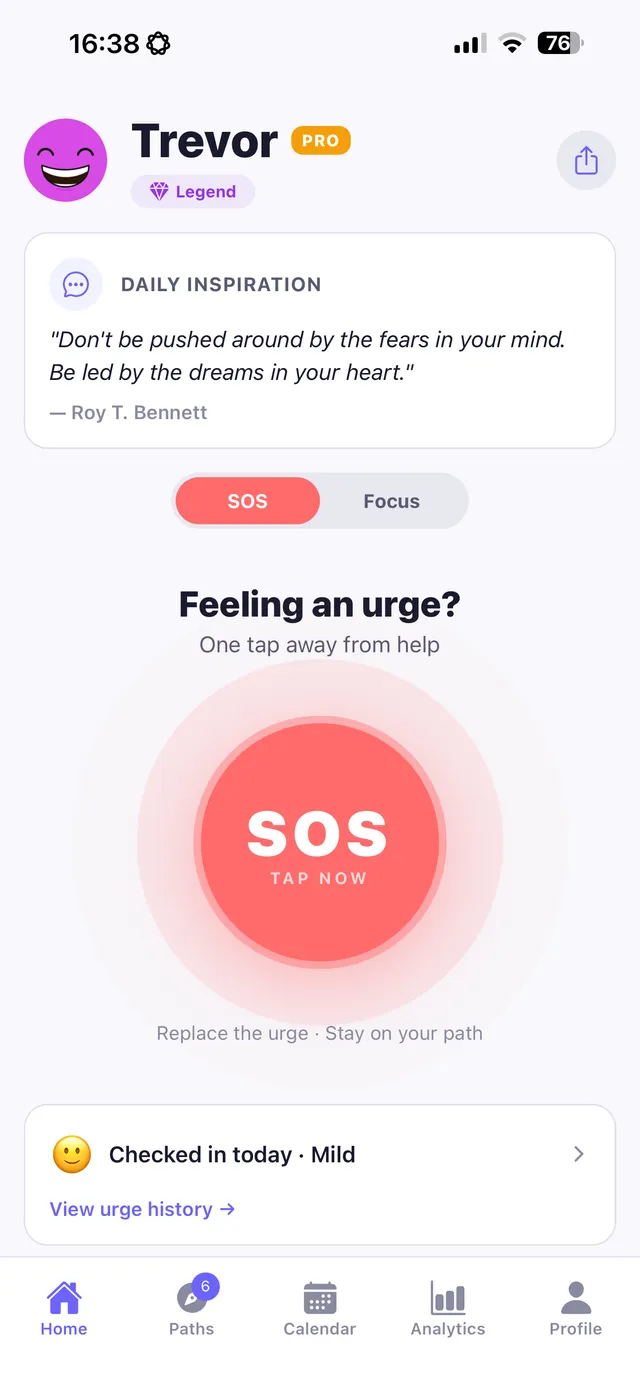
Replacify is built to turn if-then plans into something you don't have to remember on your own. Choosing a struggle and a replacement path is essentially writing your own implementation intention — if the urge for the old habit hits, then you do the new behavior — and the SOS button exists specifically for the moment that "if" fires, so the "then" is always one tap away.
Frequently asked questions
What is an implementation intention?
An implementation intention is a specific if-then plan that links a concrete trigger to a concrete action, like 'if it's 7am, then I put on my running shoes.' It pre-decides the behavior so you don't have to rely on in-the-moment motivation.
Why do if-then plans work better than general goals?
Vague goals like 'exercise more' leave the decision open for every future moment, which requires motivation you may not have at the right time. If-then plans make the decision in advance, when you're clear-headed, removing that burden later.
What makes a good implementation intention?
A good one has a specific, noticeable trigger, a small and easily doable action, and is mentally rehearsed a few times rather than just written down once. Vague triggers and large actions both weaken the plan.
Can implementation intentions help with cravings or urges?
Yes. Planning a specific response in advance — 'if I feel a craving, then I do a 60-second breathing routine' — gives you a ready action instead of leaving you to improvise a response during a high-pressure moment.
Replace the habit. Not yourself.
Replacify helps you swap a bad habit for a better one — with structured paths, an SOS button for cravings, a focus timer, and streaks that keep you going.