How to Quit Caffeine (or Cut Back) Without the Brutal Headaches

For many people, caffeine is less a choice and more a requirement: nothing happens before the first coffee, and the afternoon collapses without a second (or third). If you're thinking about how to quit caffeine — for sleep, anxiety, your heart rate or just to stop depending on it — the good news is that tapering avoids most of the pain.
The short answer
To quit caffeine: tally your real daily intake, then reduce gradually — roughly 10–25% every few days — rather than stopping abruptly. Swap in decaf or lower-caffeine drinks, keep your morning ritual, stay hydrated, and plan for the afternoon slump with light, movement and better sleep. Withdrawal symptoms typically start 12–24 hours after your last dose and usually fade within about 2–9 days.
Why quitting caffeine is hard
Caffeine blocks adenosine, the chemical that builds sleepiness during the day. With regular use, your brain adapts. Remove caffeine suddenly and you feel the full effect of that built-up adenosine — plus changes in blood flow in the brain that contribute to headaches.
On top of the chemistry, coffee and tea are rituals: the morning cup, the work break, meeting a friend. Quitting means changing routines, not just ingredients. How the habit loop works.
Caffeine withdrawal symptoms
Common symptoms include:
- Headache (the most common)
- Tiredness and low energy
- Low mood or irritability
- Difficulty concentrating
- Flu-like feelings in some people
A review of caffeine withdrawal research found symptoms usually begin 12–24 hours after stopping, peak around 1–2 days, and can last from 2 to 9 days.
Step 1: Tally your intake
| Drink | Typical caffeine |
|---|---|
| Brewed coffee (240 ml) | ~95 mg |
| Espresso (single) | ~60–65 mg |
| Black tea (240 ml) | ~40–50 mg |
| Green tea (240 ml) | ~25–35 mg |
| Cola (355 ml can) | ~30–40 mg |
| Energy drink (250 ml) | ~80 mg (some much more) |
| Pre-workout (1 scoop) | Often 150–300 mg |
Amounts vary a lot by brand and preparation. Check labels for energy drinks and supplements.
Step 2: Taper gradually
A simple approach is to cut your total by around 10–25% every three to four days.
| Days | Example (starting at 4 coffees/day) |
|---|---|
| 1–3 | 3 coffees + 1 decaf |
| 4–6 | 2 coffees + 2 decaf |
| 7–9 | 1 coffee + half-caf + decaf |
| 10–12 | Half-caf + decaf |
| 13+ | Decaf or caffeine-free only |
Go slower if symptoms are strong. There's no prize for speed.
Replacify helps you swap a bad habit for a better one — with structured paths, an SOS button for cravings, a focus timer, and streaks that keep you going.


Step 3: Keep the ritual
The morning cup is often about warmth, routine and a pause — not just caffeine.
- Decaf coffee (contains a small amount of caffeine).
- Herbal teas like rooibos, peppermint or chamomile.
- Chicory or mushroom-based coffee alternatives.
- Hot water with lemon.
Same mug, same spot, same pause.
Step 4: Handle the afternoon slump
- Get daylight — a short walk outside.
- Move — stairs, stretching, a few squats.
- Eat a balanced lunch with protein and fibre.
- Drink water.
- Consider a short nap (10–20 minutes) if you can.
- Fix your sleep. Many people rely on caffeine because they're under-slept.
Step 5: Watch for hidden caffeine
Chocolate, some painkillers and cold remedies, pre-workouts, "focus" drinks and some sodas contain caffeine. Check labels.
What to expect after you quit
- First few days: the hardest part — headaches and tiredness are common, especially if you stopped abruptly.
- End of week one to two: most people's withdrawal symptoms have faded.
- After a few weeks: many people report steadier energy without the mid-afternoon crash, and some notice they fall asleep more easily.
Everyone is different, and some people simply prefer life with a morning coffee. That's fine — the goal is choice, not dependence.
Should you quit completely?
Not necessarily. Many people feel best cutting back — for example, to one coffee before midday — rather than quitting entirely. Consider quitting completely if caffeine worsens anxiety, palpitations, reflux or sleep for you, or if your doctor advises it. If you're pregnant, have a heart condition or take certain medications, ask a doctor what limit is right for you.
If you slip
A coffee on a hard day doesn't undo your progress. Go back to your plan the next day. What to do after you break your streak.
The bottom line
Quitting caffeine is much easier with a taper than cold turkey. Tally your intake, reduce gradually over a couple of weeks, keep the ritual with decaf or herbal alternatives, and handle the afternoon dip with light, movement and better sleep. Withdrawal is temporary.
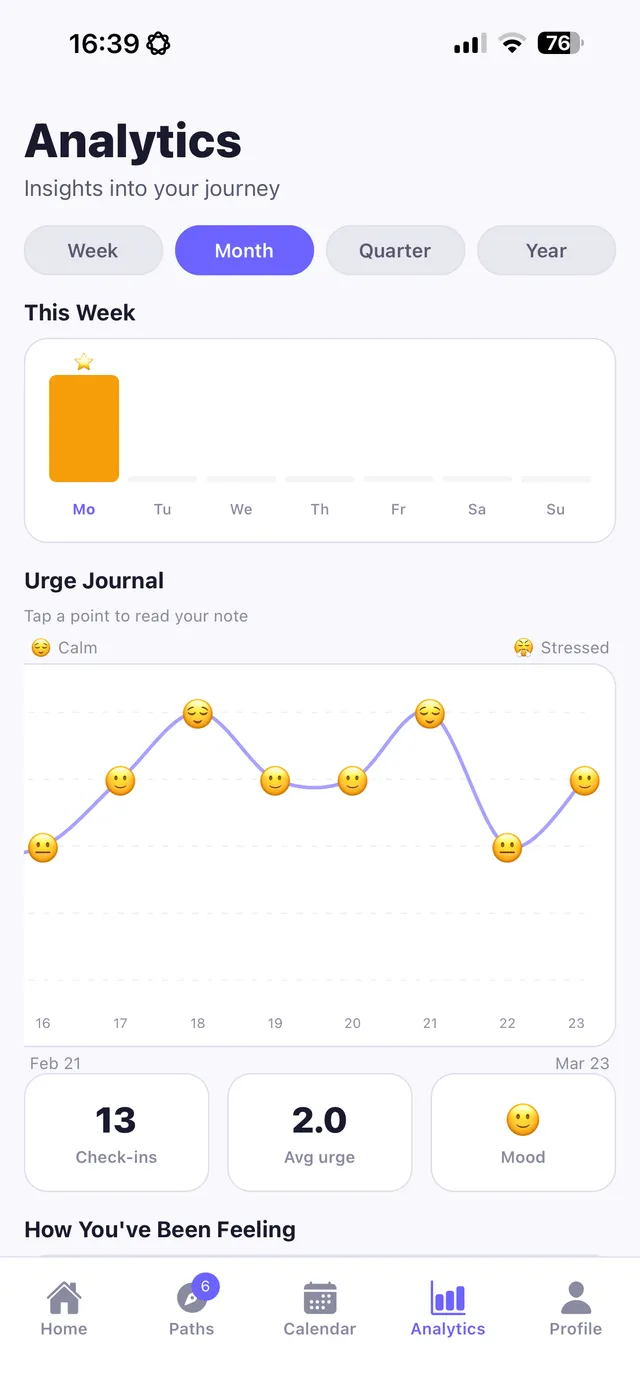
Replacify includes Caffeine as one of its struggles. Log daily check-ins with an urge rating as you taper, tap SOS for a quick activity when the 3pm craving hits, and sync with Apple Health to see how your sleep responds as your caffeine intake falls.
Replacify is not a medical service.
Frequently asked questions
How do I quit caffeine without headaches?
Taper gradually — reduce your total caffeine by around 10–25% every few days — instead of stopping abruptly. Swapping in decaf helps keep the ritual while lowering caffeine.
How long does caffeine withdrawal last?
Symptoms usually begin 12–24 hours after your last dose, peak around one to two days, and can last from about two to nine days.
What are the symptoms of caffeine withdrawal?
Common symptoms are headache, tiredness, low mood, irritability, difficulty concentrating and sometimes flu-like feelings.
What can I drink instead of coffee?
Decaf coffee, herbal teas like rooibos or peppermint, chicory-based alternatives or hot water with lemon can keep the ritual without the caffeine.
Replace the habit. Not yourself.
Replacify helps you swap a bad habit for a better one — with structured paths, an SOS button for cravings, a focus timer, and streaks that keep you going.