How to Stop Nail Biting: Habit Reversal and 10 Practical Tricks That Work

Most people who bite their nails don't decide to. It happens during a film, in a meeting, while reading, while stressed — and by the time you notice, the damage is done. That's what makes nail biting so stubborn: it's largely automatic. The most effective way to stop biting your nails is to make the habit visible, then give your hands something else to do.
The short answer
To stop nail biting: track when and where it happens, increase awareness (bitter nail polish, keeping nails short, noticing the "pre-bite" movement), and use habit reversal training — when you notice the urge, do a competing response with your hands for about a minute. Keep your hands busy in trigger situations, reduce stress where you can, and be patient: it usually takes weeks.
Why we bite our nails
Nail biting (onychophagia) is a body-focused repetitive behaviour. It often appears during:
- Stress or anxiety — soothing tension.
- Boredom — something to do while idle.
- Concentration — reading, watching, working.
- Noticing an imperfection — a rough edge or hangnail.
It's usually harmless in small amounts, but it can damage nails and cuticles, cause infections and affect how you feel about your hands.
Habit reversal training (HRT)
Habit reversal training is a behavioural approach with good evidence for nail biting and similar habits. It has three main parts:
| Component | What you do |
|---|---|
| Awareness training | Learn exactly when, where and how you bite; notice early warning signs |
| Competing response | When the urge or movement starts, do something incompatible with biting for ~1 minute |
| Social support | Someone gently points it out and encourages you |
Competing responses are things you can't do while biting: clenching your fists gently, pressing your palms together, sitting on your hands, holding a pen, or squeezing a small ball.
10 practical tricks
1. Track it for a week
Note each time you catch yourself: time, place, activity, mood. Patterns appear quickly — and just tracking increases awareness. The habit loop explains why cues matter.
2. Keep nails short and smooth
Less to bite, fewer rough edges to "fix". Carry a nail file for hangnails instead of using your teeth.
3. Try bitter nail polish
A bitter-tasting coating makes you notice the moment your finger reaches your mouth. It's an awareness tool, not a cure.
4. Get a manicure or nail care routine
Some people find they're less likely to bite nails they've invested in.
Replacify helps you swap a bad habit for a better one — with structured paths, an SOS button for cravings, a focus timer, and streaks that keep you going.


5. Keep your hands busy in trigger situations
- Watching TV: a fidget toy, stress ball, knitting, drawing.
- At work: a pen, a smooth stone, a textured object.
- Reading: hold the book with both hands.
6. Use a physical barrier
Plasters, gloves or artificial nails on your most-bitten fingers for a few weeks break the automatic loop.
7. Practise your competing response
When you notice the urge — or your hand drifting up — clench your fists gently or press your palms together for 60 seconds. It feels awkward at first; it becomes automatic with practice.
8. Address stress
If you bite more when stressed, stress relief is part of the fix: breathing, exercise, sleep, talking to someone. 60 replacement ideas by need.
9. Start with one finger
Pick one finger (or one hand) to leave alone first. Success there builds confidence.
10. Track your streak
Days without biting, or photos of your nails growing back, give visible proof of progress. Why streaks help.
How long does it take to stop?
There's no fixed timeline. Many people notice fewer episodes within a couple of weeks of tracking and using a competing response, but the habit can resurface under stress. Expect progress to be uneven — a stressful week may bring it back briefly. What matters is that the overall trend is down and that you keep using the strategies that work for you.
If you slip
Bitten a nail? Don't give up. File it smooth, notice what triggered it and carry on. What to do after you break your streak.
When to get help
If nail biting causes pain, bleeding, infections, significant distress, or comes with skin picking or hair pulling, talk to a doctor. A therapist trained in habit reversal or cognitive behavioural therapy for body-focused repetitive behaviours can help.
The bottom line
Nail biting is an automatic habit, so the first step is awareness. Track it, keep nails short, use bitter polish as a reminder, and practise a competing response with your hands whenever the urge appears. Keep your hands busy in trigger situations and track your progress — it usually takes a few weeks.
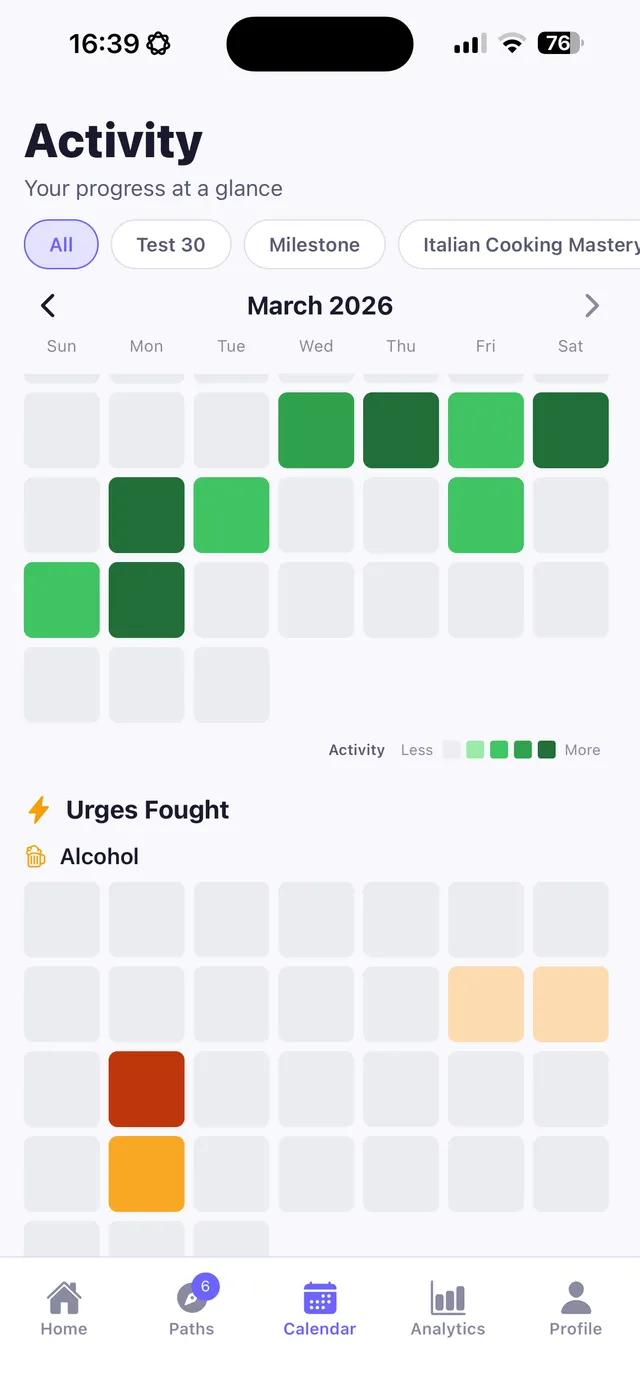
Replacify includes Nail Biting as a struggle. Log daily check-ins to build awareness, use the free SOS button for a quick hands-busy activity when the urge hits, and watch your struggle-free days grow on the heatmap calendar. A replacement path like drawing or guitar gives your hands a better job.
Frequently asked questions
How do I stop biting my nails?
Track when you bite, keep nails short, use bitter nail polish as a reminder, keep your hands busy in trigger situations, and practise a competing response like gently clenching your fists when the urge appears.
What is habit reversal training?
Habit reversal training is a behavioural approach that combines awareness training, a competing response you do instead of the habit, and social support. It has good evidence for nail biting.
Why do I bite my nails?
Nail biting is a body-focused repetitive behaviour often triggered by stress, boredom, concentration or noticing a rough edge.
Does bitter nail polish work?
It helps many people by making them notice the moment they start biting. It works best combined with other strategies like a competing response.
Replace the habit. Not yourself.
Replacify helps you swap a bad habit for a better one — with structured paths, an SOS button for cravings, a focus timer, and streaks that keep you going.