Motivation vs Discipline: Which One Actually Builds Habits?

You've probably noticed the pattern: you feel genuinely motivated for a few days, the habit feels easy, and then the motivation quietly disappears — usually right around the time life gets busy or boring. This isn't a personal failing. Motivation was never designed to be something you could count on every single day, and mistaking it for the foundation of a habit is one of the most common reasons habits don't last.
The short answer
Motivation is a feeling — it fluctuates with your mood, energy, stress and novelty, and it's genuinely unreliable day to day. Discipline is closer to a practiced skill of acting regardless of how you feel, but even discipline is a limited resource under pressure. The most durable approach relies on neither: it uses systems and environment design to make the habit require less motivation and less discipline to execute in the first place.
What motivation actually is
Motivation is a state, not a trait — it rises with novelty, excitement, a clear deadline, or a fresh start, and it fades as the behavior becomes routine, the initial excitement wears off, or life gets stressful. That's not a flaw in your character; it's just how motivation works for nearly everyone. The mistake is designing a habit plan that assumes motivation will still be there in week six the same way it was on day one.
What discipline actually is
Discipline is often described as "doing it anyway," and there's some truth to that — people who've practiced showing up regardless of mood do get better at it over time. But discipline isn't unlimited either. It draws on the same kind of finite self-control that makes willpower unreliable under fatigue, stress, or decision overload. Treating discipline as an infinite backup for whenever motivation runs out just moves the same problem one level down.
Why relying on either one alone fails
If your habit only survives on days you feel motivated, it survives roughly as often as motivation shows up — which, honestly, isn't that often once novelty wears off. If your habit only survives on days you have enough discipline left, it survives roughly as often as your self-control reserves are full — which also isn't every day, especially during a stressful week. Both are real, and both matter, but neither one is a stable enough foundation to build a lasting habit on by itself.
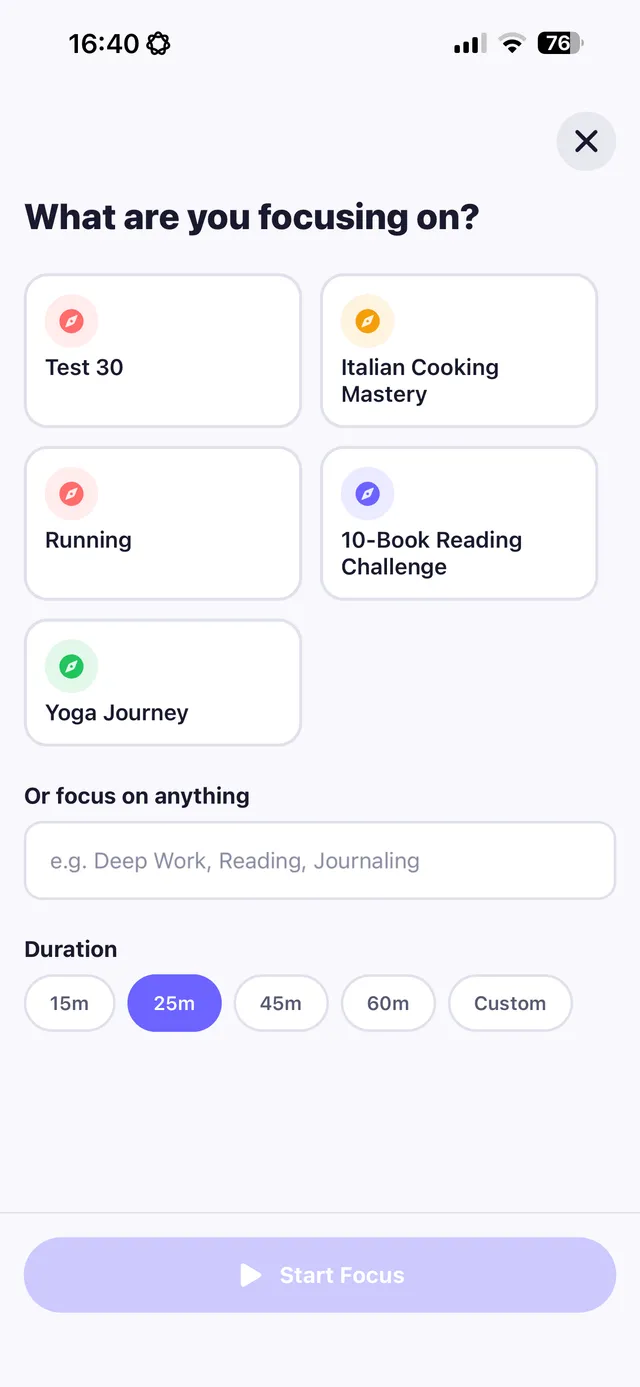
Replacify helps you swap a bad habit for a better one — with structured paths, an SOS button for cravings, a focus timer, and streaks that keep you going.


What actually works: systems that need less of both
The more reliable approach doesn't try to manufacture more motivation or more discipline — it reduces how much of either the habit requires in the first place.
Make the habit smaller. A two-minute version of a habit needs far less motivation or discipline to start than an hour-long version. Once you've started, momentum tends to carry you further than you expected. This is the core idea behind small habits, big results.
Reduce the decisions involved. Deciding when, where and how you'll do something in advance — an if-then plan — removes the in-the-moment decision that both motivation and discipline would otherwise have to win.
Design your environment. If the habit's cue and the tools you need are already in place, you need less internal push to start. Habit stacking attaches the new habit to something already automatic, so it inherits that automaticity instead of needing fresh motivation every time.
Track consistency, not intensity. How habit streaks work explains why visible progress becomes its own driver over time — it's a form of motivation that doesn't fade the way novelty does, because it's generated by the habit itself rather than borrowed from outside it.
| Motivation | Discipline | Systems | |
|---|---|---|---|
| Reliability day to day | Low — fluctuates with mood/energy | Medium — finite, depletes under stress | High — doesn't depend on internal state |
| What it depends on | Novelty, excitement, mood | Practiced self-control | Environment design, habit size, defaults |
| Best used for | Getting started | Getting through occasional hard days | Making every day require less of both |
The bottom line
Motivation gets you started; discipline gets you through some of the hard days; neither one reliably carries a habit for months on its own. What does is a system — a habit small enough, specific enough, and structurally supported enough that it doesn't require peak motivation or peak self-control to execute on an average Tuesday.
Replacify is designed around that idea directly. You choose a struggle and a replacement path once, up front — removing the daily decision that motivation and discipline would otherwise have to make for you. The SOS button handles the moments that would otherwise demand a burst of discipline, and your streak becomes its own quiet source of motivation, growing regardless of how you happen to feel on any given day.
Frequently asked questions
What's the difference between motivation and discipline?
Motivation is a feeling that fluctuates with mood, energy and novelty, while discipline is closer to a practiced skill of acting regardless of how you feel. Both matter, but neither is fully reliable on its own.
Why does motivation fade so quickly?
Motivation tends to rise with novelty and excitement and fade as a behavior becomes routine or life gets stressful — that's a normal pattern, not a sign of low willpower.
Is discipline more reliable than motivation?
It's somewhat more reliable, since it doesn't depend as heavily on mood, but discipline is still a limited resource that depletes under stress and fatigue, similar to willpower.
What should I rely on instead of motivation or discipline?
A system — a habit made small enough and specific enough, supported by environment design and reduced decision-making — so that an average day requires less motivation and less discipline to execute in the first place.
Replace the habit. Not yourself.
Replacify helps you swap a bad habit for a better one — with structured paths, an SOS button for cravings, a focus timer, and streaks that keep you going.