Why Tiny Habits Create Bigger Results Than Big Goals

There's a version of you that wants to start a habit by going all in — the hour-long workout plan, the strict new diet, the ambitious reading goal of a book a week. That version usually lasts about ten days. The people who actually keep a habit for years almost always started with something that felt almost embarrassingly small, and there's a real reason that approach wins.
The short answer
Tiny habits create bigger results than big goals because they carry lower failure risk (a two-minute habit is hard to skip even on a bad day), they build identity and consistency first before asking for intensity, and they avoid the burnout and all-or-nothing collapse that ambitious plans routinely trigger. A small habit done consistently for months outperforms an ambitious one abandoned after two weeks, almost every time.
Why starting small actually works
Lower failure risk
An ambitious goal requires the right conditions to execute — enough time, enough energy, enough motivation. A tiny habit needs almost none of those things, which means it survives your busy days, your tired days, and your low-motivation days, not just your best ones. Since consistency is what actually builds a habit, a version of the habit that's nearly impossible to skip beats an impressive version you only manage half the time.
It builds identity before intensity
Doing something small every day teaches your brain "this is just what I do" faster than doing something big occasionally does. That shift in self-concept is what identity-based habits describes — the behavior becomes part of how you see yourself well before it becomes physically demanding, and that identity is what actually sustains the habit once you do increase intensity later.
It avoids all-or-nothing collapse
Big goals tend to be brittle. Miss one ambitious workout and the whole plan can feel broken, which is exactly the kind of thinking that ends most resolutions — see why most resolutions fail. A tiny habit doesn't create the same all-or-nothing trap, because missing it barely registers as a failure worth abandoning anything over.
Tiny starting points for common goals
| Goal | Ambitious (fragile) version | Tiny (durable) starting point |
|---|---|---|
| Get fit | Hour-long gym sessions, 5x/week | Put on workout shoes and do 5 minutes |
| Read more | Finish a book every week | Read one page before bed |
| Quit a bad habit | Cold-turkey, white-knuckle it | One specific substitution for the single biggest trigger |
| Meditate | 30 minutes daily | One minute of breathing after you brush your teeth |
| Eat better | Overhaul your entire diet | Add one vegetable to one meal a day |
This is essentially the two-minute rule applied across categories: shrink the habit until starting requires almost nothing, then let consistency — not intensity — do the compounding work.
Replacify helps you swap a bad habit for a better one — with structured paths, an SOS button for cravings, a focus timer, and streaks that keep you going.


Small doesn't mean it stays small
The point of starting tiny isn't to stay tiny forever — it's that a habit performed consistently tends to grow naturally once it's established, while a habit that starts too big usually never survives long enough to grow at all. Five minutes of exercise, done daily for a month, tends to expand on its own as it becomes routine; an hour-long session attempted three times before burnout never gets the chance.
This also applies directly to breaking a habit, not just building one. Instead of trying to eliminate a bad habit entirely on day one, a replacement behavior aimed at just your single biggest trigger — not every trigger at once — is far more likely to survive its first hard week.
The bottom line
Big goals feel more impressive on paper, but tiny habits win in practice because they're nearly impossible to skip, they build identity before demanding intensity, and they sidestep the all-or-nothing collapse that kills most ambitious plans by week three. Start smaller than feels necessary — it compounds faster than it looks like it should.
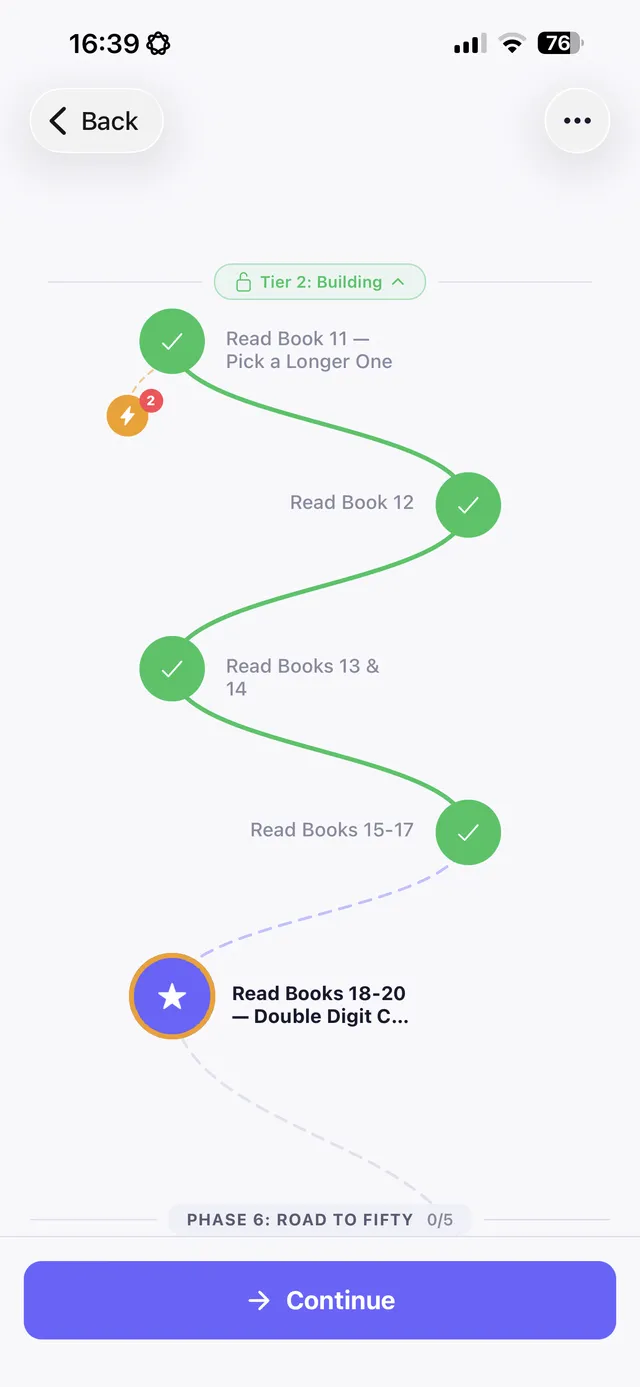
Replacify is built around this principle. Rather than an all-or-nothing overhaul, you choose one struggle and one replacement path to start — something specific and small enough to actually do today. The SOS button gives you a tiny, immediate action the moment an urge hits, and your streak tracks the compounding effect of showing up consistently, one small day at a time.
Frequently asked questions
Why do small habits work better than big goals?
They carry a much lower failure risk since they're easy to do even on bad days, they build identity and consistency before demanding intensity, and they avoid the all-or-nothing collapse that ambitious plans often trigger after one missed attempt.
Won't a tiny habit stay too small to matter?
Usually not — a habit performed consistently tends to grow naturally on its own once it's established, while an overly ambitious habit often doesn't survive long enough to grow at all.
What's a good tiny starting point for exercise?
Something as small as putting on your workout shoes and doing five minutes of movement. It's specifically sized to be nearly impossible to skip, which matters more early on than the workout's intensity.
Does starting small apply to breaking bad habits too?
Yes — instead of eliminating a habit entirely on day one, targeting just your single biggest trigger with one specific replacement behavior tends to survive the first hard week far better than an all-at-once approach.
Replace the habit. Not yourself.
Replacify helps you swap a bad habit for a better one — with structured paths, an SOS button for cravings, a focus timer, and streaks that keep you going.