Is Willpower Limited? What Research Really Says (and What to Rely On Instead)

"I just need more willpower." It's the first thing most people blame when a habit change fails. But what is willpower — and is it really the thing you're missing? The science has shifted a lot in the past decade, and the practical takeaway is encouraging: you don't need superhuman self-control to change a habit. You need a better strategy.
The short answer
The popular idea that willpower is a limited resource that runs out ("ego depletion") has not held up well in large replication studies. Research also suggests that people who appear to have great self-control often face fewer temptations in the first place, because of their habits and environment. So instead of relying on willpower, design your environment, build automatic habits, plan for triggers and reduce stress and tiredness.
The "willpower muscle" theory
In the late 1990s, psychologists proposed that self-control draws on a limited resource: use it up on one task and you'll have less for the next — a phenomenon called ego depletion. The idea became hugely popular and appeared in countless books and articles.
However, a large multi-lab replication effort published in 2016, involving over 2,000 participants across many labs, found an effect close to zero. Later replication attempts have also produced mixed or small results. The debate continues, but the simple "willpower tank that empties" story is much less certain than it once seemed.
Other research found that people's beliefs about willpower may matter: in some studies, those who believed willpower was not easily depleted showed less of a depletion effect.
What people with "great self-control" actually do
A study that tracked people's everyday desires found that those who scored high on self-control reported fewer temptations and less effortful resisting — not more heroic resistance. In other words, good self-control often looks like good habits and environments, not constant willpower battles.
| What we think self-control looks like | What it often actually looks like |
|---|---|
| Resisting temptation all day | Rarely facing the temptation |
| Heroic effort | Automatic routines |
| Saying no repeatedly | Environment set up so the question doesn't come up |
| Being "strong" | Being well-rested, planned and supported |
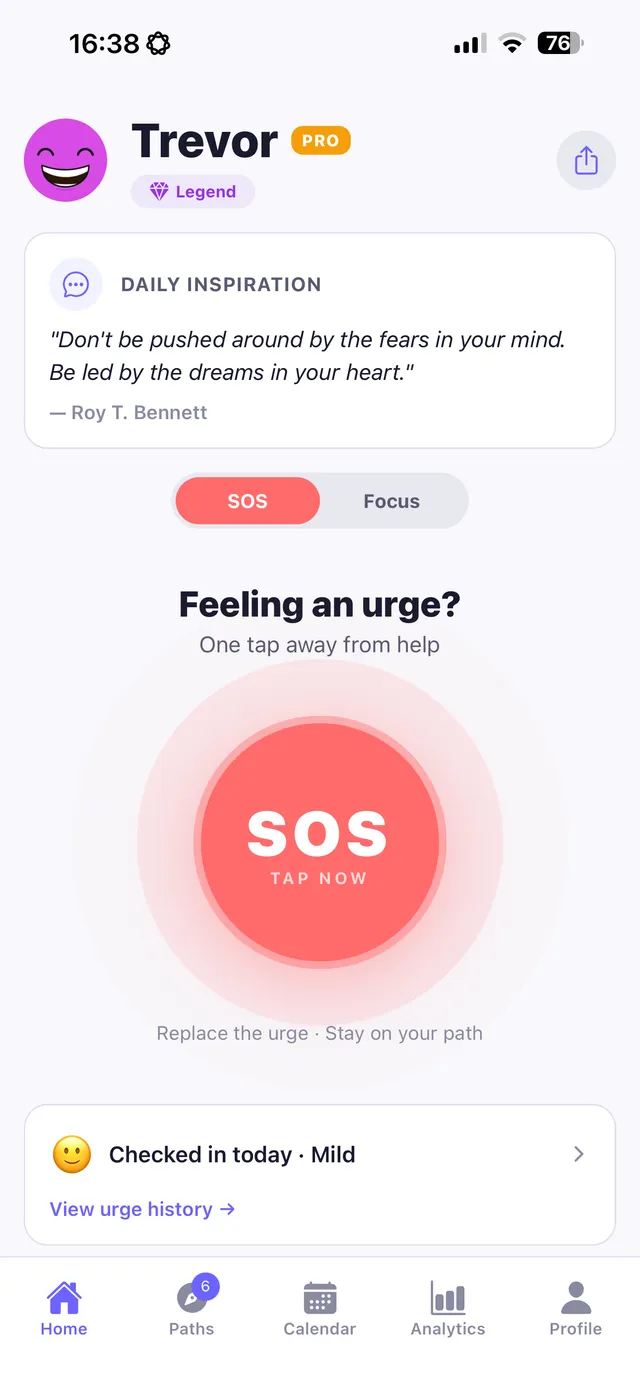
Replacify helps you swap a bad habit for a better one — with structured paths, an SOS button for cravings, a focus timer, and streaks that keep you going.


What to rely on instead of willpower
1. Design your environment
Remove cues and add friction: delete the app, clear the cupboard, keep the phone out of the bedroom. Make the good option the easy one: running shoes by the door, a book on the pillow. Why is it so hard to quit?
2. Build habits, not battles
Habits run on autopilot — that's why bad ones are hard to break. Use the same power for good ones with consistent cues. The habit loop and habit stacking.
3. Decide in advance
"If–then" plans ("If I feel stressed at work, then I'll walk around the block") take the decision out of the moment.
4. Replace instead of resisting
Resisting an urge with nothing to do is exhausting. Doing something else meets the need. 60 replacement behaviors.
5. Manage your state
Self-control is harder when you're tired, hungry, stressed or lonely. Sleep, regular meals and support aren't extras; they're the foundation.
6. Use commitment
Tell someone, sign a commitment, or join a challenge. External structure carries you on days motivation doesn't.
Can you "train" willpower?
Some studies have explored self-control training, with mixed results. What reliably helps is practice in specific situations: every time you ride out an urge, the next one tends to feel more manageable, and your confidence grows. That's less a "muscle" and more learning.
The bottom line
Willpower isn't a magic reserve you're missing. The evidence for a limited "willpower tank" is weaker than once thought, and people who seem self-controlled mostly avoid temptation through habits and environment. Design your surroundings, build automatic routines, plan in advance, replace urges and take care of your basic needs.
Replacify is built on that idea: instead of asking you to resist harder, it gives you a replacement path to follow, a free SOS button with a ready-made plan when urges hit, a commitment contract and challenges for structure — and a Willpower Training path if you want to practise building self-control step by step.
Frequently asked questions
Is willpower a limited resource?
The idea that willpower runs out (ego depletion) has struggled in large replication studies. The evidence is now much less certain than it was once thought to be.
How can I improve my willpower?
Rather than relying on willpower, design your environment, build automatic habits, make if–then plans, replace urges with other activities and look after sleep, food and stress.
Why do some people have more self-control?
Research suggests people with high self-control often face fewer temptations because their habits and environment reduce them, rather than resisting more.
What is ego depletion?
Ego depletion is the theory that self-control draws on a limited resource that gets used up. Large replication studies have found little support for a strong effect.
Replace the habit. Not yourself.
Replacify helps you swap a bad habit for a better one — with structured paths, an SOS button for cravings, a focus timer, and streaks that keep you going.