Why Most Resolutions Fail by February (and What Works Instead)

Every January, gyms fill up and productivity apps see a surge of new downloads. By February, most of that energy has quietly evaporated. This isn't a sign that the people making resolutions lack discipline — it's a sign that the way most resolutions get made sets them up to fail from the start, regardless of how motivated anyone is on January 1st.
The short answer
Resolutions fail because they're usually too vague to act on, too many at once, outcome-only with no actual system behind them, and abandoned entirely after one slip because of all-or-nothing thinking. What works instead: pick one system-level habit instead of a big outcome goal, use specific implementation intentions instead of vague intentions, and plan for setbacks in advance instead of treating the first slip as proof of failure.
Mistake 1: The goal is too vague
"Get healthier" or "be more productive" aren't habits — they're directions with no specific action attached. Vague goals give you nothing concrete to do on a random Tuesday, so they quietly fade the moment the initial enthusiasm wears off. A goal needs to translate into a specific, repeatable action before it can become a habit at all.
Mistake 2: Too many resolutions at once
Trying to overhaul diet, exercise, sleep, screen time and finances simultaneously spreads your limited attention and self-control across five fronts instead of concentrating it on one. Each additional simultaneous change increases the odds that at least one of them collapses — and once one falls, it's easy for the motivation behind the others to collapse with it.
Mistake 3: Outcome goals with no system
"Lose 15 pounds" or "read 30 books" are outcomes, not systems. They tell you the destination but nothing about what you actually do on a Tuesday morning to get there. A system — a specific habit repeated consistently — is what actually produces the outcome; the outcome is just what a good system eventually adds up to. This is the same reasoning behind keystone habits: a small number of specific, repeatable actions do more than a long list of outcome wishes.
Mistake 4: All-or-nothing thinking after one slip
This might be the single biggest reason resolutions die in the first two weeks of February. One missed gym day turns into "I've already ruined it," which turns into abandoning the whole effort. A single slip is a data point, not a verdict — but only if you've decided in advance that it won't be treated as one. What to do after you break your streak covers this directly.
Mistake 5: No plan for triggers
Most resolutions don't account for the actual situations that will test them — the stressful workday, the social event, the tired evening when the old default behavior is just easier. Without a plan for those specific moments, the resolution only survives as long as life stays convenient, which is rarely more than a few weeks.
Replacify helps you swap a bad habit for a better one — with structured paths, an SOS button for cravings, a focus timer, and streaks that keep you going.


What to do instead
Pick one system-level habit. Instead of five simultaneous resolutions, choose the one habit that would make the others easier or unnecessary — often a keystone habit like consistent sleep or a daily walk.
Use implementation intentions. Replace "I'll exercise more" with "I'll walk for 15 minutes at 7am before checking my phone." Specific if-then plans consistently outperform vague intentions because they remove the need to decide anything in the moment.
Start smaller than feels necessary. Small habits, big results explains why a version of the habit that feels almost too easy is more likely to survive a bad week than an ambitious version that only works when everything goes right.
Plan for the slip before it happens. Decide in advance what you'll do after you miss a day — not whether you'll quit, but specifically what you'll do the next day. This single decision, made calmly ahead of time, prevents most all-or-nothing collapses.
| Common resolution mistake | What to do instead |
|---|---|
| Vague goal ("be healthier") | One specific, repeatable action |
| Five resolutions at once | One system-level habit |
| Outcome-only ("lose weight") | A daily/weekly system that produces the outcome |
| All-or-nothing after a slip | A pre-decided plan for what happens after a miss |
| No plan for hard days | Implementation intentions for your actual trigger situations |
The bottom line
Resolutions don't fail because people lack willpower in January — they fail because the goal was too vague, too many things changed at once, there was no real system behind the outcome, and one slip got treated as the end instead of a normal part of the process. Fix those four things and the calendar month stops mattering.
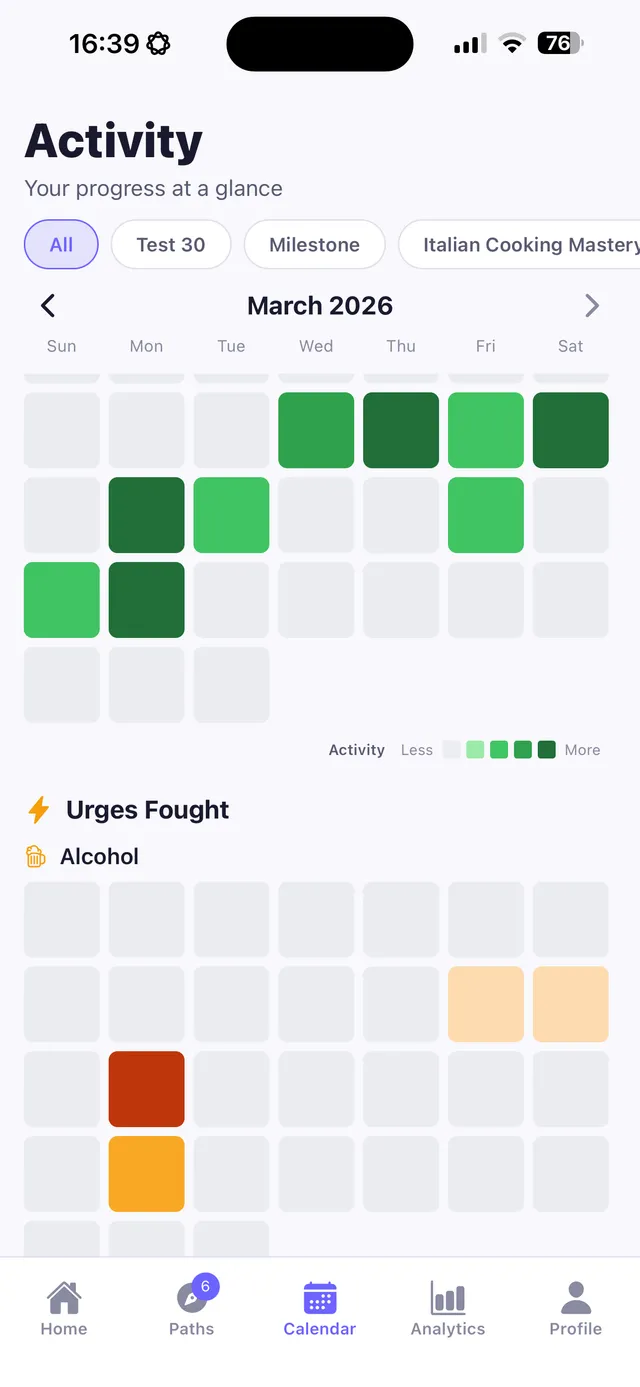
Replacify is built around exactly this fix: instead of a vague resolution, you choose a specific struggle and a replacement path — one system, not five. The SOS button handles the hard-day trigger moments directly, and your streak tracks consistency day by day, so one missed day is visibly just one day, not evidence the whole thing failed.
Frequently asked questions
Why do most New Year's resolutions fail?
Because they're usually too vague to act on, too many are attempted at once, they're outcome-only with no real system behind them, and a single slip triggers all-or-nothing thinking that ends the whole attempt.
What should I do instead of setting a big resolution?
Pick one specific, system-level habit rather than a broad outcome goal, and use a concrete if-then plan (an implementation intention) rather than a vague intention.
How many resolutions should I try to keep at once?
One is far more likely to succeed than several at once, since each additional simultaneous change increases the odds that at least one collapses and drags the others down with it.
What should I do if I already broke my resolution?
Treat the slip as a single data point, not a verdict, and follow the plan you should decide on in advance for what happens the next day — the goal is to get back to the habit quickly, not to judge the miss.
Replace the habit. Not yourself.
Replacify helps you swap a bad habit for a better one — with structured paths, an SOS button for cravings, a focus timer, and streaks that keep you going.