Habit Replacement vs Elimination: Why Substitution Works Better

"Just stop" is the most common advice for a bad habit, and it's also the advice that fails the most often. Telling yourself to simply not do something doesn't make the urge disappear — it just leaves you standing in front of the craving with nothing to do about it. There's a reason the people who actually change a long-running habit almost always describe swapping it for something else, not just quitting cold.
The short answer
Elimination tries to remove a habit and leave nothing behind. Replacement swaps the habit for a different behavior that meets the same underlying need. Replacement tends to work better because a habit exists to serve a function — stress relief, boredom relief, a dopamine hit, social connection — and that function doesn't go away just because you've decided to stop. If you don't give the craving somewhere to go, it either comes back stronger later or shows up in a different, sometimes worse, habit.
Why elimination alone struggles
Every habit that's stuck around long enough to become a "bad habit" is doing some kind of job for you, even if that job is small or short-term. Scrolling at night quiets a restless mind. Snacking breaks up boredom. A cigarette gives you a forced pause in a busy day. When you try to eliminate the behavior without addressing what it was doing for you, you're left with the same trigger, the same craving, and a gap where the response used to be.
That gap is uncomfortable, and discomfort is exactly what makes elimination-only attempts collapse. You white-knuckle through a few days, the underlying need is still unmet, and eventually you either relapse into the original habit or the craving redirects itself into something else — often something you didn't choose on purpose. This is part of why willpower alone is such an unreliable strategy on its own: it's fighting an unmet need instead of resolving it.
Why substitution works better
Replacement behaviors work because they respect the fact that the habit was never really about the specific action — it was about the function that action served. If you can find a different action that serves a similar function, the craving has somewhere real to go instead of just being suppressed.
This is the actual mechanism behind the habit loop: cue, craving, response, reward. Elimination tries to remove the response and hope the craving quietly disappears. Substitution keeps the loop intact but swaps in a different response — one that still delivers a version of the reward, just through a healthier or more intentional channel.
| Habit | Function it serves | A substitution that serves it too |
|---|---|---|
| Late-night phone scrolling | Winding down, distraction from a busy mind | A short walk, a chapter of a book, a wind-down stretch routine |
| Stress snacking | Fast relief, something to do with your hands | Herbal tea, a fidget habit, a quick breathing exercise |
| Vaping/smoking breaks | A forced pause, a ritual, nicotine hit | A short outdoor walk, sparkling water, a breathing break |
| Doomscrolling news | Novelty-seeking, boredom relief | A puzzle app, a hobby you can pick up in 5 minutes |
Notice that most of these substitutions aren't random — they're chosen specifically because they hit a similar function (calming down, a pause, novelty) rather than being an arbitrary "healthy" activity with no connection to the original need. A full list of replacement behaviors organized this way is worth building out before you attempt to change anything.
Replacify helps you swap a bad habit for a better one — with structured paths, an SOS button for cravings, a focus timer, and streaks that keep you going.


When elimination alone can work
This isn't an absolute rule — some habits really can just be dropped, especially low-stakes ones that aren't serving much of an emotional function (a habit of leaving lights on, for instance). But for habits tied to stress, boredom, social pressure, or a genuine chemical dependency, the underlying need is real and substitution consistently outperforms pure elimination. If you're trying to figure out which category yours falls into, why it's so hard to quit is a useful place to start.
It's also worth deciding this deliberately rather than by accident — see cold turkey vs. cutting down for how that choice interacts with substitution.
The bottom line
Elimination leaves a void where a habit used to serve a real function; substitution fills that void with something that serves it too, without the downside. That's why "replace, don't just remove" holds up better across screens, food, nicotine and almost every other bad habit people try to break.
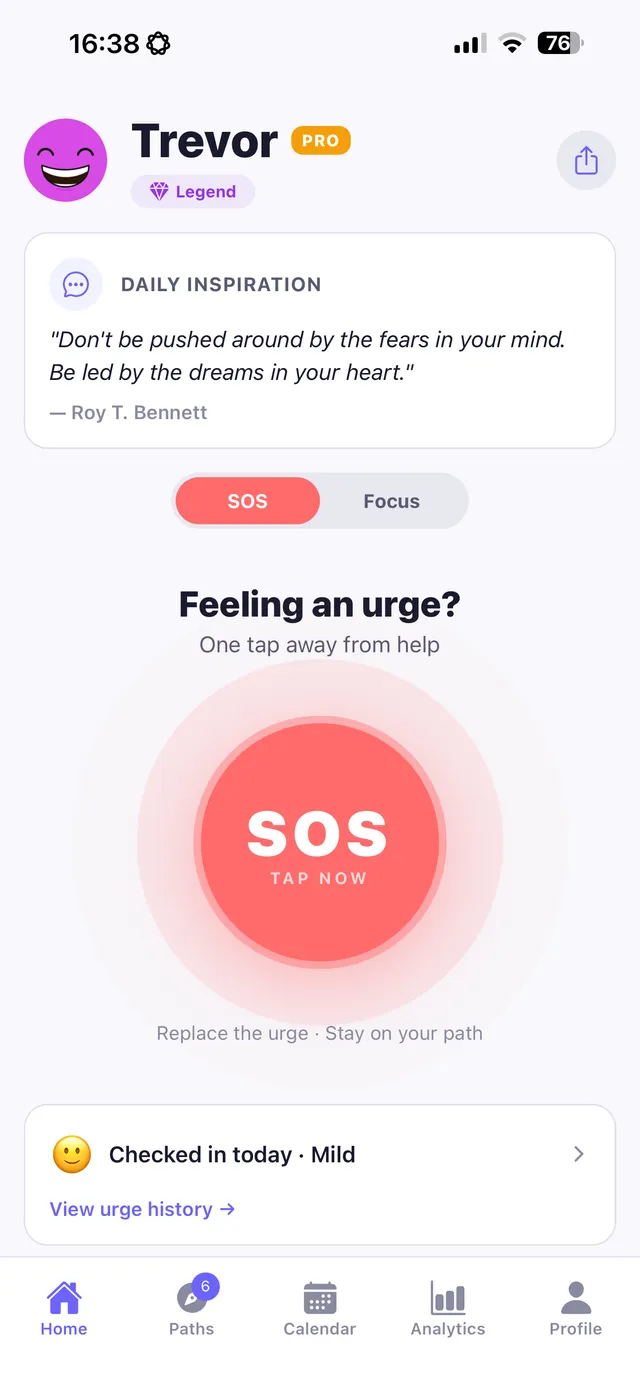
It's also the entire premise behind Replacify. Instead of asking you to just stop, you pick your struggle and a replacement path that actually appeals to you — fitness, cooking, creative work, whatever fits. When a craving hits, the SOS button gives you an immediate substitution to reach for instead of white-knuckling it, and your streak tracks the replacement behavior building up in its place, not just the absence of the old one.
Frequently asked questions
Is it better to eliminate a bad habit or replace it?
Replacement generally works better because most habits serve a real function — stress relief, boredom relief, a reward — and that need doesn't disappear just because you stop the behavior. Substitution gives the craving somewhere to go instead of leaving an unmet need.
Why does trying to just stop a habit often fail?
Stopping without substituting leaves the original trigger and craving in place. The discomfort of the unmet need often causes a relapse into the old habit, or the craving redirects into a different, sometimes worse, behavior.
Can some habits just be eliminated without a replacement?
Yes, especially low-stakes habits with little emotional or chemical pull behind them. But habits tied to stress, boredom, social pressure or dependency usually respond better to substitution.
How do I pick a good replacement behavior?
Look for something that serves a similar function to the original habit — the same kind of relief, pause or reward — rather than a random 'healthy' activity with no real connection to what the habit was doing for you.
Replace the habit. Not yourself.
Replacify helps you swap a bad habit for a better one — with structured paths, an SOS button for cravings, a focus timer, and streaks that keep you going.